
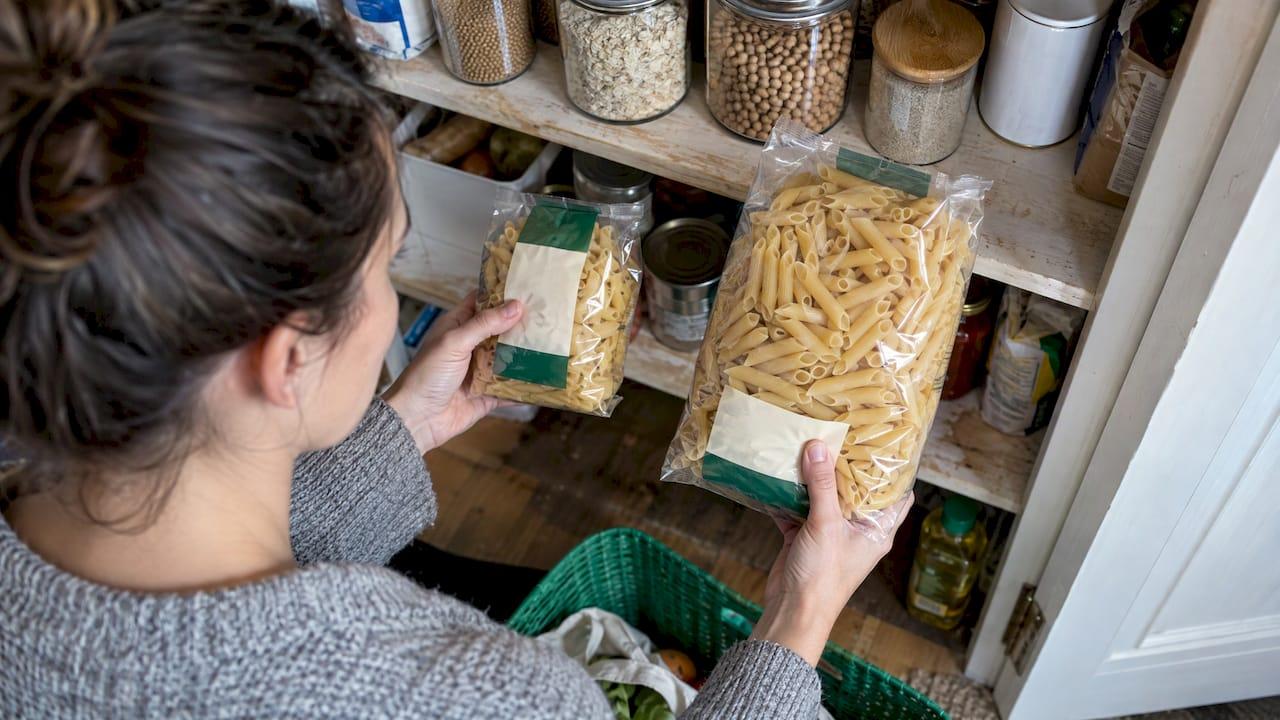
Bulk usually costs less per unit, but not always, and the sticker price will not tell you which. The only fair comparison is price per unit: divide each price by the number of items, ounces, sheets or feet inside, then compare. A bigger pack wins when its unit price is lower and you will use all of it before it expires, wears out or clutters your home. A single pack wins when the extra units would sit unused or go to waste.
This guide shows the math, the traps that make a "deal" a dud, and a simple way to decide for diapers, paper goods, personal care, pet food, cables and more.
TL;DR
- Compare price per unit, not price per package. Divide the total price by the total count, after coupons, using the same unit on both sides.
- Bulk and multipacks often win on unit price, but larger containers do not always cost less, and the savings vanish if you waste part of the pack.
- A single pack is the better buy for things that spoil, that you are trying for the first time, or that you cannot store.
- Check what counts as a "unit" before you divide. Items sold as a set, such as a matched pair, are different from loose pieces.
- Rerun the math whenever a coupon or sale changes the price, because the winner can flip.
Table of Contents
- What is the difference between bulk, multipack and single pack?
- The one calculation that settles it
- When bulk wins
- When a single pack is the smarter buy
- A quick decision test
- How to check pack prices online
- Our perspective
- Shop by unit price on OutletPicks
- Common mistakes to avoid
- FAQ
- Sources
What is the difference between bulk, multipack and single pack?
The three terms overlap, so it helps to pin them down.
- Single pack: one retail package, such as one bottle of shampoo, one box of 40 diapers or one ink cartridge.
- Multipack: several retail packages bundled and sold together, such as a 4-pack of the same shampoo, each bottle still sealed in its own packaging.
- Bulk: a larger quantity sold as one item, often in a warehouse-style or economy size. It might be a 200-count box, a case, or a big refill jug with minimal individual packaging.
Stores quote prices at different levels: one loose item, one retail pack, or a case holding several packs. That is why a shelf tag can look cheaper than the neighboring tag even when it is not. The two prices describe different quantities.
The one calculation that settles it
Unit price is the total price divided by the number of units. The steps are simple: find the total price, identify the total quantity and unit, make sure the units match, and divide.
A classic worked example from university extension materials: two pounds of baby carrots at $1.89 works out to $0.94 per pound, against $0.99 per pound for a one-pound bag. The bigger bag costs more in total and less per pound.
Here is the same logic with household items. These numbers are illustrative, not current prices.
| Option | Price | Count | Price per unit |
|---|---|---|---|
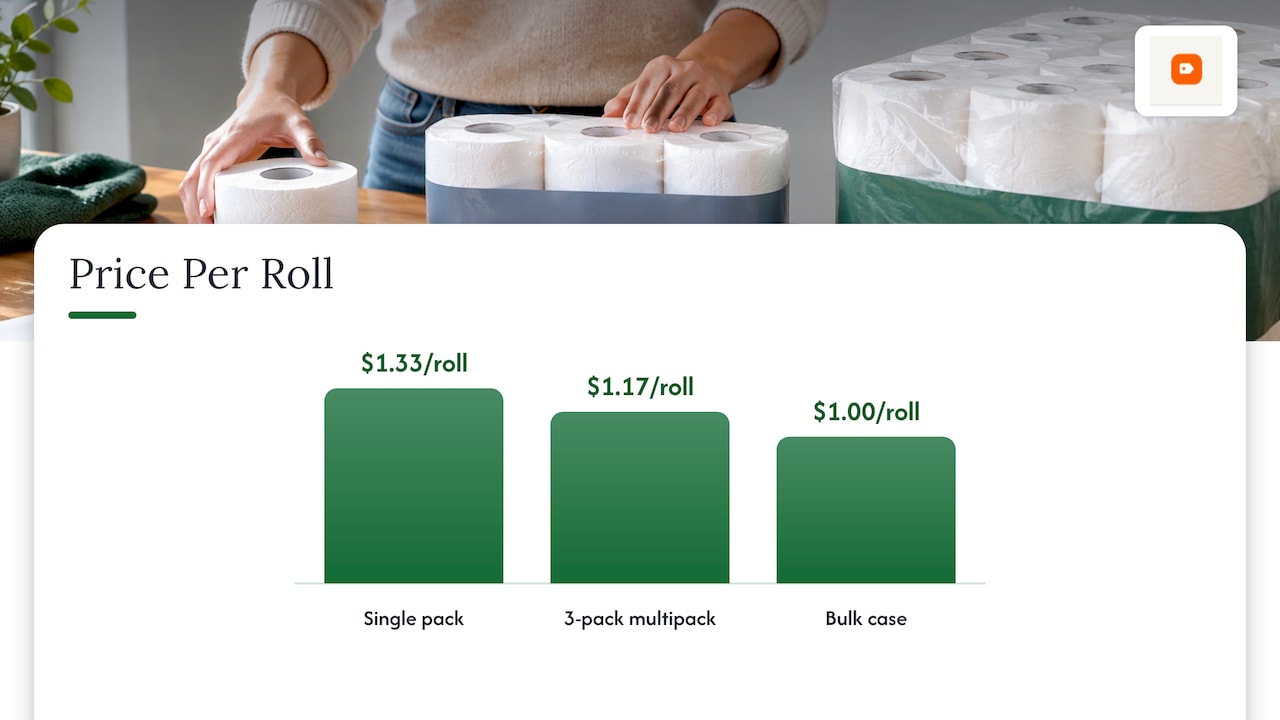
| Single pack of paper towel rolls | $8.00 | 6 rolls | $1.33 per roll |
| Multipack, 3 packs | $21.00 | 18 rolls | $1.17 per roll |
| Bulk case | $36.00 | 36 rolls | $1.00 per roll |
On paper, the case wins. Whether it wins in your home depends on the next sections.
Make the units match
If one label says ounces and another says milliliters, or one lists sheets and the other lists rolls, convert before you divide. Consumer Reports describes unit pricing as a way to compare "apples to apples" by converting products to the same unit of measure. A calculator saves time here, and our unit price comparison calculator guide walks through it.
Subtract coupons first
The same Consumer Reports guidance says to subtract the value of any coupon or discount before comparing, and to keep the units identical. A $2 coupon on a single pack can erase a multipack's lead. We cover how to run the numbers when promotions overlap in our guide on unit price versus sale price, and on Amazon coupon stacking.
Decide what a unit really is
Dividing by pieces can answer the wrong question. If the pieces must stay together as one retail set, the better divisor is the count of saleable units each price represents. A 12-piece set of storage containers with lids is six usable containers, not twelve.
When bulk wins
Bulk and multipacks tend to come out ahead when four things are true.
- The item does not spoil. Paper goods, trash bags, cleaning supplies, batteries, cables and many personal care basics last for months or years.
- You use it steadily. Diapers are the standard example: a baby goes through them every day, so a large box gets used up. Watch the size, though. Babies move up a size, so a giant box of the wrong size is a poor buy.
- You have room. A case that blocks a closet is not saving you anything.
- The unit price is verified. A big pack is not a deal until the math says so. Consumer Reports notes that a value pack can give you more for your money even when the package costs more overall, as long as its unit price is better.
The shopper's mental trap runs the other way too. A smaller package that looks cheaper is often the worse deal per unit. Our study of shrinkflation shows how a shrinking package can quietly raise the price you pay per unit while the sticker price stays the same.
A hobby example: trading cards
The bulk-versus-single question also comes up in collecting. Buyers choose between sealed packs, loose bulk lots and individual cards. The same rule applies: work out the cost per card you actually want. A guide to cheap trading cards by the lot is a good illustration of comparing price per card across formats. If you want specific cards, singles can cost less overall than opening packs hoping to find them. If you want volume, bulk lots lower the per-card price.
When a single pack is the smarter buy
Bulk is not automatic. Single packs are better in these situations.
The item expires or spoils
The University of Tennessee Extension guide points out that larger containers are a poor buy when you cannot store them properly or the food expires before you use it. Consumer Reports says the same thing in plainer terms: a lower bulk unit price turns "dicey" if you stock up on more than you can store or use, because wasted product raises what you really pay per unit.
That applies beyond food. Open sunscreen, makeup, skincare and liquid products can degrade, and a giant jar you finish in a year is not a bargain if half of it goes bad first.
You are trying something new
A 12-pack of a shampoo your hair does not like costs more than a single bottle you finish or give away. For first purchases, buy one, and move to the multipack once you know you will reuse it.
Waste would cost more than the discount
Extension guidance says that if you waste a lot of economy-size food, buying smaller packages may save money. Food-waste packaging guidance from ReFED-aligned experts makes a related point: smaller pack sizes can reduce waste from opened food that spoils before it is used.
Bulk buying raises your total spend
Shopping and budget expert Andrea Woroch, quoted by Consumer Reports, recommends caution with bulk purchases, especially at warehouse stores. Big containers can lift the cart total, and if you carry a credit card balance, interest can cancel the savings.
A quick decision test
Run through these five questions before you pick a size.
- What is the unit price of each option, with coupons subtracted?
- Will I use every unit before it expires or is outgrown?
- Do I have space to store it?
- Is the cash outlay comfortable this month?
- Have I used this product before and liked it?
If the answers are yes, yes, yes, yes, yes, buy the bigger pack. One no is a reason to look at the next size down. Two or more no answers usually point to the single pack, even at a higher unit price.
A good middle path is the smallest pack whose unit price is close to the biggest pack's. Often most of the savings come from the first step up, from single to a small multipack, and the extra gain from jumping to a giant case is small.
Worked example: diapers
Suppose a box of 120 diapers costs $36.00 and a box of 200 costs $52.00 (illustrative numbers).
- 120-count: $36.00 / 120 = $0.30 per diaper
- 200-count: $52.00 / 200 = $0.26 per diaper
The larger box saves four cents per diaper. If your baby will outgrow the size after 120 diapers, you pay $0.26 on diapers you can still use and leave 80 diapers unused. At that point the "cheaper" box has cost you more per diaper you actually wore.
Worked example: printer ink
Say a two-cartridge value pack costs $60.00 and a single cartridge costs $35.00 (illustrative). The multipack comes to $30.00 per cartridge, a clear win for a household that prints weekly. For someone who prints a few pages a month, ink can dry out or sit through changing printer needs, so the single cartridge may be the better pick.
How to check pack prices online
Online listings make it harder to compare because titles hide the real count. Baymard's research found that when pack sizes differ, shoppers often have to calculate unit price themselves, and that showing price per unit next to the package price helps them compare multi-quantity items without extra math.
A short routine helps:
- Read the title and the product details for the count and size.
- Watch for "pack of 2" that applies to a bundle, not to the number of items in each pack.
- Convert to one unit.
- Apply the coupon or subscribe discount.
- Compare against at least two other sizes or stores.
For Amazon specifically, see our four-step Amazon unit pricing guide. For grocery items, our step-by-step grocery comparison guide follows NIST guidance.
What the rules say about unit pricing in stores
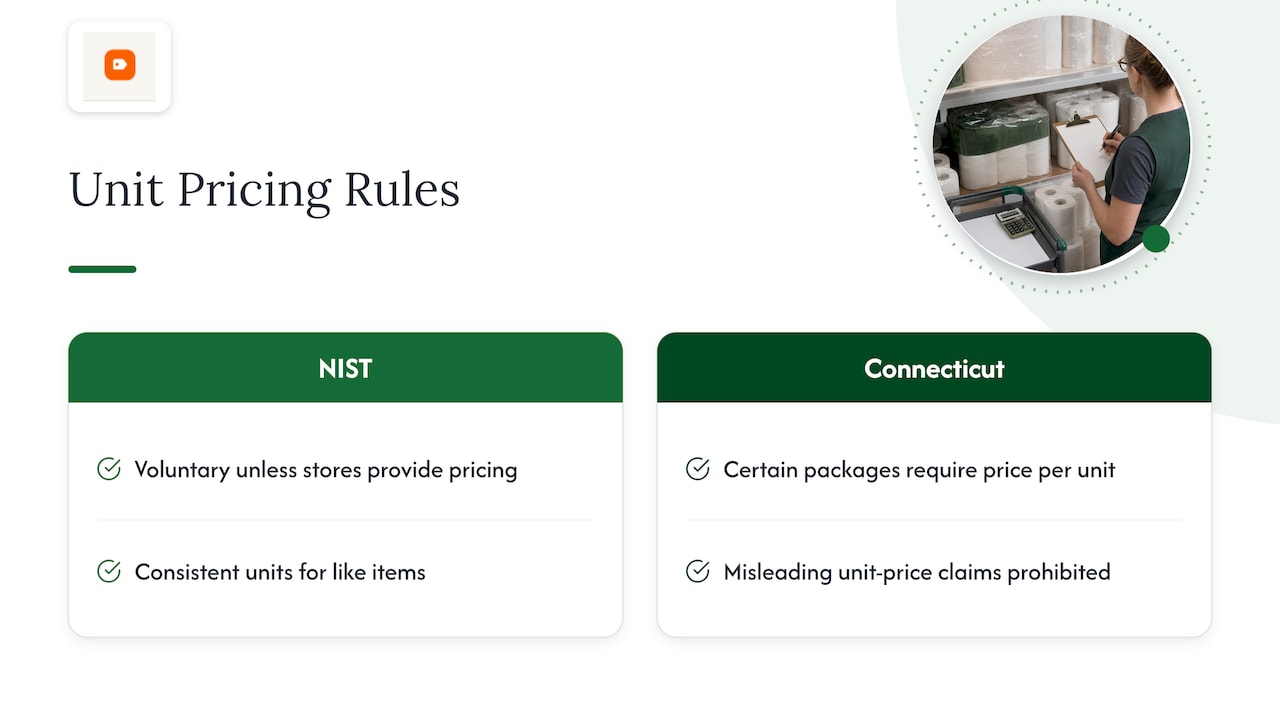
Unit pricing in US stores is mostly voluntary. NIST's guide says its uniform unit pricing regulation applies only when stores choose to provide unit pricing information, and that the unit of measure must be consistent across like items in a category. Some states go further. Connecticut's statute, for example, requires certain packages to display a conspicuous price per single unit of weight, measure or count and prohibits misleading unit-price statements. Because rules differ by state and store, do not assume every shelf tag lists a unit price, or that two tags use the same unit.
Shoppers lean on these labels. NIST reports that a 2024 Purdue University study found 82% of consumers use unit pricing when it is available, and describes good labels as the tool that lets people pick the best quantity-price ratio.
Our perspective
We built OutletPicks because the sticker price is the least useful number on a product page. A 6-pack, a 24-pack and a single bottle are not comparable until they are reduced to the same unit, whether that is a milliliter, a diaper, a sheet or a foot.
Our view is that bulk and multipacks are very often the better value, and the way to prove it is with data, not hunches. That is why we rank products by real cost per unit across Amazon and partner retailers and keep prices refreshed on a rolling cycle. Once every option sits on one scale, the winner is clear, whatever the pack size or brand.
We also think the right pack depends on the household. Our guides and original studies explain where the savings come from and where a promotion only looks like one. Pair a verified unit price with honest use and storage, and you get the full benefit of buying big.
Alex
Shop by unit price on OutletPicks
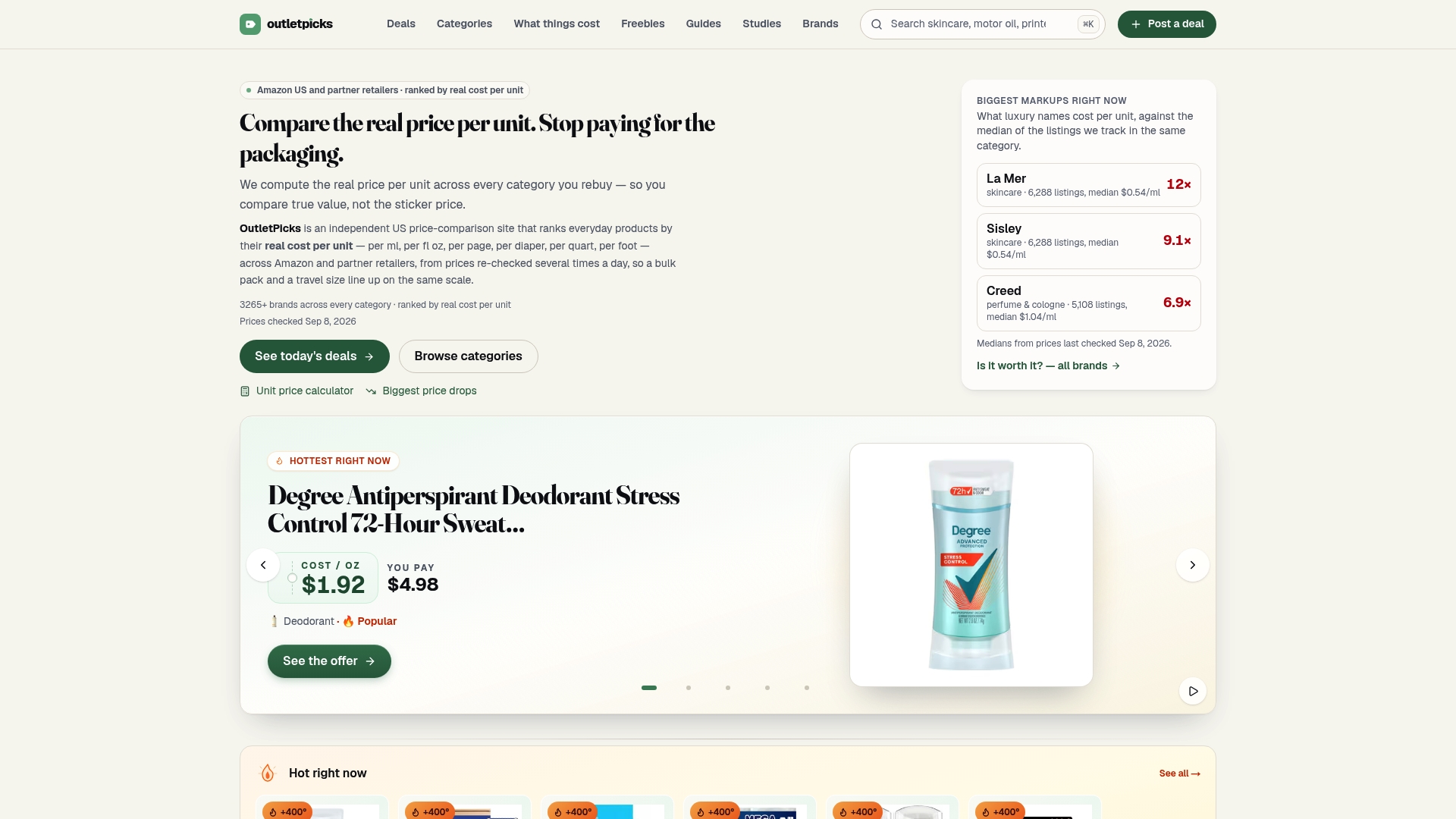
If you would rather skip the arithmetic, we have done it for you. OutletPicks ranks products by real cost per unit so you can see at once whether the single pack, the multipack or the bulk size is cheapest. Browse our categories such as skincare, hair care, baby care, pet food, light bulbs and cables, or see which retailers come out lower on our stores comparison.
For weekly deals, check the current printer ink on sale and liquid makeup on sale pages. You can also practice spotting the cheapest pack in Packle, our daily game, or build a list with our shopping checklists priced per unit. For a broader look at where bulk pays off, read when bulk beats single packs on staples.
Common mistakes to avoid
- Comparing totals. A $12 pack is not cheaper than a $20 pack until you know the count.
- Ignoring size changes. Brands sometimes cut contents while keeping the price. Recalculate each time you buy.
- Mixing units. Ounces and milliliters, sheets and rolls, feet and meters all need converting.
- Forgetting coupons. Subtract them before you compare, as Consumer Reports advises.
- Counting pieces that come as a set. Divide by the usable units, not the raw piece count.
- Buying more than you will use. A lower unit price on product you throw away is a higher real price.
FAQ
Is it better to buy in bulk or single packs?
Buy in bulk when the unit price is lower and you will use everything before it expires or is outgrown. Buy single packs for perishable items, new products and anything you cannot store. The unit price tells you which option is cheaper on paper, and your use tells you whether you will realize that saving.
Is a multipack always cheaper per unit than a single pack?
No. A multipack is usually cheaper per unit, but not always, and extension guidance confirms that larger sizes do not always cost less. Sales, coupons and odd pricing can make a single pack the better value, so divide each price by its count before you decide.
How do I compare a bulk case with a multipack?
Convert both to the same unit, such as price per roll or per ounce. Divide the price by the total count, subtract any coupon first, and compare the results. If either listing is a set whose pieces must stay together, divide by the number of usable units instead.
When is a single pack worth the higher unit price?
It is worth it when you would not finish the larger pack, when you are testing a product, or when a big purchase strains your budget this month. Paying slightly more per unit for something you fully use beats paying less per unit for something you throw out.
Sources
- How To Calculate Unit Price (Shopify)
- Uniform Unit Pricing: Tools for Consumers (NIST)
- A Guide to U.S. Retail Pricing Laws and Regulations (NIST)
- Unit Pricing: Compare Apples to Apples (University of Tennessee)
- Unit Pricing (Spend Smart Eat Smart, Iowa State University Extension)
- Display Price Per Unit for Multiquantity Items (Baymard)
- Want the Best Grocery Deals? Use This Savings Tool (Consumer Reports)
- Unit Price, Pack Price and Case Price (DataHalcyon)
- Best Practices for Designing Packaging to Prevent and Divert Food Waste
- Chapter 736, Unfair Sales Practices (Connecticut General Assembly)
- Cheap Trading Cards guide (Next Gen Cards)