
Bulk usually lowers your price per unit, but it does not always lower your total cost once you count waste, storage, and membership fees. The real answer depends on two things: how often you use the product and how long it stays good. Buy bulk for staples you go through quickly; stick with single packs for anything perishable or rarely used.
TL;DR:
- Bulk is most cost-effective for durable, non-perishable staples used frequently, with an average savings of around 27 percent across common items.
- Comparing unit prices requires dividing total cost by quantity and adjusting for waste, storage, and potential membership fees to determine true savings.
- Perishable items and rarely used products often negate bulk savings due to spoilage, limited storage, or better deals from smaller packs and sales.
- Hidden costs like storage space, waste, and financing fees can wipe out the unit-price advantage of bulk purchases.
- Using tools to calculate true per-unit costs and considering actual use habits helps avoid overpaying or wasting money on bulk buys.
Table of Contents
- How to compare prices correctly: unit-price basics
- When bulk usually wins: examples and categories
- When single packs are the better choice
- Hidden and recurring costs to include in the math
- A simple calculation: formula and worked example
- Practical buying checklist and storage tips
- What research and OutletPicks data show about typical savings and gaps
- What I'd actually tell a friend before they buy in bulk
- Find the real per-unit winner before you check out
- FAQ
- Sources
How to compare prices correctly: unit-price basics
The only honest way to compare two pack sizes is to break each one down to its price per unit, meaning price divided by quantity. A 20-ounce bottle for $4 costs $0.20 per ounce; a 60-ounce jug for $9 costs $0.15 per ounce, so the jug wins even though it costs more upfront.
To do this yourself:
- Find the total price and the total quantity (ounces, count, milliliters, or sheets).
- Divide price by quantity to get the per-unit cost.
- Compare that number across every pack size you're considering, not the sticker price.
Many shelf tags already show a unit price, but it can be missing on sale items or calculated inconsistently between stores. Watch for traps too: a "concentrated" formula may need less per use, a kit with bonus accessories isn't a fair comparison, and private-label versus name-brand quality differences can make a cheaper unit price a worse deal overall.
When bulk usually wins: examples and categories
Bulk tends to pay off for durable staples you'll use no matter what, since nothing is lost if the item sits in a closet for a few months. That includes paper towels, toilet paper, laundry detergent, batteries, and canned or shelf-stable goods.
- Paper goods and cleaning supplies routinely show lower per-unit prices at warehouse-style retailers.
- Coffee bought in larger bags often costs less per cup than small bags bought repeatedly, as long as it's stored properly.
- Canned goods and batteries rarely spoil, so buying a large quantity carries little downside risk.
Bulk buyers save an average of 27% across 44 common grocery products compared with smaller retail quantities, according to one recurring pricing analysis. Separately, a store-by-store price check found that one large-format retailer had the lowest price for 67% of cleaning products shopped in its sample, though a membership fee only pays for itself if you're buying enough staples regularly to offset it.
When single packs are the better choice
Bulk only saves money if you actually use what you buy before it goes bad or becomes useless. For a lot of households, that condition doesn't hold.
- Perishables like fresh produce, dairy, or bread often spoil before a large pack is finished, which erases any unit-price advantage.
- Items you use rarely, such as seasonal cleaning products or specialty ingredients, tie up cash and shelf space for little payoff.
- A well-timed sale, coupon, or smaller promotional pack can beat the bulk unit price outright, so it's worth checking both before you commit.
Single packs also make sense when storage is tight. An apartment with no pantry space turns a "deal" into clutter, and clutter has its own cost in time and frustration even when it's hard to put a number on it.
Hidden and recurring costs to include in the math
A lower unit price on the shelf tag is only the starting point. Several costs don't show up until later, and they can flip a bulk purchase from a saving into a loss.
- Storage costs real space: if you're renting a bigger apartment partly to store bulk goods, that space has a price.
- Waste functions like a hidden tax on your savings, since anything thrown out was paid for and never used.
- Membership fees, shipping charges, and credit card interest on a larger upfront purchase all eat into the discount.
Consumer Reports recommends checking unit pricing but cautions that a lower number on the tag can be wiped out by waste or by financing a bigger purchase than you can pay off right away. One practical fix: freeze or repackage anything perishable as soon as you get home, which is exactly the kind of advice that keeps a bulk discount from turning into spoiled food.
A simple calculation: formula and worked example
The formula is straightforward: unit price equals total price divided by total quantity, with everything converted to the same unit of measure before you compare.
Here's a worked example using paper towels, with numbers chosen only to illustrate the math:
| Pack | Price | Rolls | Price per roll | Adjusted for 20% waste |
|---|---|---|---|---|
| 24-roll pack | $10.00 | 24 | $0.42 | $0.42 |
| 24-roll pack | $10.00 | 24 | $0.42 | $0.42 |
On paper, the 24-roll pack looks cheaper per roll. But if you'd realistically waste a fifth of it to mildew or disorganized storage, the effective cost per roll rises above the smaller pack, following the adjustment method recommended by AARP: divide price per unit by one minus your estimated waste rate. As a quick mental rule, if you're confident you'll store and fully use an item within a few months, bulk will usually pay off; if you're not sure, run the math first.
Practical buying checklist and storage tips
Before you commit to the larger pack, run through a short list:
- Check the unit price, not the total price, side by side.
- Estimate how fast you'll realistically use it up.
- Check the shelf life or expiration window.
- Measure whether you actually have space to store it.
- Factor in any membership fee against how often you'll shop there.
Storage habits matter as much as the purchase decision. Freeze what you can, portion large packages into smaller containers, label dates clearly, and rotate stock so older items get used first. For bulk coffee specifically, airtight storage away from light and heat keeps beans fresher longer, as outlined in this coffee storage guide.
Pro Tip: Split a bulk purchase with a neighbor or family member so you both get the lower unit price without the waste risk of using it all alone.
What research and OutletPicks data show about typical savings and gaps
Published comparisons back up the general pattern: bulk usually costs less per unit, but the size of that saving and who actually captures it varies more than people assume.
- Bulk buying can save shoppers roughly 25% to 35% on many everyday goods compared with smaller retail sizes, per LendingTree's analysis.
- Academic research on bulk buying and cognitive costs found that low-income households buy in bulk less often, largely due to the mental effort of comparing prices and the practical burden of storage and upfront cash. The same research estimated that matching the bulk-buying habits of higher-income households could cut grocery spending for lower-income households by a small but meaningful percentage.
That gap is exactly what unit-price comparisons are built to close: when the per-unit cost is already calculated and laid out across 52 everyday categories, the decision takes seconds instead of mental math in the aisle.
What I'd actually tell a friend before they buy in bulk
My rule of thumb: calculate the unit price, subtract your realistic waste rate, and only then decide. If the product is durable and you go through it fast, bulk almost always wins. If you're guessing about either consumption or shelf life, you're gambling, not saving. Run the numbers with a unit price checklist before your next big purchase.
— Alex
Find the real per-unit winner before you check out
We built our unit-price tools so you never have to do this math by hand in a store aisle. Our unit price calculator converts any two pack sizes into a true per-ounce, per-count, or per-pound comparison in seconds, and our store comparison pages show you where the lowest real cost per unit actually lands across retailers, not just which one advertises the biggest discount.
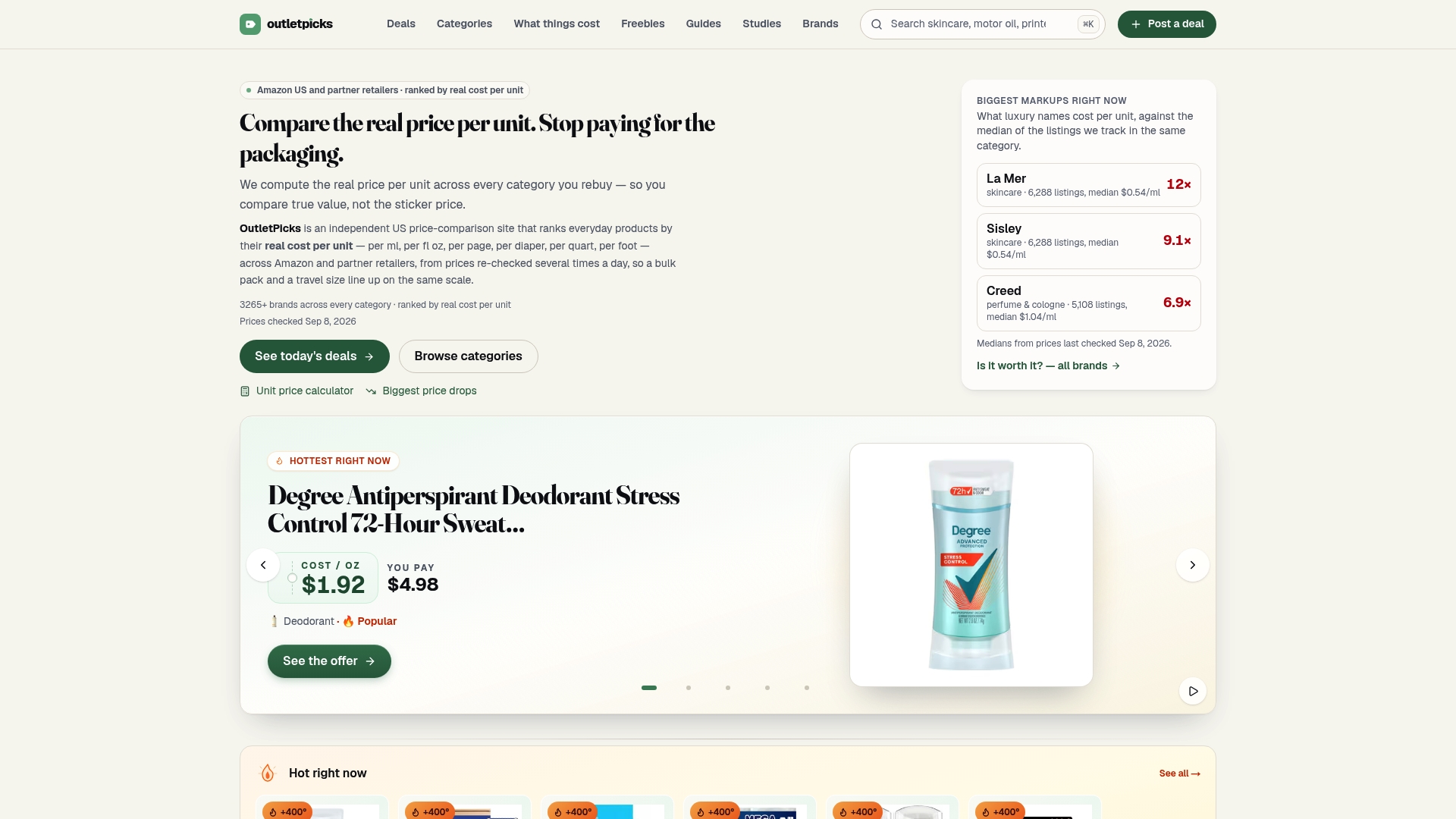
Pair that with our ready-made per-unit checklists and you've got everything from this guide in one place, ready to use before your next shopping trip. Start with our unit price calculator and see which pack size actually wins.
FAQ
Is it actually cheaper to buy in bulk?
Often, yes: bulk purchases can save shoppers an average of around 27% across common grocery products compared with smaller sizes, according to LendingTree. That saving shrinks or disappears if you waste part of the larger pack or pay a membership fee you don't use enough to justify.
What are the downsides of buying in bulk?
The main downsides are spoilage, storage limits, and tying up more cash upfront than a single pack requires. Consumer Reports also notes that financing a larger purchase on a credit card can add interest costs that erase the unit-price advantage.
Is it worth it to buy in bulk?
It's worth it when you use the product regularly, it has a long shelf life, and you have space to store it without crowding other purchases. For perishables, rarely used items, or anything you might not finish, a single pack is usually the safer financial choice.
How do food date labels affect whether bulk buying saves money?
Many shoppers throw out food early because they misread "best by" or "use by" labels as safety deadlines rather than quality estimates, which contributes to an average family of four losing about $1,500 a year to uneaten food. The USDA notes these dates generally reflect peak quality, not safety, except for infant formula, so understanding them can prevent needless waste on bulk perishables.
Sources
- Bulk buying insights — LendingTree
- Best prices on cleaning products and paper goods — Consumer Reports
- Less is More Expensive: Bulk Buying and Cognitive Costs — Mallick Hossain