
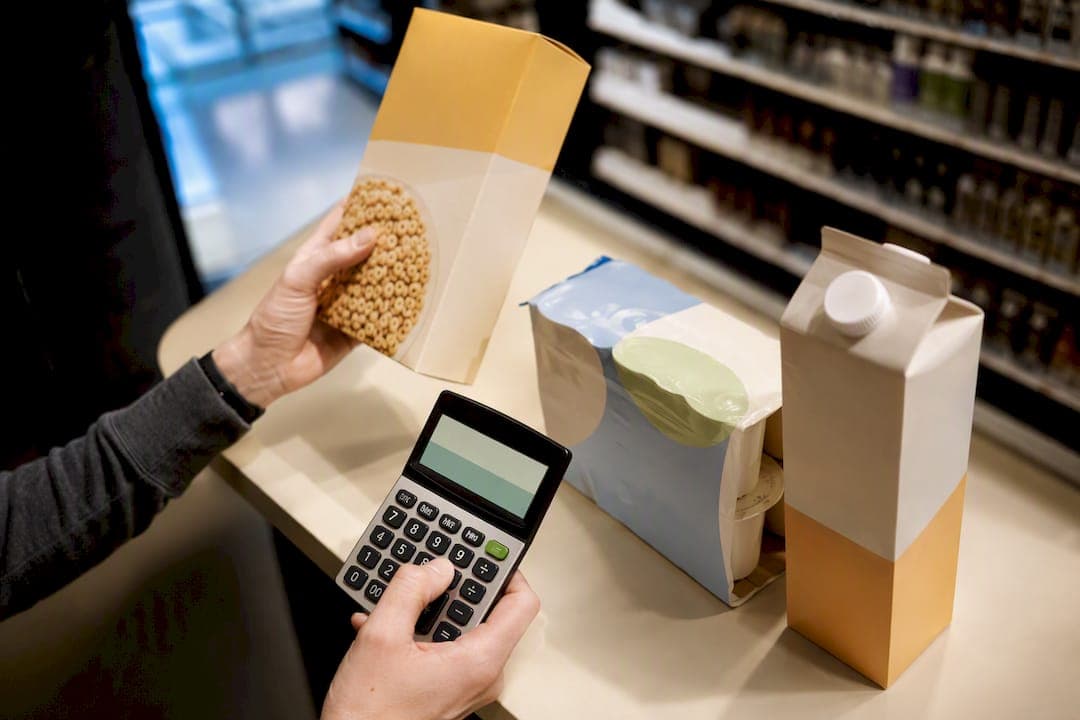
Divide the price by the quantity, using the same unit for every option, and buy whichever number is lowest. That is unit price, and it beats sticker price every time because it strips away pack size, branding, and marketing tricks. A quick savings percentage, calculated as the price difference divided by the higher unit price, tells you exactly how much that choice is worth.
TL;DR:
- Comparing unit prices requires converting all options to a common measurement unit, such as grams or milliliters, to avoid misleading results.
- Multipack comparisons must account for total quantity by multiplying individual sizes by pack count before dividing the total price.
- Discounts, coupons, and promotions lower the actual cost per unit, so recalculating after applying deals ensures accuracy.
- Shrinkflation can increase the true unit price without visible changes, making ongoing tracking of package weights essential.
- Using a specialized calculator tool simplifies these comparisons and helps identify the most cost-effective options during shopping.
Table of Contents
- How to Compare Unit Prices: The Formula and Quick Steps
- Normalizing Units: Convert Everything to the Same Base First
- Multipacks and Per-Item Math: Avoid the Most Common Mistake
- When Unit Price Can Mislead You: Discounts, Tax, and Shrinkflation
- Three Worked Examples You Can Copy at the Store
- Use a Unit-Price Calculator Before You Check Out
- Why Checking Unit Price Actually Pays Off
- Try the Outletpicks Calculator Before Your Next Grocery Run
- Sources
- FAQ
How to Compare Unit Prices: The Formula and Quick Steps
The math behind every price comparison is one line: unit price = total price ÷ total quantity. Buy a 32 oz jar of peanut butter for $6.40, and the unit price is $0.20 per ounce. A competing 16 oz jar at $3.68 comes out to $0.23 per ounce, so the bigger jar wins even though it costs more upfront.
Retailers usually display unit price per 100 grams, per ounce, or per item, depending on the category. Round to two or three decimal places, since price-per-unit differences often live in fractions of a cent that add up over a year of shopping.
Savings percentage finishes the job: (higher unit price − lower unit price) ÷ higher unit price × 100. Using the peanut butter example, $0.23 minus $0.20 divided by $0.23 gives a notable percentage of savings. The Federal Trade Commission recommends this exact calculation for measuring how much a smarter pick actually saves.
- Formula: unit price = price ÷ quantity
- Always express quantity in the same unit before dividing
- Savings % = (worst unit price − best unit price) ÷ worst unit price × 100
Pro Tip: Keep a calculator app open while you shop. Doing this math in your head in the cereal aisle is where most people give up and just grab the bigger box.
Normalizing Units: Convert Everything to the Same Base First
You cannot compare 500 grams to 1.1 pounds without converting one of them, and skipping this step is the single fastest way to pick the wrong product. Rutgers Cooperative Extension recommends converting every option to one common base unit before running any comparison: grams for weight, milliliters for volume, or per-item for counted goods.
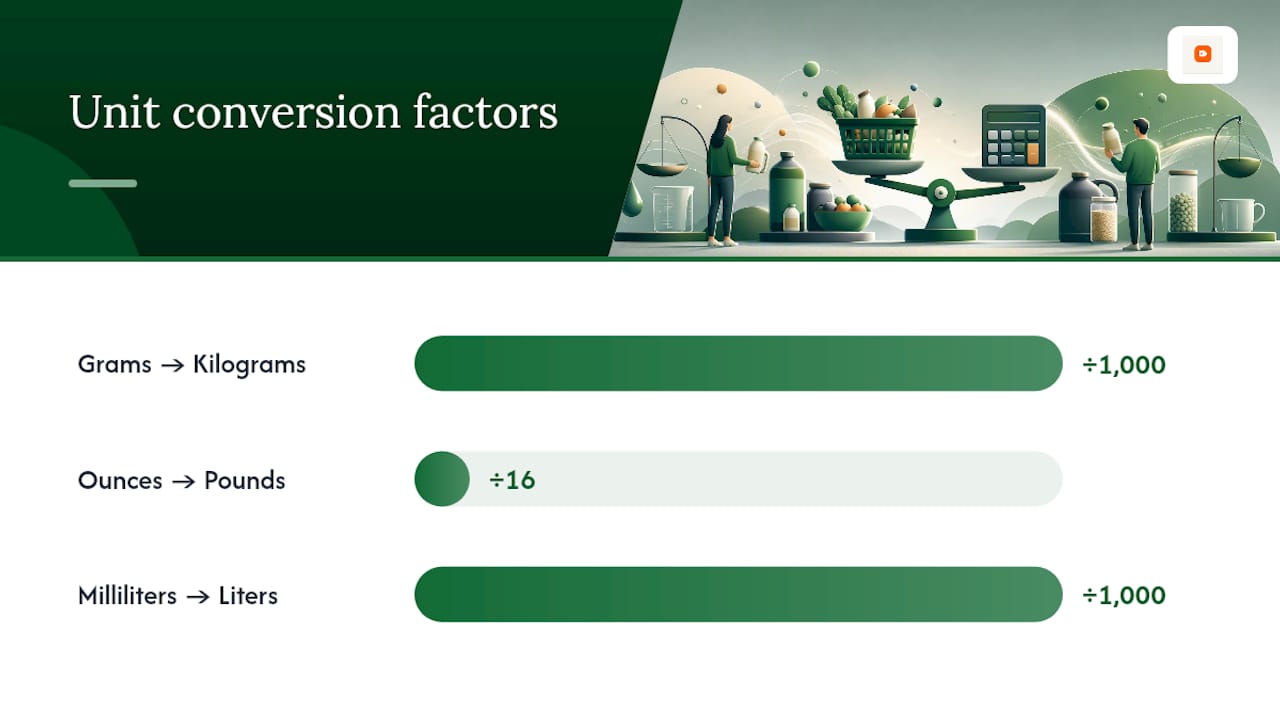
Here's the case that makes normalization impossible to ignore: 500 g at $2.50 works out to $5.00 per kg, while 1 kg at $4.00 is $4.00 per kg. That is a significant savings hiding behind two labels that look nothing alike until you convert them.
Common conversions worth memorizing:
- Grams to kilograms: divide by 1,000 (500 g = 0.5 kg)
- Ounces to pounds: divide by 16 (24 oz = 1.5 lb)
- Milliliters to liters: divide by 1,000 (750 ml = 0.75 L)
One hard rule: you cannot compare a weight-based price to a volume-based price without knowing the product's density, since a fluid ounce of honey weighs far more than a fluid ounce of water, according to guidance from Calcipedia's unit price tools. If a label shows one item in ounces (weight) and another in fluid ounces (volume), stop and check which measurement system you're actually working with. A grams-to-ounces reference makes weight conversions painless when labels mix metric and imperial units.
Multipacks and Per-Item Math: Avoid the Most Common Mistake
Multipacks are where unit-price comparisons fall apart, because shoppers price the pack instead of pricing what's inside it; for example, see detailed comparisons between Tobacco-free Snus and Vapes for category-specific insights. The fix is one extra multiplication step before you divide.
- Find the single-unit size (one diaper, one can, one bar).
- Multiply that size by the count in the pack to get total quantity.
- Divide total price by that total quantity, not by the number printed on the front of the package.
A 36-count pack of diapers at $18 is $0.50 per diaper. A 12-pack of 12 oz soda cans at $6 works out to 144 total ounces, or $0.0417 per ounce, a very different number than treating "12 oz" as the full quantity. NIST's unit pricing guide flags forgetting this multiplication step as the most common error shoppers make when comparing multipacks against single-unit alternatives.
When Unit Price Can Mislead You: Discounts, Tax, and Shrinkflation
A low unit price on the shelf tag isn't always the real number you'll pay. Coupons and multi-buy promotions ("3 for $10") lower the effective price per unit below what's printed, so recalculate after any discount applies rather than before. Sales tax rarely changes the ranking between two products, but it does change the total you'll actually spend, especially on larger purchases.
Concentrated products (laundry detergent, juice concentrate, coffee pods) need a per-use adjustment, since a smaller container that yields more servings can beat a bigger one that dilutes weaker.
Shrinkflation is the sneakiest one: a bag that used to hold 16 oz now holds 14 oz at the same sticker price, quietly raising the real unit price. NIST's research on shrinkflation points to unit-price tracking as one of the only reliable ways to catch it, since the price tag alone won't tell you. Outletpicks has tracked cases where shrinkflation added up to 32% per unit without any change in shelf price.
- Recalculate unit price after coupons and multi-buy deals, not before
- Check per-serving or per-use cost for concentrates
- Compare package weight over time, not just price, to catch shrinkflation
Three Worked Examples You Can Copy at the Store
Numbers make this concrete faster than any explanation. Here are three comparisons using the exact formulas above.
The cereal example shows the classic case where the larger package wins once you normalize to kilograms. The multipack example flips the usual assumption, since eight small cups occasionally beat one large tub once you do the ounce math. The juice example shows why converting to a shared per-100ml basis matters when one label reads in milliliters and the other in liters.
Use a Unit-Price Calculator Before You Check Out
Running this math by hand for every item on a shopping list isn't realistic, which is why a calculator workflow beats mental arithmetic almost every time. Before comparing two products, check four things on the label: net weight or volume, pack count, the advertised shelf unit price, and the expiration date, since a lower price on something close to expiring isn't actually a deal.
To use a calculator or a tool like Outletpicks, enter the total price, the total quantity, and select the unit you want the result displayed in. The tool returns the cheapest option automatically and shows the percent savings between choices, the same process described by CalculatorLib's unit price tool.
- Check net weight/volume, not just the front-of-pack size claim
- Confirm pack count before trusting a printed "per unit" price
- Verify the expiration date on the cheaper option
Pro Tip: Store-printed unit prices sometimes use inconsistent reference units between brands on the same shelf. Recheck with your own calculator whenever two tags use different bases (per ounce vs. per pound) since that mismatch hides the real winner.
Why Checking Unit Price Actually Pays Off
Running these numbers on even five staple items a week compounds into real money over a year, especially in categories like diapers, cereal, and laundry detergent where pack sizes vary wildly between brands. Outletpicks exists because most shoppers don't have time to do this math in the aisle, so the site rechecks retailer prices on a rolling cycle and surfaces the true cost per unit automatically. Try it on three items you buy weekly and compare the results against what the shelf tag claims.
— Alex
Try the Outletpicks Calculator Before Your Next Grocery Run
Outletpicks turns the math in this guide into a tool you can use in under a minute. Instead of converting grams to kilograms in your head or multiplying pack counts on your phone's calculator app, the Outletpicks unit price calculator normalizes units automatically and ranks options by real cost per unit, whether you're comparing peanut butter jars or diaper multipacks.
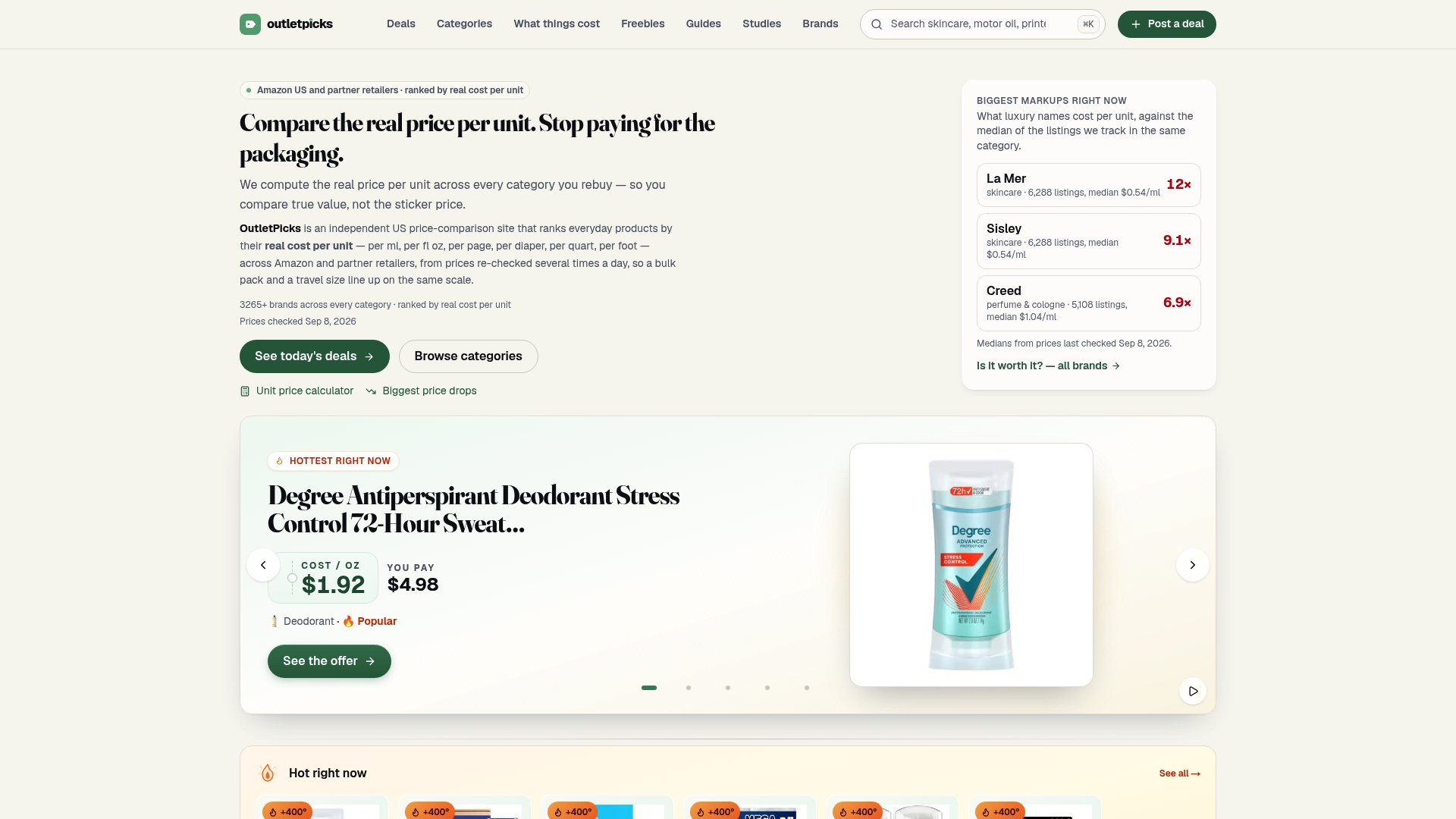
The site updates retailer prices regularly from various sources to keep rankings current rather than relying on old data. For repeat trips, the printable shopping checklists apply the same per-unit logic to a full cart instead of one item at a time. Start with the Outletpicks calculator on your next planned purchase and see whether the shelf tag was actually telling you the truth.
Sources
The formulas and normalization rules in this guide draw on the Rutgers Cooperative Extension unit price fact sheet, NIST's unit pricing best-practice guide, and the FTC's shopping savings guidance. For hands-on tools and category-level cost data, Outletpicks maintains ongoing cost-per-unit research across dozens of everyday product categories.
- Unit price and price comparison guidance (Rutgers Cooperative Extension)
- NIST - Unit pricing guide: best-practice approach (2025 edition)
- Unit Price Comparison Calculator — CalculatorLib
FAQ
How Do I Compare Unit Prices?
Divide each product's price by its quantity in the same unit, then pick the lowest result. Convert everything to grams, milliliters, or per-item counts first, since comparing mismatched units gives a meaningless answer.
What Is the Best Site to Compare Prices?
Outletpicks specializes specifically in real cost-per-unit comparisons across retailers, ranking products by price per ounce, per diaper, or per foot rather than sticker price alone. It refreshes retailer data on a rolling basis so the rankings stay current.
Is There a Site That Compares Prices?
Yes. Outletpicks compares prices across Amazon and partner retailers and normalizes them into per-unit figures so you can see true value regardless of pack size or brand.
Is There an App That Will Compare Prices?
Several unit-price calculators exist online, including tools that accept price and quantity and return per-unit cost and percent savings automatically. Outletpicks offers a browser-based calculator that handles this without requiring an app download.