
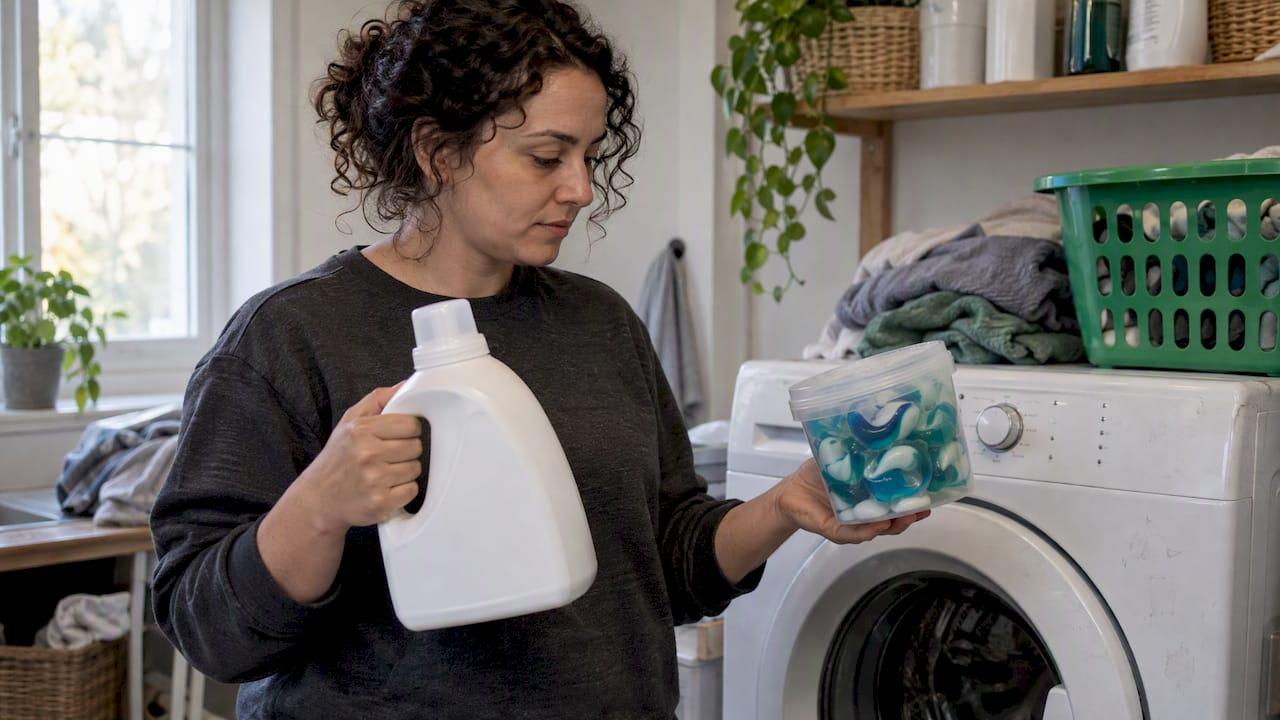
For most households, liquid detergent is the better value and the better cleaner. You pay less per load when you dose it correctly, you can pre-treat stains with it, and you can scale the amount to the size of the load. Pods win on convenience and on avoiding overpours. They lose on flexibility, on price per load in most cases, and on child safety. Below is how to check the math for the exact products on your shelf, because the sticker price of a tub or a jug tells you almost nothing.
TL;DR
- Liquid usually costs less per load than pods, and it lets you use a half dose for small or lightly soiled loads. A pod is always one full dose.
- In lab testing, Consumer Reports found liquids earned the top overall scores, while some detergent sheets scored far lower.
- Pods are more dangerous than liquid for children aged 5 and younger, per Poison Control. Households with toddlers should think hard before buying them.
- Compare by price per load (or per ounce of detergent), never by package price. Pod count, load claims and concentration all differ by brand.
- Cold-water formulas matter more for your energy bill than the format you choose.
Table of Contents
- How pods, liquid and sheets actually differ
- Cost per load: the only number that matters
- Cleaning performance: what lab tests show
- Safety: the part price tables leave out
- Energy and environment: format is not the main lever
- Our take at OutletPicks
- Which one fits your household
- Compare prices before you buy
- FAQ
- Sources
How pods, liquid and sheets actually differ
All three formats do the same job: they deliver surfactants, enzymes and brighteners to your wash. What changes is how the product is dosed, how concentrated it is, and what it comes wrapped in.
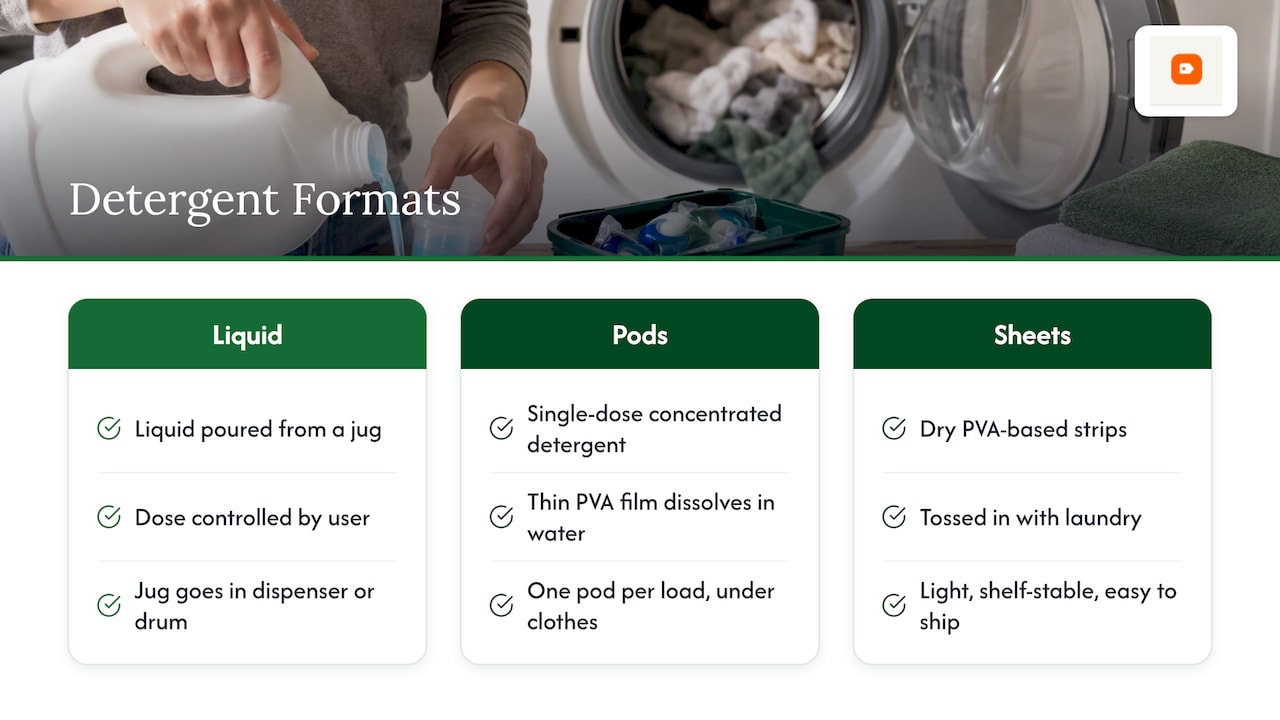
Liquid is poured from a jug into the dispenser or the drum. It is the most common format on grocery shelves. You control the amount, and you can rub it directly into a collar or a grease spot before the wash.
Pods are single-dose packets of concentrated detergent inside a thin film of PVA (polyvinyl alcohol) that dissolves in water. One pod per load, in the drum, under the clothes.
Sheets are dry strips, also built on PVA, that you toss in with the laundry. They are light, shelf-stable and easy to ship.
The Spruce's guide to detergent types and Maytag's help page on powder, liquid and pod detergent both come to a similar conclusion: each format has a use case, and the right one depends on your machine, your laundry and your household.
Cost per load: the only number that matters
A 42-count tub of pods and a 100-ounce jug of liquid share nothing on the label that you can compare directly. The jug says "64 loads". The tub says "42 pods". Is a load the same thing in both cases? Often not. Liquid load claims are based on a manufacturer's chosen dose, which may be a small cap fill for a normal load. So you need to normalize.
The formula
- Find the real number of loads. For pods, that is the pod count. For liquid, read the dose line on the cap for a normal load and divide the total fluid ounces by that dose.
- Divide the final price by the loads. Use the price you actually pay, including any shipping and after any coupon or subscription discount.
- Adjust for your habits. If you routinely use a full cap on small loads, your real cost per load is higher than the label math suggests.
Here is a made-up example to show the method, not a real product price. Say a jug holds 100 fl oz and the cap dose for a normal load is 1.5 fl oz. That is about 66 loads. If the jug costs $15.00, you are paying roughly 23 cents a load. A tub of 42 pods at $15.00 is about 36 cents a load. Same sticker price, very different cost per use. Swap in your own numbers and the answer may change, which is the point.
Our own breakdown of what a load of laundry costs walks through detergent, water, electricity and more. If you only want the detergent line, see our guide to true detergent cost per load for budget shoppers, which covers the range you can expect to pay across formats. For the general method behind this kind of math, our price per use guide shows how to turn any package into a cost per use, and our unit pricing article explains why the shelf tag can mislead you.
Why pods often cost more in practice
There are two reasons, and neither is only about price.
First, pods are priced for convenience and concentration. You pay for the premeasured dose and the film around it.
Second, you cannot use less than one. Consumer Reports notes that pods remove your ability to adjust the dose, which frequently means using more detergent than the load size and soil level call for. A half-full washer of gym shirts gets the same amount of detergent as a heavy load of towels. With liquid, you pour less and the next load costs less.
When liquid can cost more than pods
Liquid is cheaper only if you dose it honestly. Pour a generous glug on every load and the cost advantage shrinks, sometimes vanishes. If you know you eyeball the cap, measure with the cap line for a month and see how long a jug lasts. That is a better test than any label.
A quick comparison
| Liquid | Pods | Sheets | |
|---|---|---|---|
| Dosing | Adjustable | Fixed, one per load | Fixed, one per load |
| Cost per load | Typically lowest when dosed correctly | Typically higher | Varies widely by brand |
| Stain pre-treating | Easy, apply directly | Not possible | Not possible |
| Child safety risk | Lower | Higher | Not covered by the Poison Control page cited here |
| Storage and weight | Heavy jug | Compact tub | Lightest and flattest |
| Cold-water options | Many | Many | Check the label |
The cost row is a general pattern, not a promise. Check each product with the formula above, or look at brand-level comparisons on our brand versus brand page.
Cleaning performance: what lab tests show
Price means little if the clothes come out dirty and you rewash.
In its lab tests, Consumer Reports found that traditional liquids consistently outperformed pods and sheets on stain removal, with the top liquids scoring as high as 84 overall. Its separate review of laundry detergent sheets tested strips from two brands against liquid, and the results are worth reading if you are tempted by the "zero plastic jug" pitch. The magazine's guide reports that some sheet brands scored as low as 29.
The gap shows up most on body oils and protein stains such as sweat, food and grass. If you have kids, athletes or a job that gets you dirty, that matters.
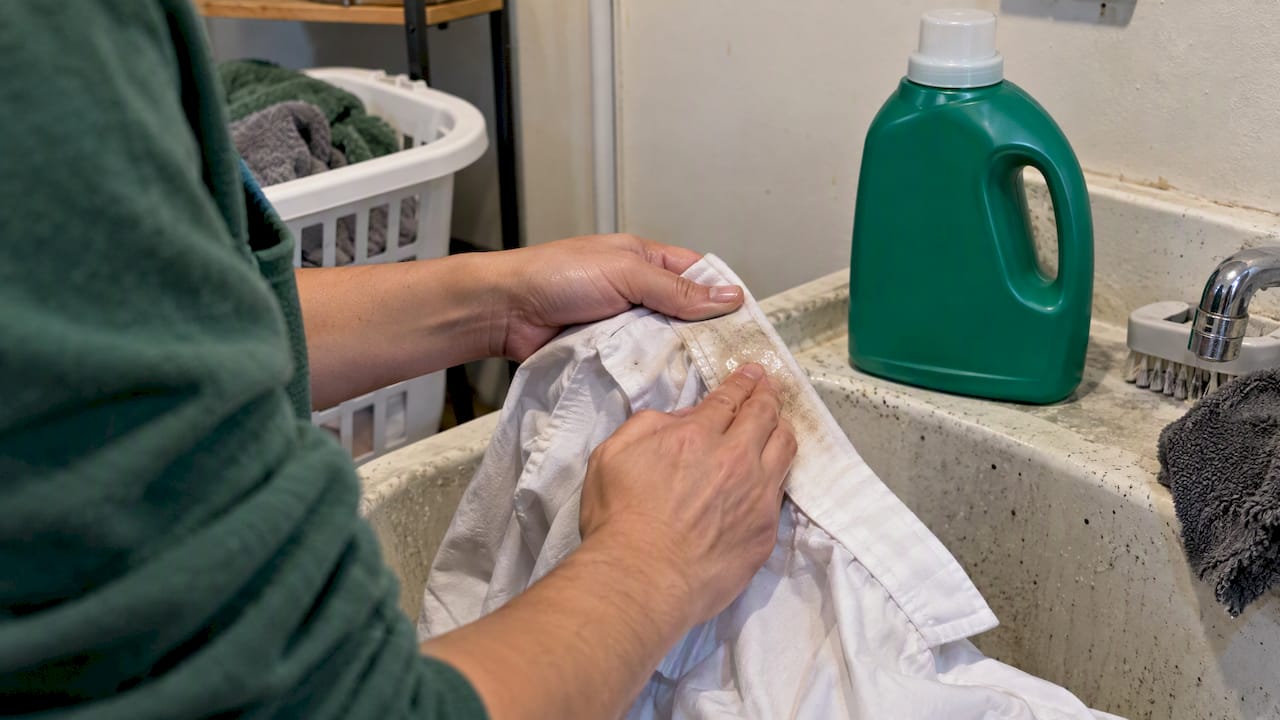
For tough spots, liquid has a practical edge: you can work it into the stain before the wash. Wirecutter's testing of detergents also found that a well-rounded liquid handled a wide range of stains and odors. For a non-detergent example of pre-treating, this walkthrough on getting candle wax out of clothes shows how much the steps before the wash matter for stubborn residue.
Safety: the part price tables leave out
If there is a child aged 5 or younger in your home, or one visits often, this section can outweigh every cost calculation.
Poison Control says laundry pods are a significant hazard for young children. Biting into one can cause coughing, choking, trouble breathing and, in serious cases, coma, and the detergent can irritate skin and burn eyes. Incidents have declined since 2015, but the organization still says pods are more dangerous than traditional liquid detergent and that no container is truly child-proof. Its separate page on liquid laundry detergent notes that any format can cause allergic reactions in some people and can be harmful if mishandled.
What to do about it:
- If you have toddlers, liquid in a high cabinet or a locked cupboard is the lower-risk choice.
- If you do use pods, keep them in the original opaque container, closed, out of sight and out of reach.
- If a child swallows or bites a pod, or gets detergent in the eyes, call Poison Control at 1-800-222-1222 straight away. Do not wait for symptoms.
For a wider view of what else under the sink needs attention, this guide on cleaning supply safety for families is a useful read.
Energy and environment: format is not the main lever
The biggest environmental and cost factor in a laundry cycle is heating the water. According to Tide's research page, 80 to 90 percent of the energy in a standard cycle goes to heating water. That page also states that neither sheets nor pods are automatically better than liquid. The right question is how much a product helps you clean successfully per load, including in cold water.
That has a direct budget effect. A cold-water formula, in any format, lowers your electricity or gas use. Tide is a detergent maker, so treat its framing as an industry view, but the point about heated water is easy to check on your own utility bill. Drying is the other big energy line: we break that down in what it costs to run a dryer.
On the plastic question: pods and sheets both rely on PVA film. A 2023 petition to the EPA from environmental groups asked the agency to require health and environmental testing of PVA used in pods and sheets, arguing that dissolving in water is not the same as fully biodegrading. That is a petition, not a ruling, and the debate is unsettled. What you can say safely: a sheet removes the rigid bottle, but it does not make the product plastic-free.
Our take at OutletPicks
We compare products by what they cost per unit, so laundry is a natural fit. The most common mistake we see is shoppers comparing a tub to a jug. A pod tub looks cheaper than a giant jug, and then the per-load math says otherwise. Another common mistake is trusting "loads" on the label without checking how big a load is.
Our view is simple. Keep a good liquid as your default, because it gives you the most control, handles stains best and tends to cost less per load. Measure it. If a pod or sheet format genuinely suits your life, for example in a small apartment where hauling a heavy jug up stairs is a chore, price it per load and accept that you are paying for convenience. Do not pay for convenience you do not use.
If you are not sure, buy the smaller pack of the format you are curious about, run it for a few weeks, and count how many loads you actually got. Then compare it with your usual liquid using the formula above.
— Alex
Which one fits your household
Families with young children. Liquid, stored out of reach. The safety gap outweighs any convenience gain.
Heavy-soil laundry (sports, work clothes, toddlers' meals). Liquid, because you can pre-treat and top-performing liquids lead in lab tests.
Budget shoppers doing many loads. Liquid, dosed with the cap line, and a cold-water formula. If you want a second, cheaper option for lightly soiled loads, keep it on hand alongside your main liquid, as The Spruce suggests.
Small households and travelers. Pods or sheets can make sense if you value the premeasured dose and light weight. Check price per load first.
Shoppers who hate overpouring. Pods or sheets remove the guesswork. But a measuring cap used properly gives you the same discipline for less money.
Compare prices before you buy
Detergent prices move often, and pack sizes vary so much that the cheapest-looking box is rarely the cheapest per load. We rank everyday products by their real cost per unit across Amazon and partner retailers, and we recheck prices on a rolling cycle. Browse the OutletPicks categories to see how unit-price ranking works for personal care and household items, or use the brand index to see which brands come out cheapest per unit.
FAQ
Are detergent pods cheaper than liquid?
Usually not. Pods are priced for convenience, and you cannot reduce the dose for small loads. Liquid typically costs less per load when you follow the cap line. Always divide the final price by the real number of loads to confirm for your products.
Are detergent sheets better than liquid?
Not on cleaning power in Consumer Reports' lab tests, where top liquids scored much higher than some sheet brands. Sheets are light and easy to store, and their per-load price varies widely by brand. They suit travel and small spaces better than heavy-soil laundry.
How do I work out laundry detergent price per load?
Divide the total fluid ounces by the dose for a normal load to get the number of loads, then divide the price you pay by that number. For pods and sheets, divide the price by the count. Use your real dose, not the one on the front of the package.
Do pods work in cold water?
Many do, if the product is formulated for it. Look for a cold-water claim on the label. Heating water accounts for most of a cycle's energy, so cold washing saves money in any format.
Are pods safe to keep with kids in the house?
They carry more risk than liquid for children aged 5 and younger, according to Poison Control. If you use them, keep them closed, in the original container, and out of reach. Call 1-800-222-1222 immediately after any exposure.
Sources
- Best Laundry Detergent Buying Guide, Consumer Reports
- Do Laundry Detergent Sheets Work as Well as Liquid? Consumer Reports
- What happens if a child eats a Tide Pod? Poison Control
- Liquid laundry detergent: Is it harmful? Poison Control
- Are Detergent Sheets or Pods Better for the Environment Than Liquid? Tide
- What's Best: Liquid, Powder, Pods, or Sheets? The Spruce
- Using Powder, Liquid, or Single Dose Pod Detergent, Maytag
- Stop Using So Much Laundry Detergent, Wirecutter
- Petition to the EPA on PVA, January 26, 2023