

Unit price is the cost of one standard measure of a product, like one ounce, one milliliter, or one count, so you can compare items fairly no matter the package size. The fastest way to find the best deal on Amazon is to check the $/unit figure Amazon sometimes displays under the price, or to calculate it yourself with total price divided by total units. Our Unit Price Calculator does this math instantly when a listing does not show it.
TL;DR:
- Amazon displays a $/unit price only when sellers supply accurate
unit_countandunit_count_typedata, which can lead to incorrect or missing figures.- Comparing units requires converting different measurement types, such as pounds to ounces or milliliters to fluid ounces, to ensure accurate cost comparison.
- Browser extensions and calculators automate the normalization and calculation process, but they depend on correct product data and can be misled by bundles and multi-item sets.
- Relying solely on package size or sticker price is unreliable because packaging and bundle structures often distort the true cost per unit.
- Regularly rechecking prices and using normalized cost allows consumers to make more informed decisions, especially as promotions and stock levels change.
Table of Contents
- How Amazon displays price per unit on product listings
- How to calculate unit price yourself with a simple formula
- Normalizing units so you're comparing apples to apples
- Tools and browser extensions that surface unit price automatically
- A step-by-step checklist for finding the best unit price
- Why normalized pricing beats a quick glance at the sticker
- Compare real cost per unit before you check out
- FAQ
- Sources
How Amazon displays price per unit on product listings
Amazon shows a per-unit price, like "$0.12/fl oz" or "$0.08/count," directly under the main price on many listings, but that label only appears when the seller has supplied the right data. Sellers must submit unit_count and unit_count_type attributes for many product categories, and Amazon uses those fields to calculate and display the figure, according to seller forum guidance on the requirement. When that data is missing or entered incorrectly, the per-unit price either disappears or shows a number that does not match what is actually in the box.
A few patterns to watch for as you browse:
- Two nearly identical products may show per-unit prices in different units, like one in ounces and one in count, making a side-by-side glance misleading.
- A listing with no visible $/unit at all usually means the seller never submitted the required attribute, not that the product lacks a measurable unit.
- Bundled or multipack listings sometimes display a per-unit price based on the outer pack rather than the individual item inside it.
Treat the displayed figure as a starting point, not a guarantee of accuracy, and verify it against the package details whenever the price looks unusually low or high for the category.
How to calculate unit price yourself with a simple formula
The core formula is total price divided by the number of units, and for multipacks it becomes total price divided by units per item multiplied by the number of items, as described in Shopify's unit price guide and the Omni Calculator unit price tool. Once you have that number for each option, the comparison is just arithmetic, no guessing required.
- Weight example: A 32-ounce bag priced at $6.40 works out to $0.20 per ounce, while a 16-ounce bag at $3.68 comes to $0.23 per ounce, so the larger bag wins on cost per ounce.
- Volume example: A 500 ml bottle at $9.99 is about $0.02 per ml, while a 1-liter (1,000 ml) bottle at $17.99 is about $0.018 per ml, making the liter bottle the better value.
- Count example: A 12-roll pack of paper towels at $14.99 is roughly $1.25 per roll, compared to a 6-roll pack at $8.49, which comes to about $1.42 per roll.
Pro tip using a real number: In the volume example above, switching from the 500 ml bottle to the 1-liter bottle saves about a noticeable percentage per milliliter, a gap you would never catch by comparing sticker prices alone, based on the unit price formula from Omni Calculator.
Normalizing units so you're comparing apples to apples
The most common mistake in unit-price comparisons is comparing two different measurement types, like ounces against pounds or milliliters against fluid ounces, which produces numbers that look comparable but are not. Normalization means converting both options into the same unit before you divide by price, a step both Shopify and Omni Calculator flag as the step shoppers skip most often.
A few conversions come up constantly when shopping on Amazon:
- Weight: 1 pound equals 16 ounces, so a 2-pound bag is 32 ounces before you compute anything.
- Volume: 1 fluid ounce equals 29.5735 milliliters, which matters when one listing is in fl oz and another is in ml.
- Small volumes: 1 milliliter equals about 0.0338 fluid ounces, useful for travel-size or sample products.
- Cups: 1 fluid ounce equals 0.125 cups, handy for recipe-sized liquid comparisons.
Quick example: if one listing is priced per pound and another per ounce, convert the pound price by multiplying by 16 first, then compare the two per-ounce figures directly rather than trusting the sticker numbers.
Tools and browser extensions that surface unit price automatically
A number of free browser extensions, including listings like Amazon Unit Price on the Chrome Web Store, overlay a calculated $/unit figure directly onto Amazon search results and product pages as you browse. These tools pull the price and package size from the listing and do the division automatically, which saves time when you are scanning dozens of similar products.
That convenience comes with real limits:
- Extensions depend entirely on the seller's listing data, so a missing or wrong
unit_count_typeproduces a wrong overlay. - Mixed unit types across competing listings, like count versus weight, can still trip up an automated overlay the same way they trip up a manual glance.
- Bundles, variety packs, and multi-item sets often confuse extensions because the "unit" is ambiguous.
Pro tip: Use a browser extension for quick, in-the-moment scanning, then double-check any close call with a dedicated calculator before you buy.
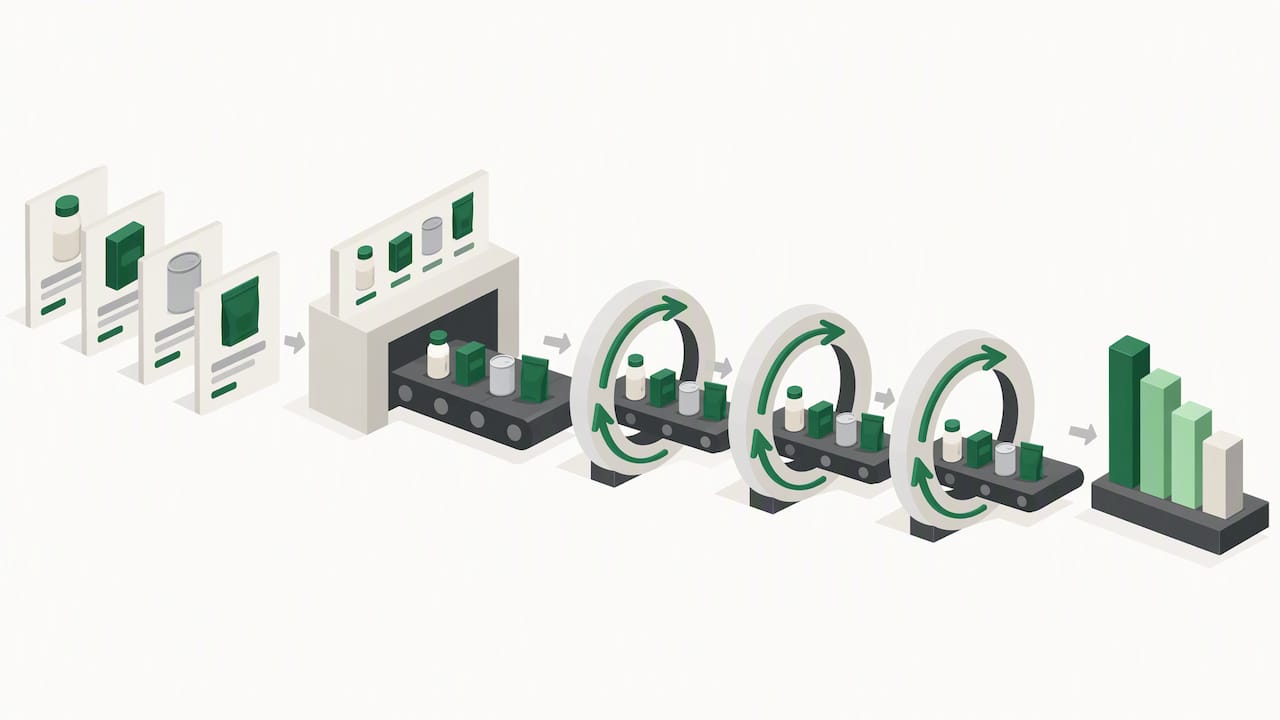
A useful Unit Price Calculator works differently from a point-in-time overlay. Instead of just reading one listing, it normalizes units across products and categories and rechecks prices on a rolling cycle, so the ranking you see reflects more than a single snapshot.
A step-by-step checklist for finding the best unit price
Running through the same sequence every time removes most of the guesswork from comparing packages on Amazon.
- Check for a displayed unit price. Look under the main price for a $/unit or $/oz figure, and confirm the unit type matches what you expect.
- Normalize if the units differ. Convert pounds to ounces, or milliliters to fluid ounces, using a quick conversion reference before comparing.
- Calculate or use a tool. Run the numbers yourself with total price divided by total units, or drop both listings into a calculator for an instant comparison.
- Factor in coupons, shipping, and pack price. A lower per-unit price on paper does not help if the only size available adds a shipping fee or if a clippable coupon flips the math on the smaller pack.
Pro tip: Watch for listings that show a flattering per-unit price calculated on the outer case rather than the single item you'll actually receive.
Some shopping checklists walk through this same process for specific categories, from diapers to skincare, if you want a version tailored to what you're buying.
Why normalized pricing beats a quick glance at the sticker
Most shoppers assume the bigger package or the lower sticker price is automatically the better deal, and that assumption is wrong often enough to matter. Pack sizes, bundle structures, and even packaging choices get designed in ways that make raw price comparisons unreliable, which is a big part of why we built a tool around normalized cost per unit rather than headline price.
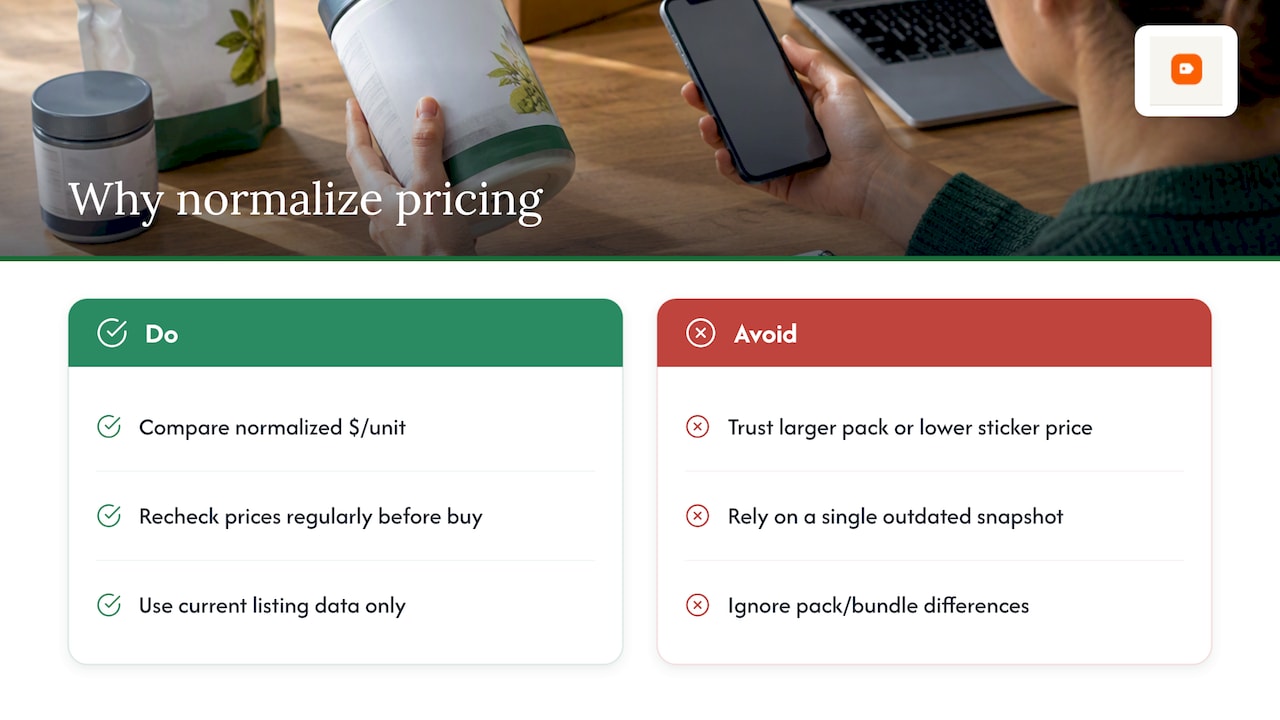
Rechecking prices on a rolling basis matters too, because a retailer's per-unit economics on a given listing can shift from one week to the next as pack sizes, promotions, and stock change. A single snapshot comparison can go stale fast, so the comparison you rely on should be current, not a number from months ago.
The point of normalizing isn't to make shopping complicated. It's to strip out the noise so the number you compare actually means what you think it means.
— Alex
Compare real cost per unit before you check out
A Unit Price Calculator lets you paste in price and package size for two or more products and get a normalized $/unit figure in seconds, without doing the conversion math by hand. It handles weight, volume, and count-based products, and it flags when you're comparing mismatched units so you don't accidentally judge a bad deal as a good one.
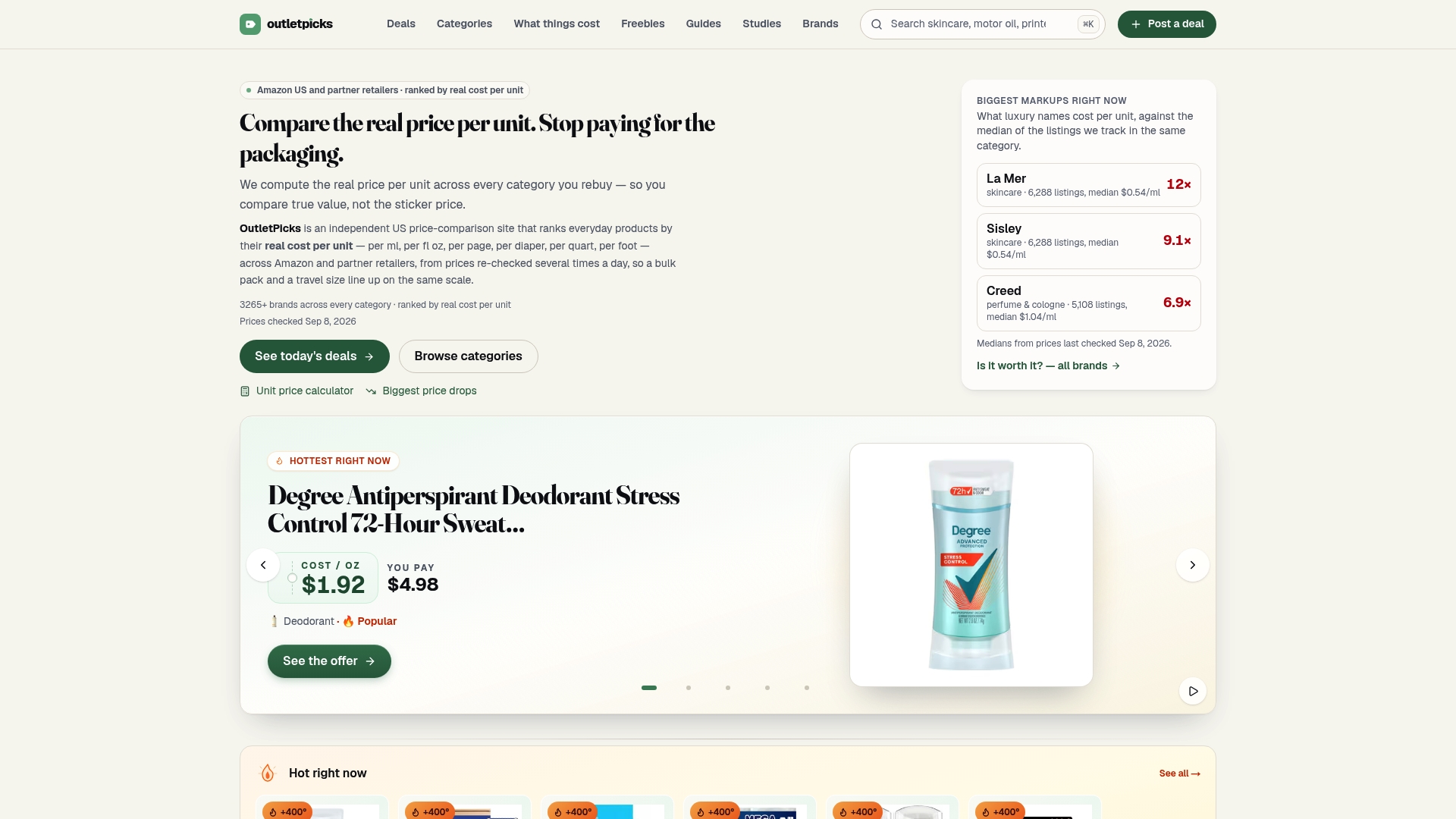
Beyond the calculator, some category pages rank products across skincare, hair care, baby care, pet food, and more by their real cost per unit, pulled from Amazon and partner retailers and rechecked on a rolling cycle rather than a one-time snapshot. If you shop the same categories repeatedly, a brand index ranked by cost per unit may be worth bookmarking too.
- Start with the Unit Price Calculator for a one-off comparison between two products.
- Browse category pages when you want a ranked view of an entire product type.
- Check shopping checklists for a step-by-step walkthrough tailored to specific categories.
FAQ
Can you search by unit price on Amazon?
Amazon does not offer a dedicated search filter sorted purely by unit price, though many listings display a calculated $/unit figure under the main price when the seller has supplied the right package data. For a true side-by-side ranking across multiple listings, a separate tool like our Unit Price Calculator or a browser extension is more reliable.
How much does Amazon take from a $100 sale?
Amazon's referral fees vary by product category and are set by Amazon, not by individual sellers, so there is no single flat rate across every sale. Sellers researching pricing strategy can review how fees and bundling choices affect listing prices in guidance like the Amazon pricing strategy overview.
What is the Amazon pricing tool?
Amazon provides seller-side tools and required listing attributes, including unit_count and unit_count_type, that determine whether a per-unit price displays to shoppers, based on seller forum guidance. For shoppers rather than sellers, our own Unit Price Calculator serves a similar purpose by calculating and normalizing $/unit across products.
Why do small decants or travel sizes cost more per unit?
Smaller packages often carry a higher per-unit price because fixed costs, like the container itself, make up a larger share of a small size than a large one. This pattern shows up clearly in fragrance decants, where per-milliliter pricing climbs sharply as bottle size shrinks, as explained in this breakdown of decant pricing economics.
Sources
- How to calculate unit price · Shopify
- Unit price calculator · Omni Calculator
- New unit count or price per unit requirements for product listings
- Amazon Unit Price — Chrome Web Store