
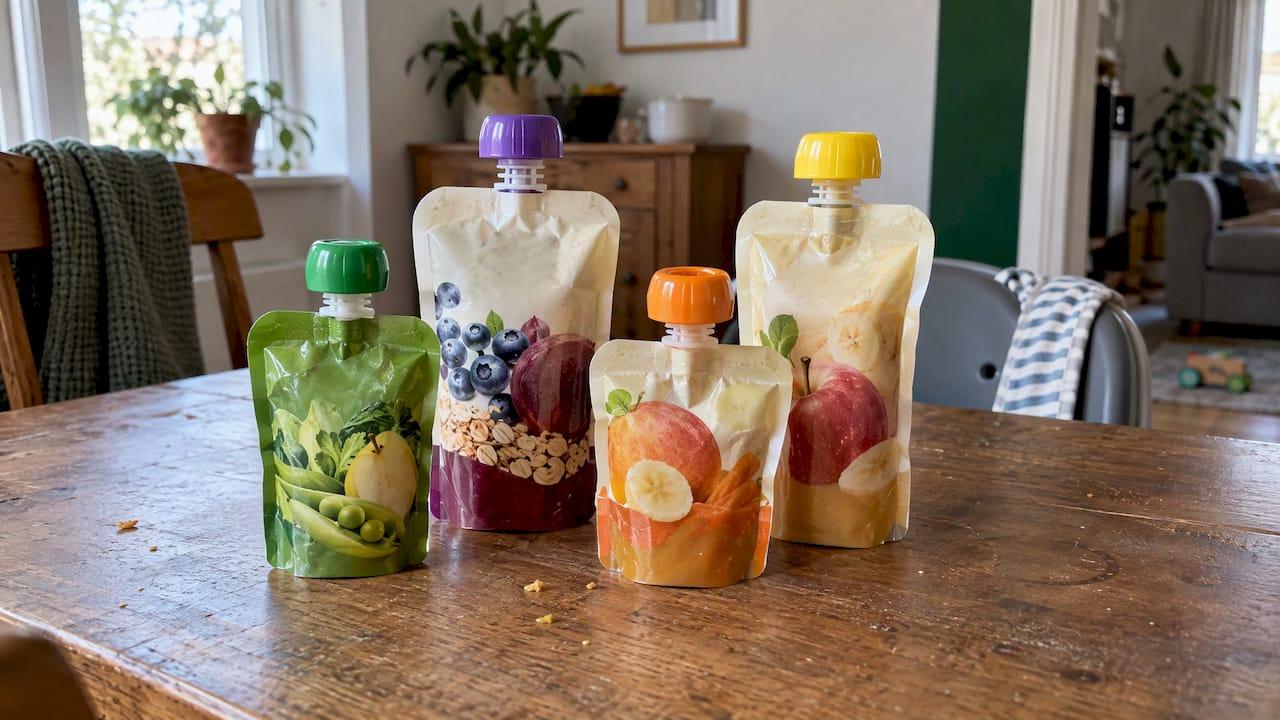
Most baby food pouches in the US land somewhere between about 30 and 70 cents per ounce, and the sticker price on the front of the box won't tell you where a given pack falls. A 3.5 oz pouch at $1.67 works out to 48 cents per ounce. A 9-pack at $14.99 is almost the same rate. A 4 oz pouch with a lower price tag can still cost more per ounce than a bigger one. This guide shows you how to do the math in ten seconds, what the typical numbers look like, and when the cheapest ounce is not the best buy.
TL;DR
- Divide the final price by the total ounces in the package. Total ounces means pouch size times pouch count.
- Typical single pouches cost roughly $1.00 to $2.00 for commercial brands and $1.50 to $2.50 for organic, which is around 30 to 70 cents per ounce depending on pouch size.
- Pouch size matters as much as brand: 3.2, 3.5 and 4 oz pouches sit side by side on the shelf, so only the per-ounce figure compares them fairly.
- Subtract coupons and sale discounts before you divide, and compare multipacks with singles on the same unit.
- Price per ounce is where you start. Ingredients, age stage and how you feed the baby decide the rest.
Table of Contents
- What baby food pouches cost per ounce in the US
- How to calculate price per ounce for any pouch
- What moves the cost per ounce
- Compare sale prices and regular prices fairly
- Perspective: why the ounce beats the sticker
- What to check besides price per ounce
- A simple routine for the best value
- Where OutletPicks fits in
- FAQ
- Sources
What baby food pouches cost per ounce in the US
Pouch prices are usually quoted per pouch, which hides the real comparison. One aggregated cost overview puts commercial pouches at roughly $1.00 to $2.00 per 3.2 oz packet as of June 2025, with organic options averaging $1.50 to $2.50 per unit. Translate that to ounces and you get a band of about 31 to 63 cents per ounce for conventional pouches and 47 to 78 cents for organic ones.
A real shelf price shows where a mainstream pouch falls inside that band. At one New York grocery, a 3.5 oz Beech-Nut Fruities pouch is listed at $1.67, which is 48 cents per ounce. A supermarket listing for a 9-count Gerber organic variety pack showed $14.99 for 9 pouches of 3.5 oz. That's 31.5 oz in total, or about 47.6 cents per ounce. Prices move week to week, so treat these as snapshots of the pattern, not a promise of today's shelf tag.
The pattern is what matters. A conventional multipack and a mid-priced single pouch can end up within a penny of each other per ounce. Premium brands with added protein or specialty ingredients can run well above a dollar per ounce, and no pack count will bring them down to the mainstream range.
| Example | Price | Total ounces | Price per ounce |
|---|---|---|---|
| One 3.5 oz pouch | $1.67 | 3.5 | 48¢ |
| 9-pack of 3.5 oz pouches | $14.99 | 31.5 | 47.6¢ |
| Hypothetical: one 4 oz pouch | $1.50 | 4 | 37.5¢ |
| Hypothetical: 12-pack of 4 oz pouches | $12.00 | 48 | 25¢ |
The last two rows are made-up numbers to show the effect of size. The 4 oz pouch looks only 17 cents cheaper than the 3.5 oz one on the shelf, but it's about 10 cents cheaper per ounce.
How to calculate price per ounce for any pouch
The formula is the same one extension programs teach for every grocery item. Iowa State University's Spend Smart Eat Smart puts it simply: divide the price by the ounces in the package. Their example is $0.94 for 12 ounces, which comes to $0.08 per ounce.
For pouches, the only extra step is working out total ounces.
- Find the ounces per pouch. It's printed on the front, usually as 3.2, 3.5 or 4 oz.
- Multiply by the count. A 12-pack of 3.5 oz pouches holds 42 oz.
- Take the final price. Use what you will actually pay, after coupons and sale discounts.
- Divide. $17.99 ÷ 42 oz is about 42.8 cents per ounce.
- Compare in the same unit. If one store shows per pound and another per ounce, convert before you decide. Our guide to price per pound to price per ounce shows the divide-by-16 step.
If you'd rather not do it by hand, a unit price calculator takes the price and size and gives you the rate. It also helps on trips where a pack says "12 count" but the ounces are in small print.
One trap: the shelf tag on some packs shows the unit price by the pouch, not by the ounce. A figure like $1.79/count tells you nothing about size, so ignore it and use the ounces.
What moves the cost per ounce
Pouch size
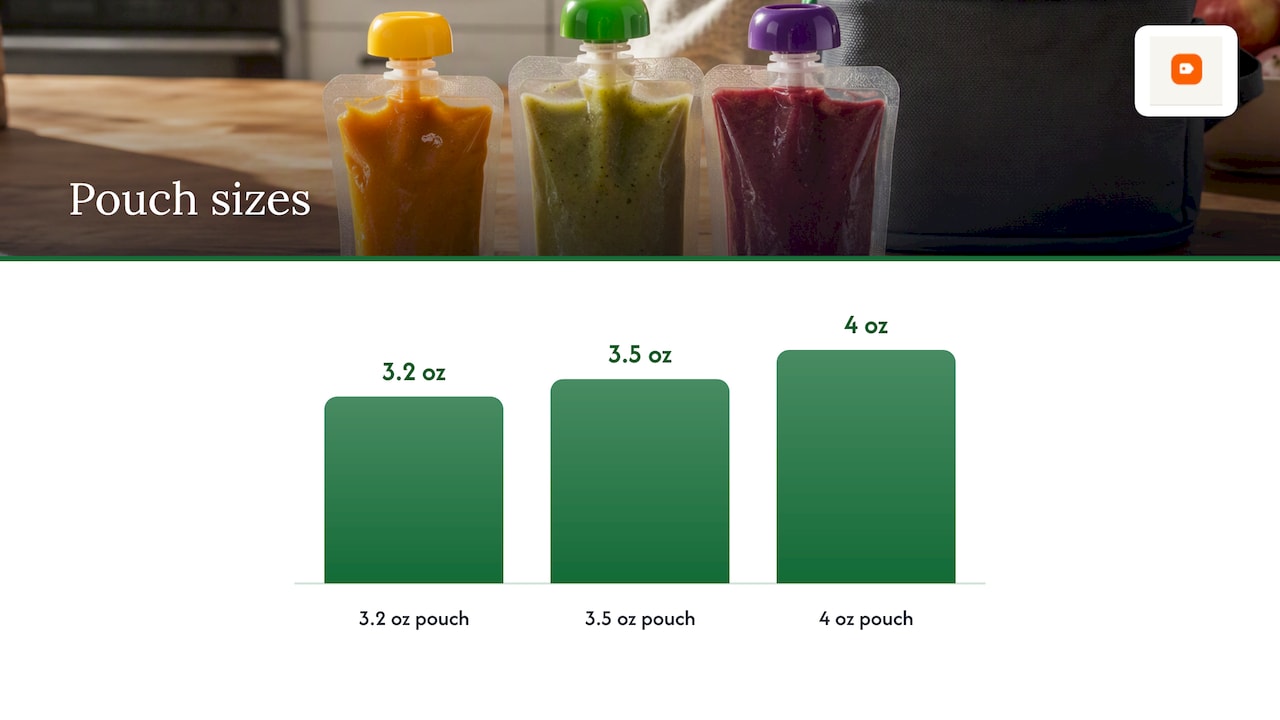
The three common sizes are 3.2, 3.5 and 4 oz, and they often sit next to each other at similar prices. A 4 oz pouch has 25% more food than a 3.2 oz one. If it costs 10% more, it wins. Always check the ounces before you reach for the cheaper tag.
Pack count and where you buy
Buying in bulk can lower the cost per unit. The same cost overview notes that bulk online purchases or wholesale club packs usually beat single pouches from a convenience store. The savings aren't automatic, though. As the 9-pack above shows, some multipacks cost about the same per ounce as a single pouch at a regular grocery. Do the math, don't assume.
Organic, brand and formulation
Organic sourcing, premium brands, and products with specialized formulas or added nutrition push the price up. That's a fair trade if it's what you want to feed your baby. Just know you are paying for it, and compare organic with organic, not with the cheapest conventional pack.
Stage and ingredients
Pouches for older babies and toddlers tend to be larger and often have more protein or grains. Those details change both the ounces and the value. A pouch that's mostly fruit puree and one that includes meat, beans or oats aren't the same product, even if the ounces match.
Compare sale prices and regular prices fairly
A deal only counts if the unit price drops. Consumer Reports advises taking off any coupons or discounts first, then converting the competing products to the same unit before you compare. Here's what that looks like with pouches.
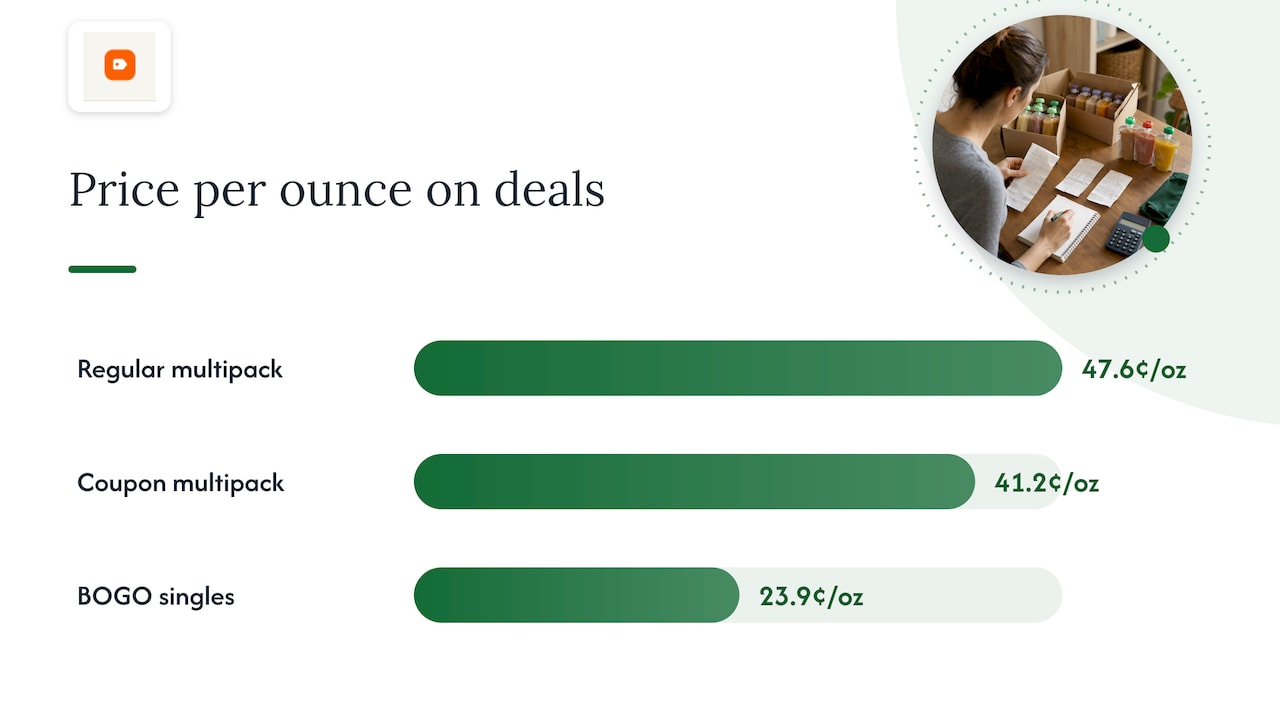
- Digital coupon on a multipack: A $14.99 pack with a $2.00 coupon costs $12.99. Divide $12.99 by 31.5 oz and you get about 41.2 cents per ounce, down from 47.6.
- Buy-one-get-one on singles: Two 3.5 oz pouches at a combined price of $1.67 cost 23.9 cents per ounce for 7 oz. It looks great, but check whether the regular price was inflated first.
- Subscription discount: Take the percentage off the final price, and add shipping if you pay for it.
A sale price on a small pack can still lose to the regular price on a larger one. If you want ideas for eating well on a budget beyond baby food, this piece on eating healthy and saving money covers the supermarket side of coupons and promotions.
Timing helps too. Baby products tend to go on promotion on a pattern, and we track that for diapers in our guide to the best time to buy diapers. Pouches often follow similar store-wide sales, so the same habit of waiting for a stock-up price applies.
Perspective: why the ounce beats the sticker
We built OutletPicks around one idea: the price on the package is the least useful number on the shelf. Pouches show this clearly. Pack counts of 6, 8, 10, 12 and 18, sizes of 3.2, 3.5 and 4 oz, and a mix of per-count and per-ounce shelf labels make it almost impossible to eyeball value.
Our approach is to turn every pack into a single unit and rank on that, whether it's per ounce, per diaper or per milliliter. We've seen the same pattern across categories: bigger isn't always cheaper, and a "deal" often looks smaller once it's divided out. Our study on shrinkflation shows how a shrinking package can raise the real cost without changing the sticker, and pouches are no exception when a size drops from 4 oz to 3.5 oz.
Our practical advice for parents: pick the two or three pouches your baby actually eats, work out the per-ounce price of each at two or three places you shop, and buy the multipack only when the per-ounce number backs it up. Don't stock up on a flavor before you know the baby will eat it. A cheap case of pouches that nobody eats costs more than a pricier pack that gets finished.
— Alex
What to check besides price per ounce
Unit price is the right first filter, but it isn't the full picture.
Pouch versus jar. Pouches cost more for the convenience: you can feed one-handed, toss it in a diaper bag, and skip the spoon. Jars usually cost less per ounce but need a bowl and a spoon. The cost overview above says parents should weigh that price premium over jarred food against their own routine. Many families use pouches for the car and jars at the table.
Homemade. Making puree at home can cost less, but it takes time and effort, and Iowa State's guidance on unit pricing says the same: unit price shows the best value, but you should ask whether you have time for less-processed options. Plenty of parents mix the two approaches.
Ingredients and fillers. Read the first three ingredients. Some pouches add apple or pear puree to stretch a more expensive fruit or vegetable. A cheap pouch that's mostly apple may deliver less of what you thought you were buying.
Age and texture. Check the stage label and talk to your pediatrician if you aren't sure what your baby is ready for. Value doesn't matter if the baby can't use the product yet.
Packaging and waste. Pouch caps and spouts aren't generally recyclable curbside, and that matters to some families. Reusable pouches filled at home are one option, though they take more work.
A simple routine for the best value
- Pick your shortlist. Choose two or three pouch types your baby already eats, in the same category (conventional or organic).
- Write down ounces. Note the pouch size and the count for each pack you see.
- Divide by the final price. Include coupons and loyalty prices, and add shipping when you order online.
- Set a target. Pick a per-ounce price you consider a good deal, such as the lowest rate you saw this month, and buy when a pack meets it.
- Recheck every few months. Prices change, and so do pack sizes. If you've seen a pouch drop from 4 oz to 3.5 oz, rerun the math.
A short list plus a target is easier than hunting for a deal each trip. It's the same way we suggest buying diapers: look at our guide on cost per diaper to see how the unit price approach works on another baby staple. Our guide to unit pricing for US shoppers also explains what the shelf label does and doesn't have to show.
If you like to practice, our daily games Packle and Bulkle ask you to guess which pack is cheapest per unit, and they're a fast way to sharpen your eye for pack math. For lists you can bring to the store, see our shopping checklists priced per unit.
Where OutletPicks fits in
OutletPicks is an independent US price comparison site that ranks everyday products by their real cost per unit, across Amazon and partner retailers, and rechecks prices on a rolling cycle. We cover baby care among many other categories, and you can see all of them on our categories page. Browsing the brand index is another way to see which names tend to come out cheaper once the pack size is stripped out. Use us to check the per-ounce number before you click through to buy.
One more place the same math helps: other products sold in ounces. This write-up on per-ounce pricing math applies the same divide-by-size approach to a completely different product, which shows how portable the habit is.
FAQ
What is a good price per ounce for baby food pouches?
For mainstream conventional pouches, about 30 to 50 cents per ounce is a common range, with organic options often above that. A 3.5 oz pouch at $1.67 works out to 48 cents per ounce. Anything under that on a brand you trust, after coupons, is a good buy.
Are baby food pouches cheaper in multipacks?
Sometimes. Bulk online or wholesale club buying can lower the cost per unit, according to cost overview data, but a 9-pack at $14.99 comes out to roughly the same per ounce as a single $1.67 pouch. Always divide the final price by total ounces before you assume a multipack saves money.
How do I compare pouches of different sizes?
Convert each one to price per ounce. Multiply the ounces per pouch by the number of pouches, then divide the final price by that total. Because pouches come in 3.2, 3.5 and 4 oz sizes, this is the only fair way to compare them.
Are pouches more expensive than jars?
Generally yes, you pay a premium for the convenience of the pouch. Whether it's worth it depends on how you feed your baby, where you are and how much time you have. Many parents use pouches on the go and jars or homemade puree at home.
Should I include coupons when I work out the unit price?
Yes. Consumer Reports recommends subtracting coupons and discounts first, then comparing in identical units. Otherwise a pack that looks pricier on the shelf may actually be the cheaper one at checkout.
Sources
- Average Cost of Baby Food in the United States
- Beech-Nut Fruities Stage 2 Baby Food, 3.5 oz listing
- Gerber 2nd Foods Organic variety pack, 9 x 3.5 oz listing
- Unit Pricing, Spend Smart Eat Smart (Iowa State University)
- Want the Best Grocery Deals? Use This Savings Tool (Consumer Reports)
- How to Eat Healthy and Save Money at the Supermarket
- Stop Overpaying for Beard Oil: Per Ounce Math