
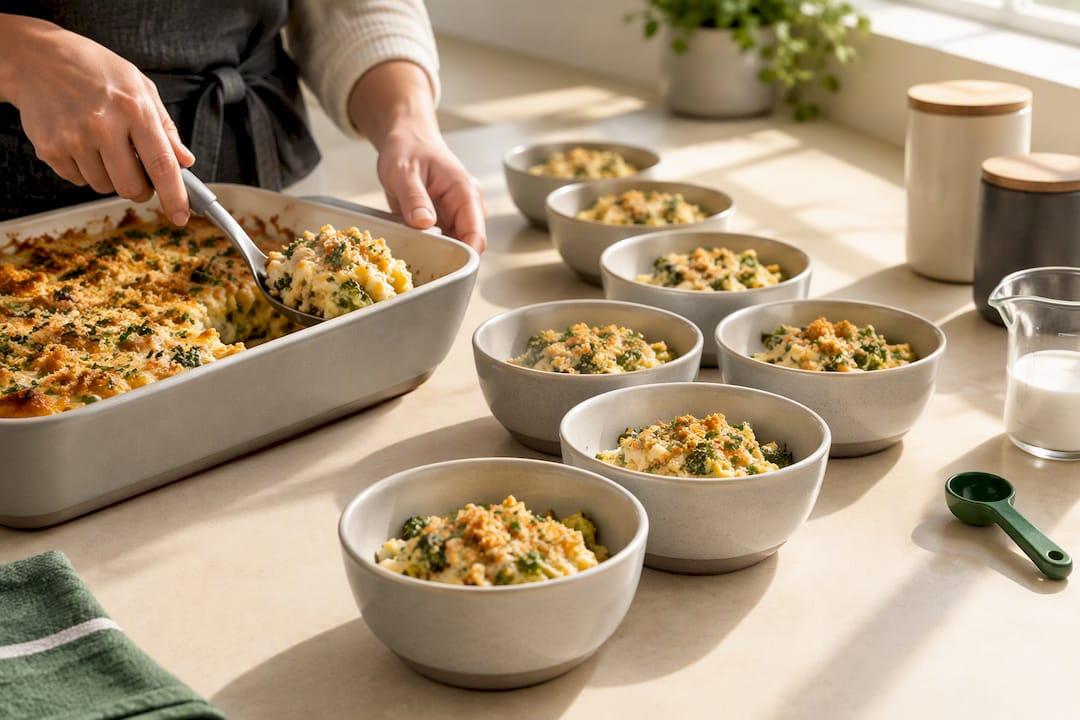
The price per serving formula is simple: total package price divided by total number of servings equals price per serving. For a recipe, swap in total recipe cost divided by recipe yield. Grab your price and serving count, convert units if the label numbers do not line up, then divide.
TL;DR:
- Comparing unit price per ounce or gram first reveals the best deal before considering the number of servings per container.
- Many labels list dual columns for per-serving and per-package values, making it easier to verify total servings accurately.
- Converting measurements to common units helps prevent errors when product serving definitions differ, ensuring accurate price comparisons.
- Hidden costs like prep time, equipment, or waste can significantly increase the true cost per serving, sometimes outweighing initial price differences.
- Using online calculators or conversion tools increases speed and accuracy when shopping across multiple brands or pack sizes.
Table of Contents
- What you need before you calculate price per serving
- Where to find servings per container on the label
- Normalize serving sizes before comparing prices
- Two worked examples: a package and a recipe
- Hidden costs that change the real price per serving
- Mistakes that throw off your per-serving math
- Calculators and converters that speed this up
- A three-step workflow that saves you time in the aisle
- Why OutletPicks makes cost-per-serving comparisons faster
- Sources
- FAQ
What you need before you calculate price per serving
The math behind price per serving is one division problem, but getting a correct answer depends on gathering the right inputs first. For packaged goods, the formula is: price ÷ servings per container = price per serving. For a homemade dish, it is: total ingredient cost ÷ recipe yield = price per serving, a version confirmed in an extension newsletter example showing a recipe example shows a dish costing $4.47 in total and serving eight people, resulting in about $0.56 per serving.
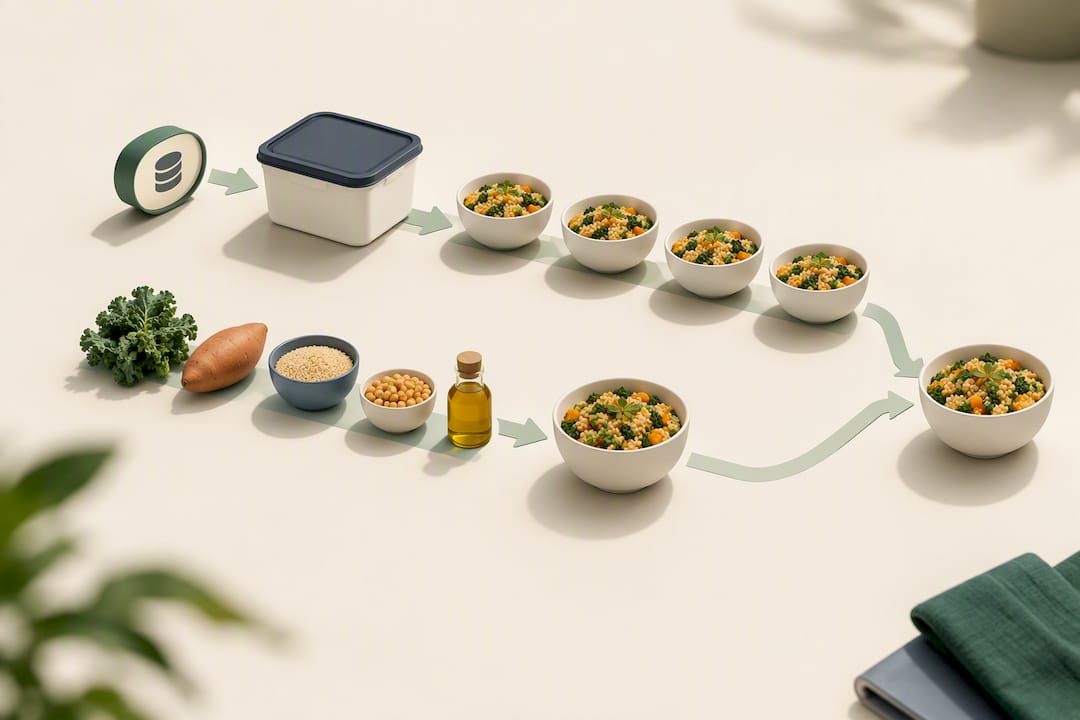
Use the price actually paid, including any discount applied at checkout, but leave sales tax out since it is not part of the product's value. A shelf tag, a receipt line, or an online listing all work as your price source as long as it matches the package size you are dividing by.
Before you calculate, gather:
- The price you paid or the listed shelf price.
- Servings per container, from the Nutrition Facts label or recipe yield.
- Net weight or volume, to catch mismatched serving definitions.
- Ingredient costs and total yield, for homemade dishes.
- Any unit conversion needed before you divide.
If two products define a serving differently, convert both to the same unit first. Dividing before converting is where most errors creep in.
Where to find servings per container on the label
The fastest way to check total servings is the Nutrition Facts label itself. Serving size and Servings per container sit at the top, above the calorie count, and the FDA's guidance on serving size confirms this is where shoppers should look first.
A few things to watch for:
- Some labels use dual columns, listing values per serving next to values per package, which helps confirm your serving count.
- Certain snack foods and beverages show nutrition for the whole package as a single serving, especially in smaller containers.
- Serving sizes reflect amounts people customarily eat, not a recommended portion, so your actual serving may differ from the label's.
- When the printed serving count looks off, divide net weight by the stated serving size in the same unit as a quick cross-check.
Some Nutrition Facts labels show dual columns with values per serving and per package, a format the FDA's interactive label guide explains was built specifically to help shoppers verify total servings without doing extra math.
Normalize serving sizes before comparing prices
When two products define a serving differently, comparing raw per-serving prices is misleading. That is where unit price, cost per ounce, per 100 grams, or per milliliter, earns its keep. University extension guidance on unit pricing describes it as the standardized way to compare value across brands and pack sizes, and it often reveals which pack actually offers the best deal before you ever touch serving counts.
A few conversions come up constantly:
- 1 ounce equals 28.3495 grams, useful when one label uses grams and another uses ounces.
- 1 cup equals 240 milliliters, a rounding convention set by FDA guidance on metric equivalents.
- 1 pound equals 16 ounces, handy for bulk pantry items sold by weight.
When definitions clash, convert both products to a common unit like grams to ounces or ounces to grams, compare the unit price, then convert back to a per-serving figure only if you need that specific number for a recipe or budget.
Two worked examples: a package and a recipe
Numbers make this easier to trust than formulas alone. Here is the packaged product first, then a recipe.
Packaged product example:
- Shelf price: $3.99 for a box of cereal.
- Servings per container listed on the label: 12.
- Divide: $3.99 ÷ 12 = $0.33 per serving.
- Cross-check with net weight if the servings count looks unusually high or low for the box size.
Recipe example, drawn from the same extension newsletter's per-recipe calculation:
- Add up every ingredient cost for the dish: $4.47 total.
- Confirm the recipe yield: 8 servings.
- Divide: $4.47 ÷ 8 = $0.56 per serving.
A unit price calculator does the same math faster. Enter the price, the package size, and the serving count, and it returns a normalized per-unit and per-serving figure without you touching a calculator app.
Pro Tip: If your per-serving answer feels off, round the price and servings to easy numbers and estimate the division in your head before trusting the exact figure. A recipe that seems to cost $0.06 a serving almost always means a decimal point slipped somewhere.
Hidden costs that change the real price per serving
The sticker price rarely tells the whole story, especially when comparing homemade food to something ready-made. Extension research on home food preparation notes that prep time and equipment use can flip which option is actually cheaper.
- Estimate an hourly rate for your prep time and add it to ingredient costs before dividing by servings.
- Amortize equipment, like a blender or slow cooker, across its expected number of uses rather than ignoring it.
- Add an expected waste percentage for trimming, spoilage, or spillage to your ingredient total.
Once you fold those in, a convenience product that looked pricier on paper sometimes comes out even or cheaper per serving.
Mistakes that throw off your per-serving math
A few habits quietly wreck an otherwise correct calculation.
- Treating the labeled serving size as the amount you actually eat, when your real portion might be double or half that.
- Skipping the unit price on shelf labels and relying only on the sticker price of a bigger-looking package.
- Forgetting that labels round serving sizes and gram amounts, which can shift a per-serving answer by a few cents.
Pro Tip: Do a rough per-ounce estimate in your head, then multiply by the number of ounces in one serving. If that number is close to your calculated price per serving, your math is probably right.
Calculators and converters that speed this up
Doing this math by hand works, but it is slow when you are standing in an aisle comparing five packages. There are online calculators that allow you to enter a product's price, size, and servings, and return a normalized cost per unit you can compare across brands instantly.
- Check the cost-per-unit index to see how a product's real per-unit price compares across retailers.
- Rely on shopping checklists priced per unit as a quick reference while you shop.
Retailer prices shift often, so price comparison sites often recheck listings on a rolling cycle rather than rely on a one-time snapshot, which keeps the comparisons useful weeks after you first look them up.
A three-step workflow that saves you time in the aisle
Most shoppers overthink this. Check the unit price on the shelf tag first, since it usually settles the comparison without any math. Verify the servings count matches what you expect for the package size, then compute the per-serving price only if you need that exact number for a budget or recipe. Sometimes the bigger, less convenient option is not worth the marginal savings for a small household, and that is a legitimate call, not a failure of math. Keep an eye on the cost-per-unit index for ongoing comparisons rather than recalculating from scratch every trip.
— Alex
Why OutletPicks makes cost-per-serving comparisons faster
Calculating price per serving by hand works, but comparing a dozen products across three retailers gets tedious fast. OutletPicks tracks real cost per unit across categories like skincare, hair care, fragrance, and more, so you can see which pack size actually wins before you commit to a cart.
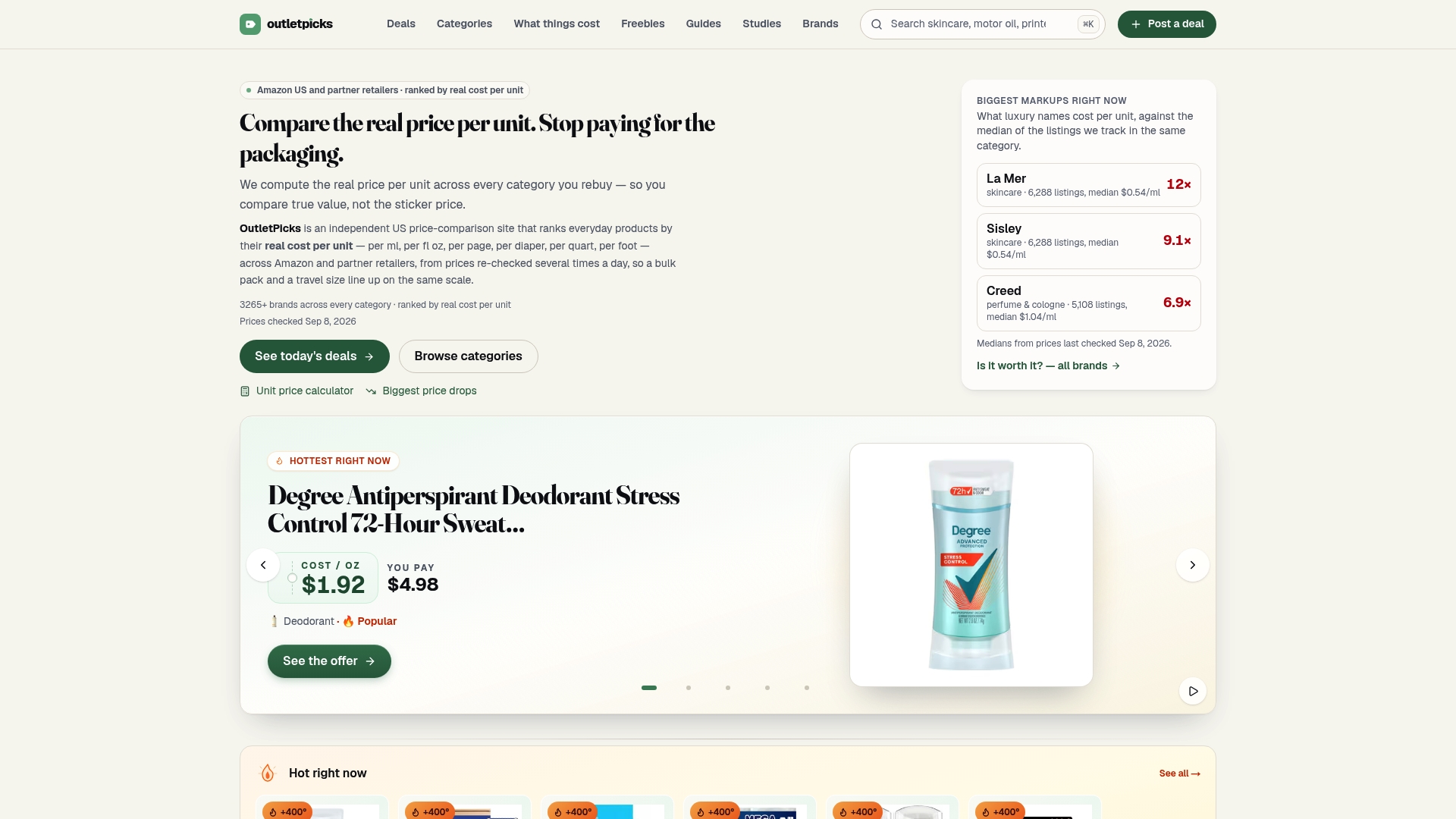
Browse the category pages to compare cost per unit across brands and pack sizes without running the math yourself every time.
Sources
- Eat Well — Extension newsletter example
- Serving size and the Nutrition Facts label | FDA
- Unit pricing: how does it work? — University extension guidance
- Interactive Nutrition Facts Label — What's on the Nutrition Facts Label (FDA)
FAQ
What is the basic price per serving formula?
Divide the total price by the total number of servings: for packaged goods, that is price divided by servings per container. For a recipe, divide total ingredient cost by recipe yield, the same method shown in an extension example where a $4.47 dish serving 8 people works out to $0.56 per serving.
How do I find servings per container on a label?
Look at the top of the Nutrition Facts label, just above the calorie line, where serving size and servings per container are listed together. Some labels show dual columns with per-serving and per-package values side by side to help you confirm the count.
Should I compare unit price or price per serving first?
Start with unit price, cost per ounce, per 100 grams, or per milliliter, since extension guidance on unit pricing treats it as the standardized comparison across brands and pack sizes. Calculate price per serving afterward only if you need that specific figure for a recipe or budget.
How do I convert serving sizes when labels use different units?
Convert both products to the same unit before comparing: 1 ounce equals 28.3495 grams and 1 cup equals 240 milliliters under FDA metric equivalent guidance. Tools like a grams to ounces converter can handle this quickly without manual math.
Does a bigger package always have a lower price per serving?
Not always. A larger pack can carry a higher price per serving once you factor in real unit pricing, which is why checking the unit price on the shelf label matters more than package size alone.