
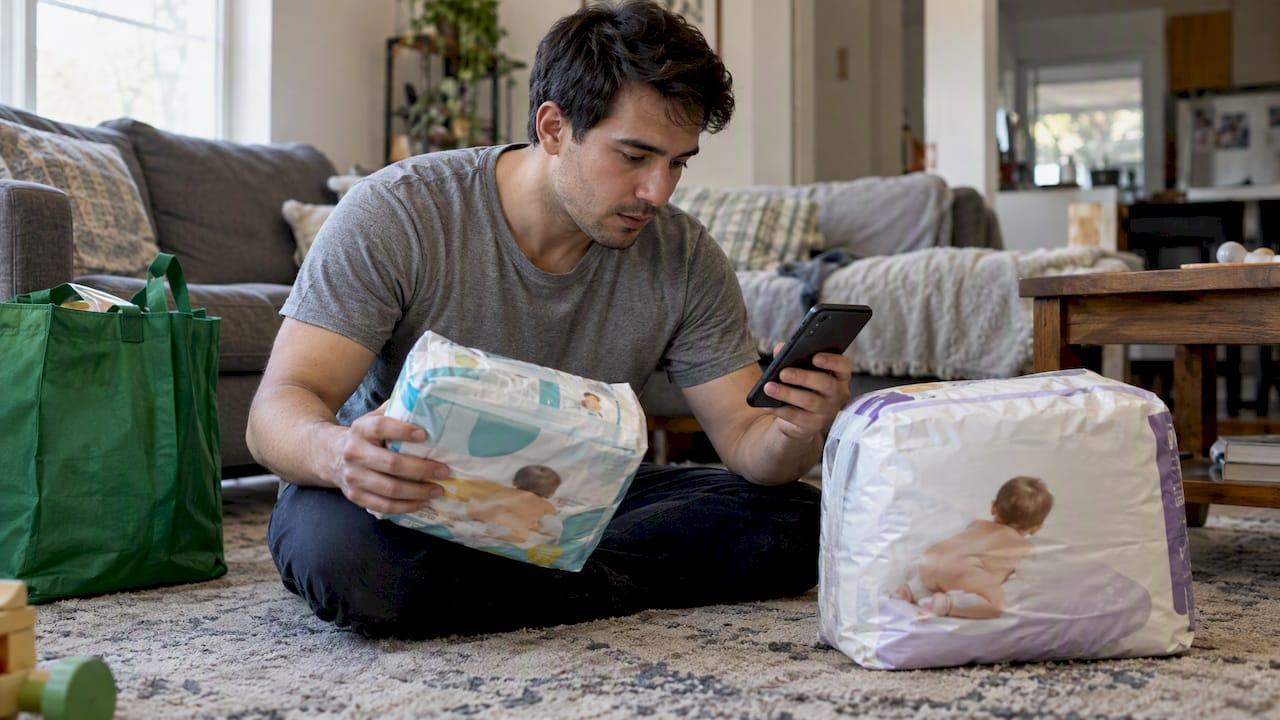
Diapers may go on sale during Prime Day, Black Friday and Cyber Monday, and major retailer seasonal events. Checking the true per-diaper price can help you spot a worthwhile deal. Buy in bulk only when that price sits well below your usual baseline. We track unit prices and price history at OutletPicks so you can verify a deal first.
TL;DR:
- Recurring delivery discounts, manufacturer coupons, loyalty rewards, and warehouse pricing can stack, but compare each offer with a fair base price before buying.
- Keep newborn and size 1 purchases small because babies outgrow them quickly; when stocking ahead, choose a size larger than the one currently worn.
- Divide each pack’s price by its diaper count, then compare the result with recent price history; typical costs run about $0.25 to $0.30 per diaper.
- Diapers do not expire in controlled conditions, but keep supplies cool and dry and verify return rules for unopened packs before placing a large order.
Table of Contents
- When do diapers go on sale during the year?
- How many diapers should you buy at once?
- Which tactics stack with a sale?
- How do you check unit price and price history?
- What should you check before you buy?
- Why we track diaper prices by the unit
- How to use OutletPicks to time diaper purchases
- FAQ
- Sources
When do diapers go on sale during the year?
Diapers cluster their deepest discounts around a few recurring events, so plan your big purchases around them.
- Prime Day: Amazon's Prime Day is a recurring shopping event. A 2026 press release shows how seriously brands treat it: Momcozy advertised up to 32% off on select baby items during Prime Day 2026. That is a gear example, not a diaper price, but it shows the event matters for baby products.
- Black Friday and Cyber Monday: Late November brings broad markdowns across retailers, and diaper brands often join in with bundle or gift card offers.
- Retailer seasonal promotions: Big-box stores, drugstores and warehouse clubs run their own multi-day events, often tied to back-to-school or spring and fall resets.
- Brand days and flash sales: These are time-limited, so set alerts instead of checking by hand.
- Weekly ads and pharmacy sales: Smaller, steadier savings show up here week after week, which suits parents who run out sooner than expected.
Diapers are a stockpile-friendly purchase. You use them every day, they take a predictable amount of space, and Consumer Reports notes they don't expire when stored in a temperature-controlled environment. That is why catching a real sale window is worth planning for.
How many diapers should you buy at once?
Your stock size depends on your baby's current size, how fast they are growing and how much supply you want. Healthline's guide gives daily-use estimates and typical pack counts by size, so start there. Newborns go through the most diapers per day, but they also outgrow sizes fastest, which is why caution matters at the smallest sizes.
Healthychildren starting small until you know which brand and size fit your baby, then buying in bulk once you do. It also cautions against over-stocking newborn or size 1 diapers and suggests buying a size up if you stock ahead.
Here is a simple way to size an order:
- Check your baby's current size and weight against our diaper size chart.
- Estimate daily diapers, then multiply by the days you want covered.
- Divide by the count per pack or box and round up to a whole package.
- Buy a size up if you are stocking ahead.
Estimate your baby's daily diaper use and the number of diapers in each box, then calculate how many boxes you'll need for the period you want to cover. This is only an example of the method, so use your own figures.
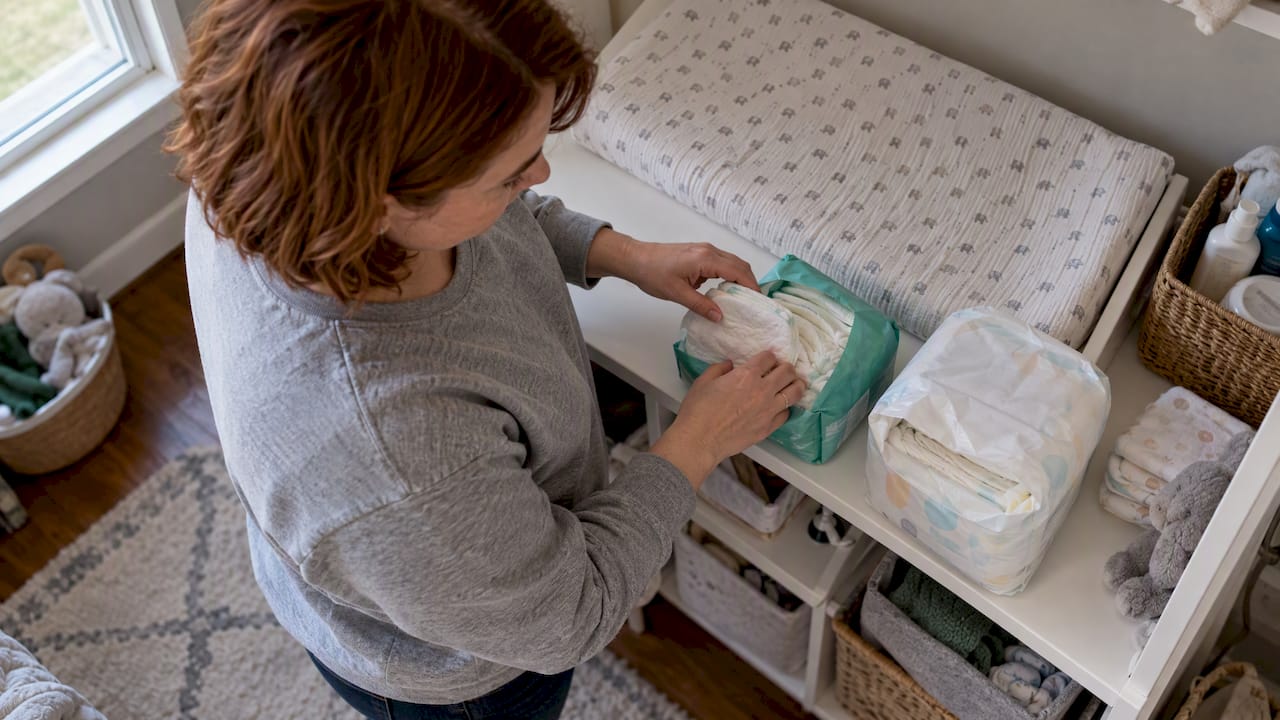
Pro Tip: When stocking ahead, consider keeping a supply one size up from what your baby wears now, and avoid building a large newborn stockpile.
Which tactics stack with a sale?
Waiting for a sale is only one lever. These combine with it:
- Subscribe & Save: Recurring-delivery discounts can beat a one-off sale when your usage is steady and the base price is already fair. We explain how to judge it in our guide to checking unit price and price history before Subscribe & Save, and our page of Amazon Subscribe & Save deals shows which ones are cheap per unit today.
- Manufacturer clubs and coupons: Brand reward programs and printable or digital coupons add savings on top of retailer promotions.
- Loyalty programs and store cards: Consumer Reports lists loyalty programs among its core ways to cut diaper costs. Store credit-card rewards and cashback layer on top.
- Warehouse clubs: Bigger quantities there often come at lower per-unit prices, according to the same Consumer Reports guide.
- Cloth hybrids: If you are weighing long-run savings, see our comparison of cloth diapers versus disposable.
Stack deliberately and skip panic buying. A discount layered on a fair base price beats a flashy banner on an inflated one.
Pro Tip: Write down your usual per-diaper price once. Every stack you build should land clearly below it.
How do you check unit price and price history?
The formula is simple: pack price divided by diaper count equals your per-diaper price. For context, Healthline reports typical per-diaper costs of about $0.25 to $0.30.
A "sale" label tells you nothing until you compare it with history. Consumer Reports' price tracker coverage explains that third-party marketplace sellers can swing prices and recommends using price history instead of panic-buying.
- Divide the price by the count for every pack, every time.
- Compare the result with your baseline and recent history.
- Walk away when a "deal" only matches your normal price.
We built tools around exactly this. Our cost per diaper guide includes a unit-price calculator, and the size chart shows the cheapest price per size.
What should you check before you buy?
Run through this list at checkout:
- Confirm your baby's current size and how many days of supply you need.
- Calculate the unit price and compare it with your baseline or recent history.
- Make sure you have room, and that storage stays cool and dry.
- Verify the return or exchange policy for unopened packs.
- Round up to whole boxes and favor sizes your baby will actually wear.
If any step fails, skip the sale. Another window arrives within weeks.
Pro Tip: Screenshot the unit price before you check out so you can compare it with the next sale.
Why we track diaper prices by the unit
We think the banner price is the least useful number on a diaper page. Pack sizes vary, so a big box can look like a bargain while costing more per diaper than the smaller one beside it. That is why we rank products by real cost per unit and recheck retailer prices on a rolling cycle. Use that number together with price history, and let the data tell you when a sale is worth stocking up for.
— Alex
How to use OutletPicks to time diaper purchases
We built these pages for exactly this decision, so run each stack-up through them before you pay:
- Our diaper size chart for weight, age and cheapest price per size
- Our category pages for deals across everyday products
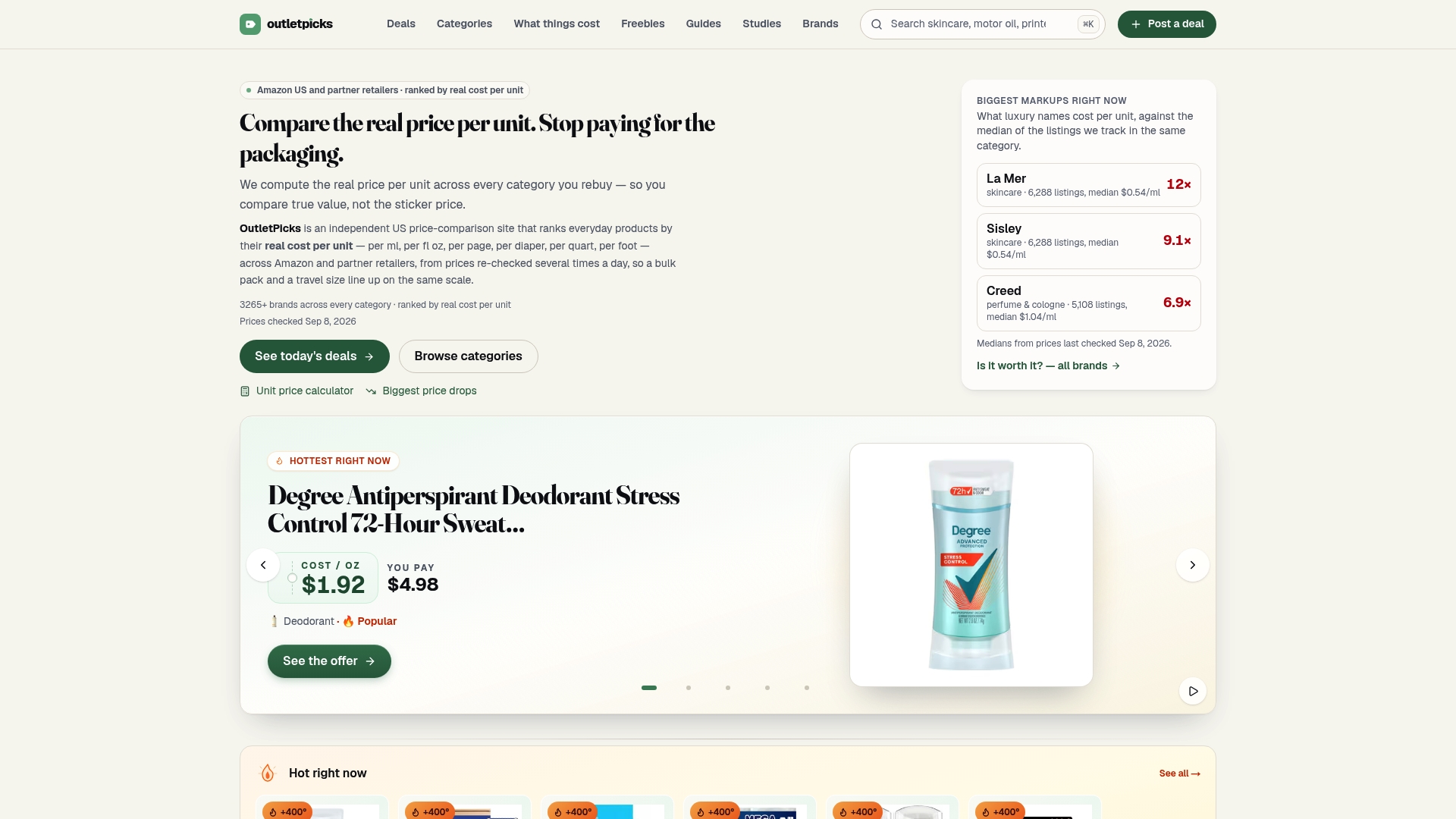
Before your next large order, check the unit price and price history with us, then buy only when the number beats your baseline. Start at our categories page and pick up the baby care deals.
FAQ
When is the cheapest time to buy diapers?
The deepest discounts tend to show up during Prime Day, Black Friday and Cyber Monday, and big retailer seasonal sales. Steady smaller savings come from weekly ads and pharmacy sales. Always confirm the per-diaper price against your own baseline.
Is it worth stockpiling diapers?
Often yes, because diapers are used daily and don't expire in temperature-controlled storage. Keep newborn stock small, since babies outgrow sizes quickly.
Which diaper size should I stock up on?
Buy a size up from what your baby wears now. HealthyChildren.org recommends this approach to keep inventory useful.
How do I know a diaper sale is real?
Divide the pack price by the diaper count, then compare it with recent price history. If the unit price is not clearly below your usual, skip it.
Sources
- Healthychildren
- How to Save Money on Diapers - Consumer Reports
- How Many Diapers Do I Need? A Guide to Stocking Up
- Momcozy Announces Prime Day 2026 Sale With Up to 32% Off Baby, Feeding and Maternity Essentials