

Sometimes. Subscribe & Save is worth it for things you really use on a steady schedule, when the price per unit after the discount is still lower than what you would pay elsewhere. It is not worth it as a set-and-forget habit, because prices move between deliveries and the discount depends on what you subscribe to. The program is a convenience tool first and a bargain second. The only way to know which one you are getting is to compare the cost per unit before every shipment.
TL;DR
- Subscribe & Save can save up to 15% when five or more products arrive in one delivery to one address, but the discount and the price can change between deliveries.
- It is not guaranteed to be the cheapest option. One 170-item comparison found a warehouse club about 12% cheaper overall, though diapers came out cheaper through Amazon's program.
- You can skip or cancel at any time, and the reminder email shows the highest price you can be charged for the next order.
- Compare cost per unit (per diaper, per load, per ounce), not the sticker price, before each shipment.
- Best fits: items you use up predictably and never want to run out of. Worst fits: anything you stockpile or use unevenly.
Table of Contents
- How Subscribe & Save works
- When Subscribe & Save is worth it
- What the price comparisons show
- The catches to know before you subscribe
- How to check whether your subscription is actually cheaper
- Which products suit Subscribe & Save
- Mistakes that cost you money
- Our perspective: treat it as a tool, not a deal
- See the cheapest per-unit prices before you subscribe
- FAQ
- Sources
How Subscribe & Save works
You pick an eligible product, a quantity and a delivery schedule. Amazon then ships it automatically on that schedule at a discounted price. Amazon's US program page says you get a reminder email before each delivery and can skip or cancel from Manage Your Subscriptions.
The discount rules are simple on paper:
- Eligible products usually show a discount when you sign up.
- Amazon's help page says extra savings apply when five subscriptions are delivered to one address in the same auto-delivery.
- Amazon's program page states the savings can reach up to 15% with five or more products in one auto-delivery to one address.
- Standard shipping on auto-deliveries is free, though shoppers without Prime may pay shipping on the first delivery.
- You can cancel at any time.
Note the phrase "up to." A single subscribed item will usually get a smaller discount than a basket of five, and the percentage differs by product and category. The number on the page is the number that matters, not the headline.
When Subscribe & Save is worth it
The program earns its place when three things are true at once.
1. You use the product at a steady rate. Diapers, pet food, laundry detergent, coffee filters, toilet paper and vitamins get used up on a predictable timeline. Delivery matches consumption, so nothing piles up in a closet.
2. The subscribed price per unit beats your next-best option. A 15% discount off an already high list price can still lose to a warehouse club or a store sale. A 5% discount off a low price can win. The percentage tells you nothing without the starting price.
3. You value not having to remember. Even when the savings are modest, never running out of diapers at 9 p.m. has a real value. Money's May 2026 take on the program is that its main value is convenience and automation rather than a guaranteed lowest price, and that shoppers should recheck prices and their actual usage.
If you tick all three, subscribing is a good move. If you tick only the third, it is a fair trade: you pay a small premium, or save a little, for convenience. If you tick none, buy as needed.
What the price comparisons show
The evidence is mixed, and that is the honest answer.
Against warehouse clubs. A comparison reported by 10News, based on a 170-item test by The Krazy Coupon Lady, found a warehouse club 12% cheaper overall than Amazon Subscribe & Save. The same report noted that diapers could be cheaper through Amazon's program. Warehouse clubs tend to win on the whole household basket. Amazon can win on specific categories and on convenience, and you do not need a membership card or a trip to the store.
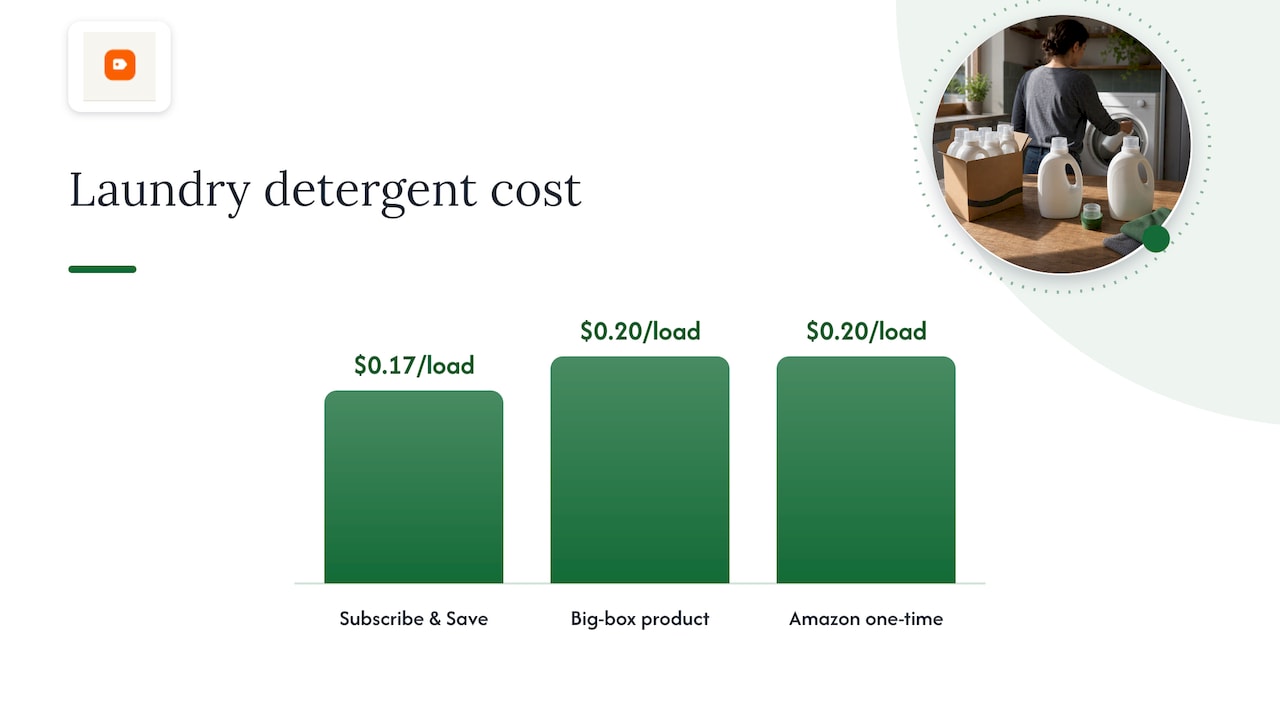
Against big-box stores. A March 2023 comparison from Cord Cutters News looked at laundry detergent. It found about $0.17 per load with Subscribe & Save, against about $0.20 per load for the compared big-box product and about $0.20 per load for Amazon's one-time purchase. Two cautions apply: the package sizes were different, and the prices are from March 2023, so treat it as an illustration of the method rather than today's price. The useful lesson is that the subscription discount, not Amazon itself, created the advantage. Without it, the gap closed.
Against Amazon's own regular price. This is the comparison most shoppers skip. Subscribe & Save is only a deal if the discounted price is lower than the same item bought once, on a normal day, at the current price. Amazon prices change often. Our own study of how often Amazon prices change measured more than a million checks to show how volatile listings can be, which is exactly why a discount off a moving price needs verifying.
The catches to know before you subscribe
Prices are not locked
Amazon's help page says the discount can change, and the item price can rise or fall between deliveries. A changed price applies only to future shipments. The price shown in the reminder email is the maximum you will be charged for that upcoming order.
That last point is the safety net. If the price in the email looks wrong, you can skip, swap or cancel before it ships.
The price can creep up
The problem is old and well documented. In 2016, The New York Times reported on a Subscribe & Save lint-roller pack that rose from $12.44 to $18.04, nearly 50%. The same report noted that Amazon emailed customers about recurring prices roughly 10 days before shipment, which left time to change or skip. The details have changed over the years, but the lesson holds: a subscription that was a deal in month one may not be in month eight.
The five-item discount is easy to miss
Money's May 2026 guide lists missing the five-item threshold among the common ways shoppers lose value. If you subscribe to two items on different schedules, they may never land in the same delivery, and you never reach the top discount. Aligning the schedules so five items ship together is the single biggest lever you control.
Auto-delivery can become stockpiling
The same guide points to over-frequent deliveries and forgetting to skip, delay or cancel. Three months of surplus detergent erases a year of small discounts. If a box arrives and you still have the last one, skip the next.
Is there a penalty for canceling?
Amazon's help page says you can cancel at any time. Nothing in the program documentation describes a cancellation fee.
How to check whether your subscription is actually cheaper
The test takes about two minutes per product and works for anything. This is the method we use across OutletPicks.
- Find the pack size. Count the real units: diapers, loads, ounces, sheets, feet of cable.
- Divide the subscribed price by the units. Use the price in the reminder email or on the subscription page, after the discount.
- Do the same for the one-time price on the same listing, so you know what the discount is really worth.
- Do the same for the alternatives: warehouse clubs, big-box stores and drugstores. Match the size, not the brand name, if the product is interchangeable.
- Compare the cost per unit, not the sticker price.
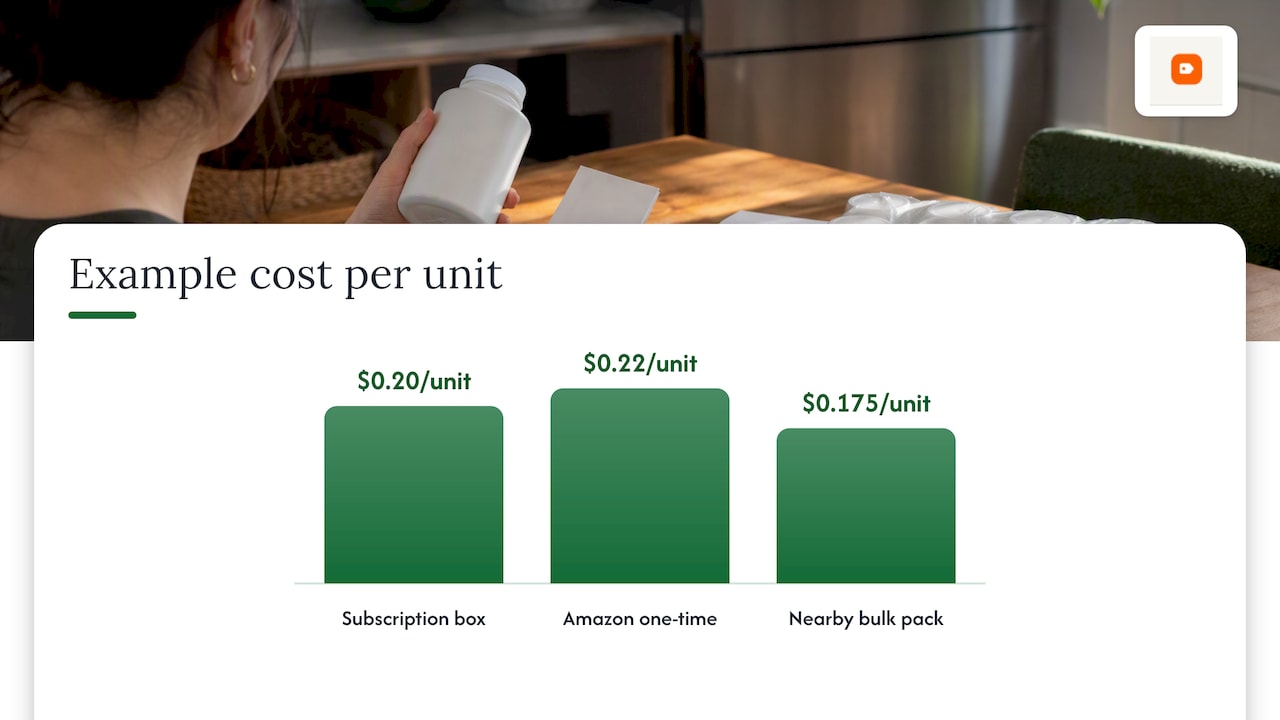
A worked example, with made-up numbers to show the math. Say a 120-count box of a household staple costs $24.00 on subscription. That is $0.20 per unit. The same box bought once is $26.40, or $0.22 per unit. A bigger 240-count pack at a nearby store costs $42.00, or $0.175 per unit. The subscription saves 9% against Amazon's own one-time price and still loses to the bulk pack by about 12%. Without the unit math you would call the subscription a win.
The first step is the one that trips people up, because pack sizes and counts are written differently on every listing. Our guide on checking unit price and price history before subscribing walks through it, and the broader method is in our four-step guide to Amazon unit pricing. If you want the ranking done for you, our page of Amazon Subscribe & Save deals ranked by cost per unit lists the ones that are cheap per unit.
Which products suit Subscribe & Save
Use the three tests above as your filter. In practice these categories tend to pass:
- Diapers and baby wipes. Use is constant for years, and the 10News report found diapers could be cheaper through Amazon's program than at a warehouse club. Sizes change as the baby grows, so update the size before the next shipment.
- Pet food and litter. A pet eats at a very steady rate, so delivery timing is easy to set. Brands that run their own membership can beat marketplace subscriptions, so compare. A dog food subscription is a good example of where recurring delivery fits a household.
- Laundry, dish and cleaning supplies. Predictable use, and small per-load differences add up over a year.
- Paper goods and trash bags. Bulky to carry home, and a fixed monthly rate suits them.
- Daily-use personal care. Shampoo, toothpaste and body wash run out on a known schedule. Check our weekly pages for shampoo and body care before you commit.
These tend to fail:
- Anything you use unevenly, like seasonal items or things you try once.
- Products with volatile prices, such as electronics and accessories, where a one-time deal or a coupon usually beats a recurring discount.
- Items where you have a strong brand-neutral alternative that costs less per unit. Amazon's own brands sometimes win, and sometimes cost more; our study of Amazon's own brands shows where.
A note on timing: shopping events can beat a subscription price for a stretch. Before a big sale, look at our real cost per unit view of Prime Day deals, and check whether stacking a coupon on a one-time purchase beats the subscription. Our guide on using cost per unit to compare coupon stacking covers that.
Mistakes that cost you money
The pattern in the sources is consistent. Most lost value comes from inattention, not from the program itself.
- Never reading the reminder email. It is your price check, and it shows the maximum charge.
- Set-and-forget on price. A price from the first month tells you nothing about month seven.
- Delivery too frequent. If you finish a product every 8 weeks, a monthly schedule means you pay for stock you do not use.
- Splitting subscriptions across addresses or days. You lose the five-item discount.
- Ignoring bulk alternatives. Our look at when bulk beats single packs shows how often a bigger pack wins, with or without a subscription.
- Comparing the wrong retailers. A store-to-store comparison only works per unit. Our piece on Aldi versus Walmart prices per unit shows how store-brand pricing can flip a result.
Our perspective: treat it as a tool, not a deal
We rank products by cost per unit all day, and one pattern keeps showing up: the headline discount is rarely the whole story. A "15% off" label sits on top of a price that was already moving. The subscription removes a purchase decision. It does not remove the need to check the number.
So we use Subscribe & Save the way we would use any rule of thumb. Subscribe to a few items you use steadily. Line them up so they ship together. Open each reminder email and divide the price by the units. If the subscription is no longer the cheapest per unit, skip it, buy the better option and resume later. A subscription you actively manage can be worth it. One you ignore usually drifts toward the average price at best.
The real question is not whether Subscribe & Save is worth it. It is whether this specific product, this month, is cheapest per unit with it.
— Alex
See the cheapest per-unit prices before you subscribe
OutletPicks does the division for you. We compare products across Amazon and partner retailers on their real cost per unit, so a bigger pack, a different brand or a competing retailer shows up next to the subscription price. Browse all our categories, from baby care and pet food to cables and cameras, and see which option is cheapest per diaper, per ounce or per foot before you click subscribe.
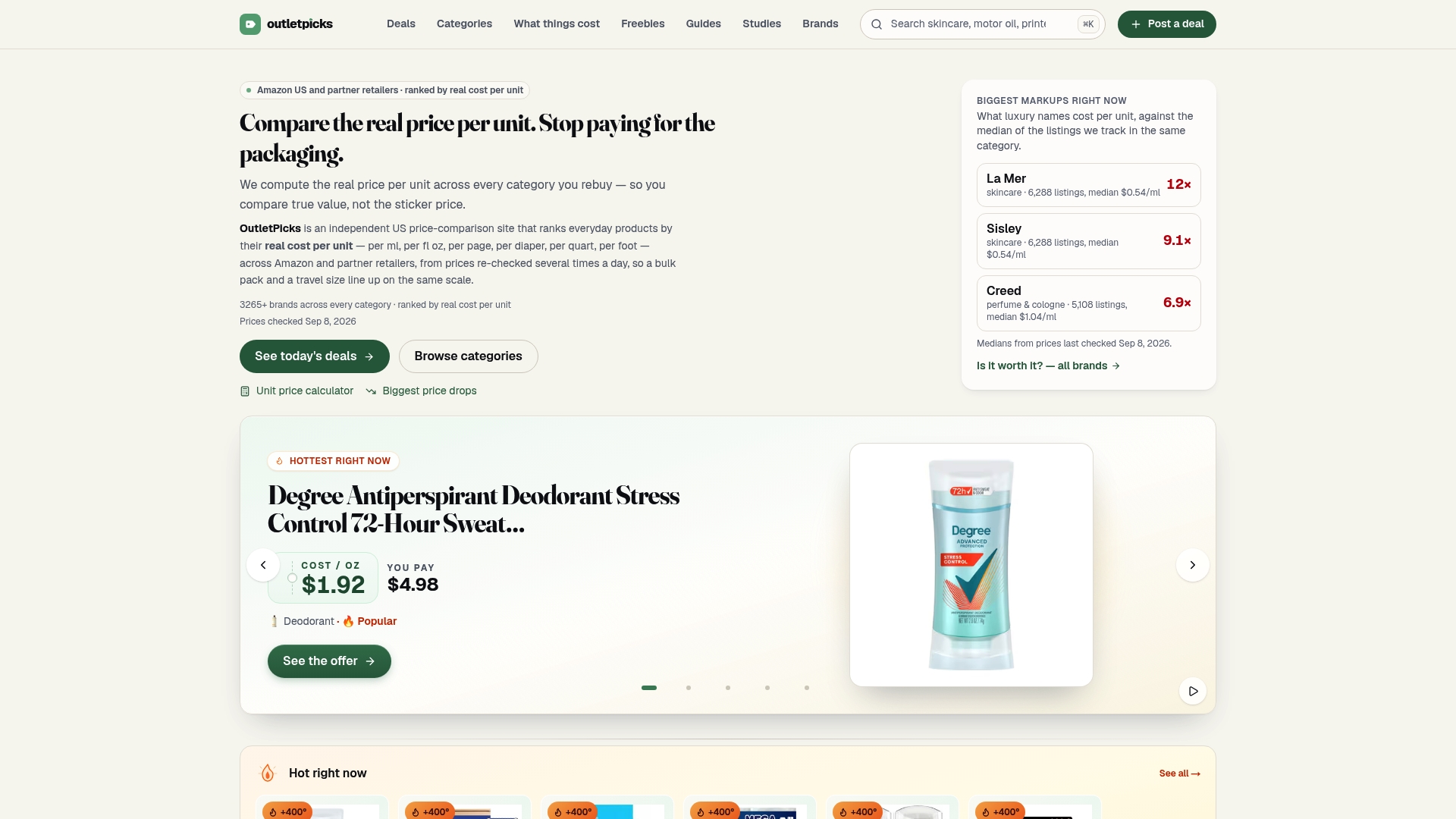
If you are already considering a specific product, start with the Subscribe & Save deals that are cheap per unit and compare them with the same item's one-time price.
FAQ
Is there a catch to Amazon Subscribe & Save?
The main catch is that prices are not locked. The discount and the item price can change between deliveries, and a new price applies to future shipments. Amazon's reminder email shows the maximum you will be charged for the next order, so read it each time.
Does Amazon penalize you for canceling Subscribe & Save?
No penalty is described in Amazon's help documentation. You can cancel at any time, and you can skip or change deliveries through Manage Your Subscriptions. Non-Prime customers may pay shipping on the first delivery, which is a shipping charge rather than a cancellation fee.
How much can you save with Subscribe & Save?
Amazon says up to 15% when five or more eligible products arrive in one auto-delivery to one address. Your actual discount depends on the product and how many items you have scheduled together. Check the discount shown at checkout, then compare the cost per unit with other stores.
Is Subscribe & Save cheaper than a warehouse club?
Often not across a whole household basket. A 170-item comparison found a warehouse club about 12% cheaper overall, though diapers were cheaper through Amazon's program. Compare the particular item you buy, per unit, rather than relying on the general result.
Sources
- Subscribe & Save, Amazon Customer Service
- Subscribe & Save: How Does It Work?, Amazon.com
- The Amazon Subscribe & Save Mistakes That Are Costing You, Money
- Amazon vs warehouse clubs: who has the lowest prices, 10News
- Amazon vs big-box store prices, Cord Cutters News (March 2023)
- Subscribe and Save on Amazon? Don't Count on It, The New York Times (2016)