
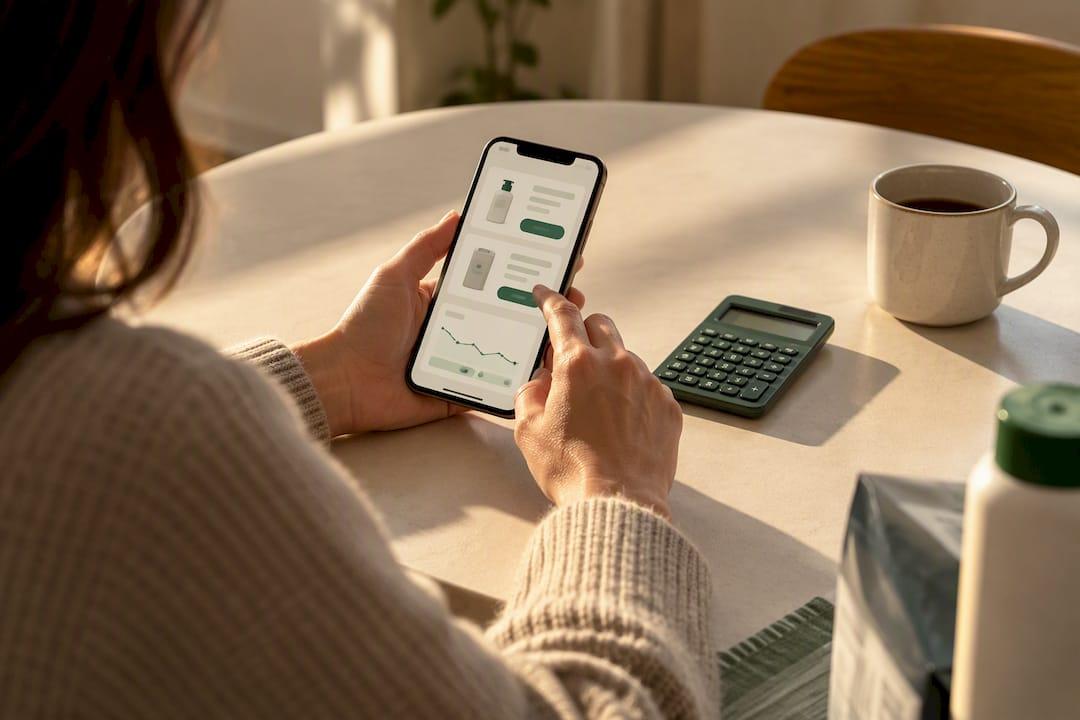
Amazon charges the price at the time each order is processed, so the number you saw at signup can drift before your next shipment. Your best defense is the reminder email and its skip window, checked every cycle.
TL;DR:
- The actual discount depends on seller funding tiers and stacking with Amazon's five-item bonus, with maximum savings around 15 percent.
- Price drift between shipments can reduce or eliminate the claimed savings if the base price increases before processing.
- To verify a deal, compare the subscription's cost per unit with the item's typical price range rather than relying solely on the advertised discount.
- The discount is only guaranteed at the time of shipment processing, so checking the reminder email before each order prevents overpaying.
- Subscribing benefits those buying high-volume, predictable essentials like diapers or pet food, but may be less cost-effective for infrequent or deeply discounted items.
Table of Contents
- How does the Subscribe and Save order cycle actually work?
- How are Subscribe and Save discounts calculated?
- What factors change the real savings from a subscription?
- Who actually benefits from subscribing, and who should skip it?
- How do you keep the discount without quietly overpaying?
- How do you verify a Subscribe and Save price is actually a deal?
- What is the smartest way to think about Subscribe and Save?
- How OutletPicks helps you check a subscription offer before committing
- Sources
- FAQ
How does the Subscribe and Save order cycle actually work?
The lifecycle runs on a fixed loop, and every stage after enrollment gives you a chance to change your mind before money moves.
- You enroll in Subscribe and Save on an eligible product and pick a delivery frequency, typically every one to six months.
- Amazon sets your next delivery date based on that schedule and begins tracking the item for you automatically.
- A reminder notification arrives a few days before processing, showing the current price and quantity.
- You have until a stated cutoff, the last day to skip or change, to adjust quantity, delay, or cancel that shipment.
- If you take no action, the order processes at whatever price is active at that moment and your card is charged.
- The subscription repeats indefinitely until you cancel it, which you can do anytime from Your Account with no penalty.
Doing nothing is itself a decision: it accepts the current processing price, not the one you saw when you subscribed. That single detail explains most of the complaints about Subscribe and Save price changes, since the terms and conditions are explicit that discount eligibility and pricing can shift ordering. Canceling stops future shipments immediately and has no effect on orders already processed.
How are Subscribe and Save discounts calculated?
The discount you see is built from layers, not a single flat rate, and knowing the layers helps you spot when a deal is thinner than it looks.
- Sellers choose their own funding tier for each product, commonly 0%, 5%, or 10% off.
- Amazon adds a bonus of an extra 5% off when five or more subscription items ship together in the same delivery.
- Coupons, first-delivery discounts, and other seller promotions can sometimes stack on top of the base subscription discount.
- The combined effect typically ranges from no discount at all up to about 15% off, depending on the seller's tier and whether you hit the five-item bonus.
Combined Subscribe and Save discounts can run as high as 15% when a seller's funded tier stacks with Amazon's five-item bonus, according to seller guidance on funding tiers. That ceiling is not guaranteed on every item, since it depends entirely on what the individual seller has configured.
What factors change the real savings from a subscription?
The advertised discount is only part of the equation. A few practical factors determine whether Subscribe and Save actually beats buying the item on your own schedule.
- Price drift between deliveries can quietly erode or erase the discount if the base price climbs before your next shipment processes.
- SKU changes and availability issues sometimes leave a subscription showing "offer withdrawn," which happens when a seller transfers a listing to a new SKU without carrying the subscription over.
- Lost coupon stacking matters because some retailer promotions and stackable coupons do not apply to subscription orders the way they do to one-time purchases.
- Time saved on reordering is real value for anyone buying the same item on a predictable cycle, even when the price discount itself is modest.
Pro Tip: Screenshot the price shown in your reminder email each cycle so you can spot a creeping price increase before it becomes a pattern.
Who actually benefits from subscribing, and who should skip it?
Subscribe and Save fits some shopping habits far better than others, and a quick mental checklist beats guessing.
- Families and pet owners buying diapers, formula, or pet food on a predictable monthly cycle tend to see the most consistent benefit, since independent comparisons point to real time savings for high-volume, frequent buyers.
- Daily supplement or personal care users who reorder the same item every few weeks get similar convenience without having to remember to reorder.
- Infrequent buyers of an item, or shoppers whose product regularly goes on deep sale or qualifies for stackable coupons, often do better price-hunting manually instead.
- Before subscribing to anything, run three checks: confirm the unit price actually beats your typical purchase price, check how often the item goes on sale outside the subscription, and confirm whether a coupon you'd otherwise use is excluded from subscription orders.
How do you keep the discount without quietly overpaying?
A few habits, repeated every cycle, protect the value of the discount instead of letting it erode.
- Calculate the cost per unit rather than comparing sticker prices, since pack sizes vary between sellers and even between your own past orders.
- Treat the pre-processing reminder email as your checkpoint: if the quoted price is noticeably higher than your last shipment, skip that cycle rather than accept it by default.
- If a product's Subscribe and Save discount depends on shipping five items together, consider staggering or combining subscriptions to your household to hit that threshold and unlock the extra 5%.
- Use first-delivery coupons when offered, but check the price for delivery two before assuming the discounted first price is what you'll keep paying long term.
Pro Tip: A five-second gut check works well: if the unit price in the reminder email is higher than the lowest price you've paid for that item in the last few months, skip the shipment.
How do you verify a Subscribe and Save price is actually a deal?
Judging a subscription offer by its sticker price alone is how shoppers get fooled by pack-size differences and short-lived promotional pricing. A repeatable check works better than a gut feeling.
- Convert the subscription price to cost per unit, whether that's per ounce, per count, or per diaper, so you're comparing like for like across pack sizes and sellers.
- Compare that unit price against the item's typical price range, not just its price on the day you happen to check, to see whether the subscription price sits meaningfully below normal.
- As an illustrative example, say a 12-pack of a household item is offered on Subscribe and Save at $0.42 per unit, while that same product has typically sold between $0.38 and $0.48 per unit over recent months. A $0.42 subscription price sits inside the normal range rather than below it, so the "discount" isn't actually beating a typical sale price.
What is the smartest way to think about Subscribe and Save?
Subscribe and Save earns its place for items you buy on a true, predictable cycle—diapers, pet food, coffee—where the convenience of never running out matters as much as the discount. It earns nothing for items you buy occasionally or that go on deep sale often enough that patience beats automation.
My rule of thumb: subscribe to routine, not to discounts. If you'd buy it again next month regardless of price, subscribing is close to free convenience. If you're subscribing chasing a percentage, check the unit price first.
— Alex
How OutletPicks helps you check a subscription offer before committing
Before you lock in a subscription, it helps to see the item's real cost per unit next to its recent price history rather than trusting a single checkout page. OutletPicks tracks cost-per-unit comparisons across categories like household essentials, personal care, and baby care, rechecking retailer prices on a rolling basis so the number you see reflects current market pricing, not a stale snapshot.
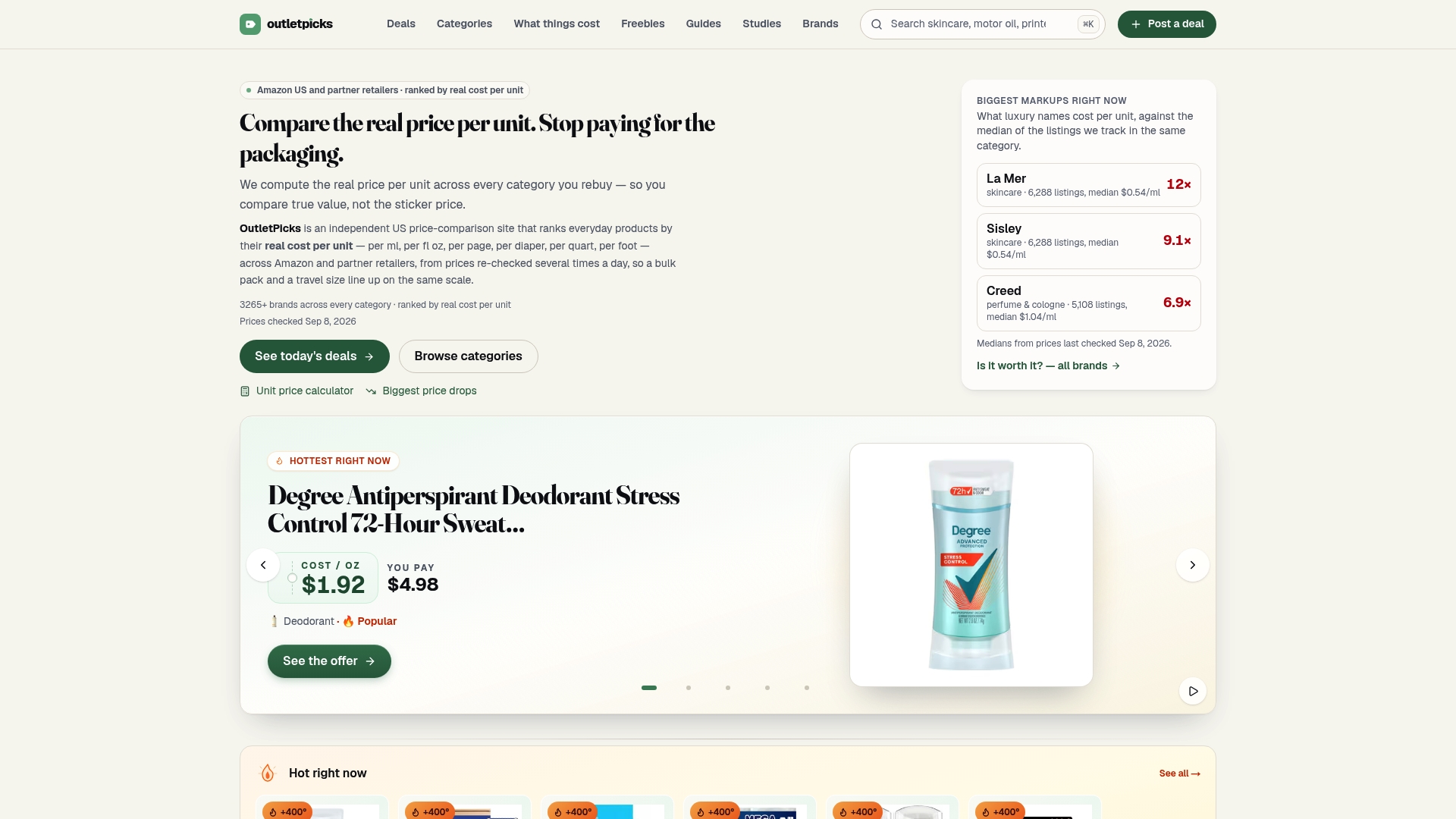
A quick three-step check: look up the item on OutletPicks to see its typical price-per-unit range, compare that range against the price shown in your Subscribe and Save reminder email, and skip or adjust the shipment if the subscription price isn't actually below the norm. You can run this check against the brand index ranked by cost per unit in under a minute, no spreadsheet required.
Sources
- Subscribe & Save Terms & Conditions - Amazon Customer Service
- Subscribe & Save: Seller guidance and funding tiers - Sell on Amazon blog
- Amazon Subscribe & Save vs store prices: real comparison - Mother Jones
FAQ
Is it worth it to subscribe and save on Amazon?
It's often worth it for items you buy on a predictable schedule, since the combined discount can reach up to about 15% when a seller's funding tier stacks with Amazon's five-item bonus. For occasional purchases or items that go on frequent deep sale, manual price tracking can beat the subscription discount.
Does Amazon penalize you for canceling Subscribe and Save?
No, canceling a Subscribe and Save subscription carries no fee or penalty and can be done anytime from Your Account. It simply stops future shipments; any order already processed is unaffected.
Does Amazon Subscribe and Save increase prices?
Subscribe and Save charges the item's price at the time each order is processed, not the price shown at signup, so the price can rise or fall between deliveries. Checking the reminder email before each shipment is the main way to catch an increase before it's charged.
What are the best deals for Amazon Subscribe and Save?
The best deals tend to be everyday consumables you already buy on repeat, like diapers, pet food, or personal care items, where a seller has funded a meaningful discount tier. Comparing the subscription's unit price against the item's typical price-per-unit range, using a tool like the unit price calculator, is the most reliable way to confirm a given offer is genuinely below normal pricing.