
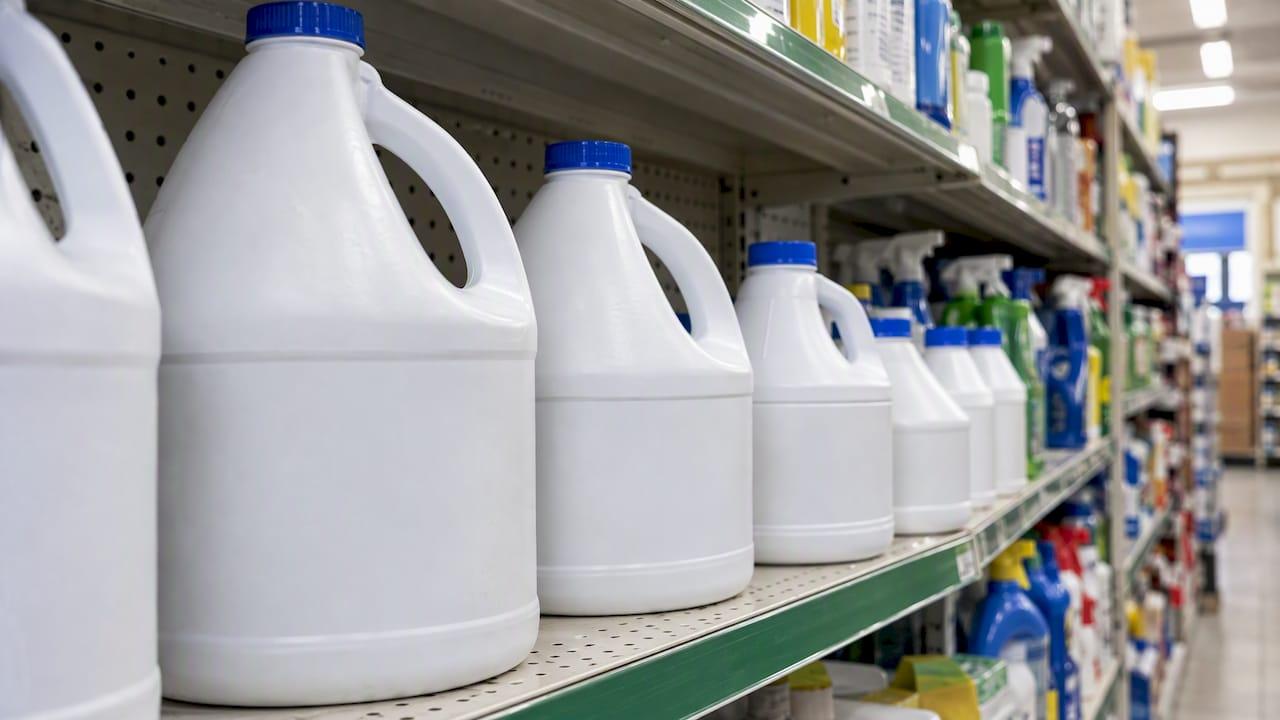
As of October 21, 2026, a good price for plain liquid bleach is roughly 5 to 6 cents per fluid ounce, and anything near 7 cents or above is the premium end. The big jug with the lowest unit price usually wins, but only if you compare the same unit and check the label. This guide shows the current numbers, the math for turning them into gallon and per-use costs, and the traps that make a cheap bottle expensive.
TL;DR
- Store-brand 121 fl oz jugs currently list around 5.1 to 5.9 cents per fluid ounce, while name-brand Clorox 121 fl oz lists around 6.7 to 7 cents.
- A gallon of bleach is 128 fl oz, but a 121 fl oz jug is not a gallon. Always multiply by the unit price, not the sticker.
- Value is cost per use, not cost per ounce alone: check the sodium hypochlorite strength and the label dose.
- Never mix bleach with ammonia, acids or other cleaners to save money. It is the one saving that can hurt you.
- Vinegar is cheaper per ounce than bleach, but it is not a swap for disinfecting. Compare each on its own job.
Table of Contents
- Current bleach prices per fluid ounce
- How to calculate the cost of a gallon of bleach
- Why bleach feels more expensive than it used to
- Price per ounce is not price per use
- Safety is part of the value
- Best value white vinegar and baking soda
- Our perspective
- Where to compare prices across categories
- Quick checklist before you buy bleach
- FAQ
- Sources
Current bleach prices per fluid ounce
The numbers below come from retailer listings retrieved in 2026. Prices move with location, promotions and delivery channel, so treat them as benchmarks, not shelf guarantees.
| Product | Size | Listed price | Per fl oz |
|---|---|---|---|
| Great Value Low Splash Bleach | 81 fl oz | $4.24 | 5.2¢ |
| Great Value Bleach | 81 fl oz | $4.76 | 5.9¢ |
| Great Value Bleach | 121 fl oz | $6.43 | 5.3¢ |
| Clorox Splash-Less | 77 fl oz | $5.48 | 7.1¢ |
| Clorox Disinfecting Bleach, concentrated | 121 fl oz | $8.24 | 7¢ |
The first four rows come from Walmart's business bleach catalog. The Clorox 121 fl oz figure is from a Walmart-fulfilled Instacart listing. A Walmart two-pack of the same Clorox size shows $16.24 total at 6.7 cents per fluid ounce, per its product page, so buying two can shave a little off.
Two patterns stand out:
- The 81 oz store-brand bottles are not always the bargain. The 81 fl oz regular at 5.9 cents costs more per ounce than the 121 fl oz at 5.3 cents, while the low-splash 81 fl oz is cheaper than both. Size alone does not predict price.
- The gap between store brand and national brand is real. On a 121 fl oz jug, $6.43 versus $8.24 is $1.81 less, about 22 percent, for the store-brand jug at the prices above. That is our arithmetic from the two listings, not a quoted discount.
How to calculate the cost of a gallon of bleach
Shoppers often search for a gallon price because that is how bleach is talked about. The fix is simple: a gallon is 128 fluid ounces (our gallons to fluid ounces converter confirms it), so multiply the unit price by 128.
- At 5.1 cents per fl oz: 128 × $0.051 = about $6.53.
- At 5.3 cents: about $6.78.
- At 7 cents: about $8.96.
These are calculations from the listed unit prices, not quoted gallon shelf prices, and they exclude tax. The reason to do this is that a 121 fl oz jug is about 0.945 gallon. A "gallon-sized" jug that is really 121 oz looks cheaper than a true 128 oz container at the same sticker price.
If you shop in other units, such as liters or milliliters, the same logic applies. Our fluid ounces to milliliters converter and the price per mL formula walk through normalizing any liquid to one unit.
Why bleach feels more expensive than it used to
People ask why bleach has gone up so much, and there is no single clean answer. The Bureau of Labor Statistics tracks a producer price index for inputs to residential maintenance and repair goods. It rose from 304.701 in December 2024 to 311.594 in December 2025, and was 342.798 in September 2026 (preliminary).
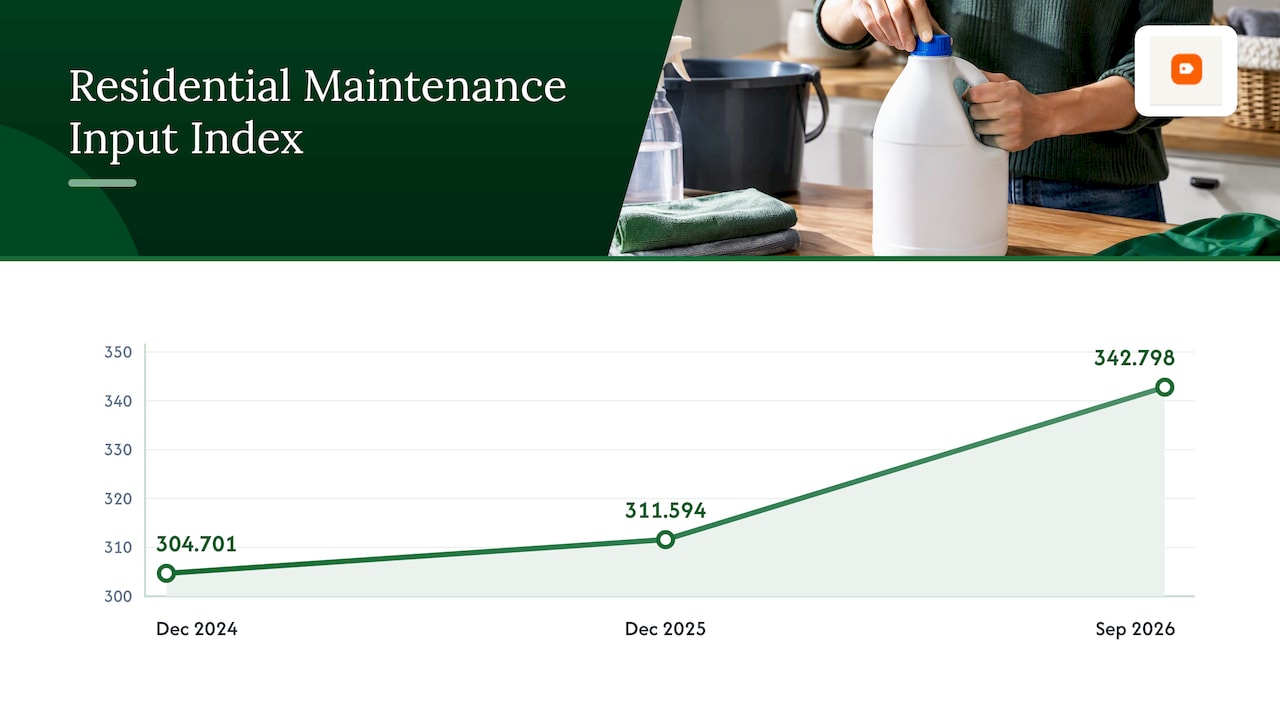
That index is not a bleach price series, so it does not tell you how much bleach itself rose. It does show that upstream costs for home-maintenance goods have climbed. Manufacturing inputs, packaging, freight, retailer margin, regional supply and promotions all feed into the shelf price, and each differs by store. For a wider view of household goods, see our look at household essentials price trends.
The practical takeaway: the same jug can be a few cents per ounce cheaper across town. That is why every price should be read with its retailer, date, size and unit basis next to it.
Price per ounce is not price per use
A cheaper ounce can still be the worse buy if the bottle is weaker or asks for more product per task. EPA-registered labels list the sodium hypochlorite percentage and a dilution table. A 5.25% sodium hypochlorite label specifies ½ ounce per gallon for a 200 ppm sanitizing solution, for example. A product with a different strength or different directions needs a different amount for the same job.
So compare in three steps:
- Convert every bottle to cents per fluid ounce.
- Read the active ingredient percentage and the label's dose for your task.
- Multiply dose by unit price to get cost per use.
A worked example. At the label's ½ oz per gallon for sanitizing, a bottle at 5.3 cents per ounce costs about 2.7 cents of bleach per gallon of solution. At 7 cents per ounce it is about 3.5 cents. The difference is under a penny per batch, so for light household use the choice between brands matters less than people think. It matters for heavy users: a laundromat, a rental property or a daycare going through several jugs a month.
The capful problem
What is one capful? There is no dependable universal answer, because caps differ between bottles and concentrations. Follow the label's measured directions instead. The same EPA label gives 1 tablespoon per gallon for certain baby-clothing and diaper directions. One U.S. fluid ounce is 2 tablespoons, so a tablespoon is half an ounce. Our fluid ounces to cups converter and cups to fluid ounces converter help when a label mixes units.
Safety is part of the value
The lowest price per ounce is not a bargain if the product is used outside its directions. EPA labels, such as the one for a 1.75% available chlorine product, warn against mixing bleach with ammonia, acids, toilet-bowl cleaners, rust removers or other household chemicals because hazardous gases can result. They also say to store it cool, dry and out of sunlight and heat, because sodium hypochlorite solutions degrade with age.
Two money-related consequences follow:
- Don't buy a year of bleach at once. A discount jug that has weakened in a hot garage is worth less per ounce than a fresh one.
- Don't decant into unmarked containers to stretch a deal. Keep it in the original labeled bottle.
Costly mistakes also happen on fabric. A splash on a carpet or couch can cost more than a year of bleach. If it happens, here is what to know about bleach spots on carpet and when a pro is the cheaper answer than another DIY attempt.
Best value white vinegar and baking soda
Many readers who search for bleach value also compare vinegar and baking soda. They do different jobs, so compare each against its own alternatives, not against bleach.
For white vinegar, Walmart's vinegar page lists a 128 fl oz White House distilled bottle at $4.53. That works out to about 3.5 cents per fluid ounce by our math. A Great Value distilled white vinegar 128 fl oz listing shows about 3.1 cents per fluid ounce. So vinegar runs cheaper per ounce than bleach, and the same rule applies: the big jug beats the small bottle.
Baking soda is sold by weight, so compare cents per ounce of weight, not fluid ounces, and never mix the two units in one comparison. Larger boxes and bags are usually cheaper per ounce, but check the listing's unit price on the day.
One firm rule: do not combine bleach and vinegar. Vinegar is an acid, and the labels above warn against mixing bleach with acids. Use whichever product fits the task, one at a time.
Our perspective
We built OutletPicks around one idea: the sticker price tells you very little. A jug, a case and a two-pack can all carry the same-looking number while the cost per unit differs by 20 percent or more. Bleach is a clean example, because the product is nearly identical across brands and the unit price is the main variable.
What we think matters when you compare bleach:
- Always put retailer, location, date, bottle size and unit basis beside the price. A cents-per-ounce figure with no date is a guess.
- Use fluid ounces for liquids and keep that unit throughout. Converting a gallon, a liter and a 121 oz jug into one unit is what makes them comparable.
- Then look past the unit price to strength and label dose. A cheap ounce of weaker product is not cheap.
- Do not trade safety for savings. No unit price is worth improvising a mixture.
Prices move, so we recheck retailer data on a rolling cycle rather than treating any one number as permanent.
— Alex
Where to compare prices across categories
Bleach is one of many household items where unit price changes the answer. On OutletPicks you can browse every category we rank by real cost per unit, from personal care to cables to baby care, and see products ordered by what you actually pay per unit instead of per package. If you also buy chlorine for a pool, check pool chemicals on sale this week and compare by the same unit logic.
Quick checklist before you buy bleach
- Convert to cents per fluid ounce. If the listing shows a unit price, use it, but confirm the size.
- Multiply by 128 for a true gallon cost.
- Compare store brand and national brand at the same size and strength.
- Check the sodium hypochlorite percentage and the label's dose.
- Buy the quantity you will use within a few months.
- Keep it in its original bottle, away from heat, light and other chemicals.
FAQ
What is a good price per ounce for bleach?
In the listings we reviewed in October 2026, about 5 to 6 cents per fluid ounce is a good price for store-brand liquid bleach. National brands such as Clorox listed near 7 cents. Your local store may differ, so check the unit price on the day you shop.
What is the cost of a gallon of bleach?
Multiply the unit price by 128 fluid ounces. At 5.1 cents per ounce that is about $6.53, and at 7 cents about $8.96, before tax. These are calculated from listed unit prices, not quoted shelf prices.
How much is one capful of bleach?
There is no universal amount, because caps and concentrations vary. Use the measured dose on your product's label. One EPA label, for example, gives ½ ounce per gallon for a 200 ppm sanitizing solution.
Why has the price of bleach gone up so much?
There is no single cause. Government data show higher producer prices for inputs to home maintenance and repair goods, and costs such as packaging, freight, retailer margin and regional supply also affect shelf prices. That index is not a bleach-specific price series, so it cannot give an exact percentage for bleach.
Sources
- Walmart Business: bleach products and unit prices
- Instacart: Clorox Disinfecting Bleach, 121 fl oz at Walmart
- Walmart: Clorox two-pack, 121 fl oz
- Bureau of Labor Statistics: PPI inputs to residential maintenance and repair goods
- EPA pesticide product label: sodium hypochlorite solution 5.25%
- EPA pesticide product label: Shield, 1.75% available chlorine
- Walmart: white vinegar
- Walmart: Great Value distilled white vinegar, 128 fl oz