
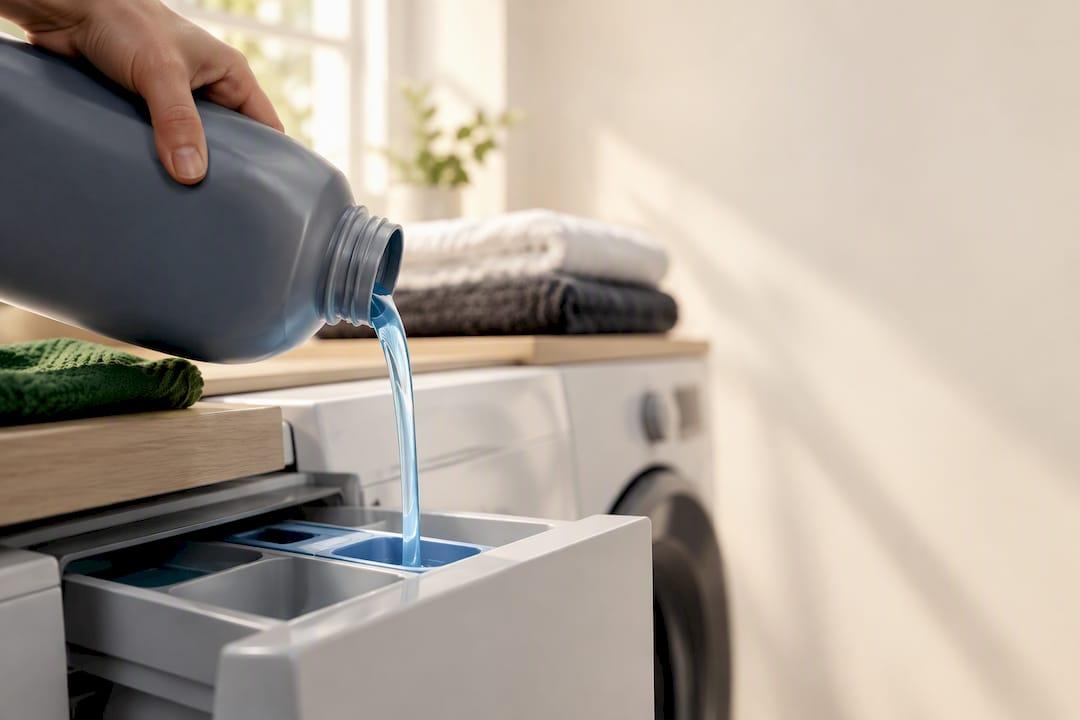
Expect to pay somewhere between $0.10 and $0.30 per load depending on format, and treat anything past $0.40 as a convenience tax you're choosing to pay. Powder and concentrated refills usually sit at the bottom of that range; pods and premeasured packs sit at the top. The single best move for cutting your laundry bill isn't switching brands. It's measuring your dose instead of eyeballing it, since overdosing quietly inflates the true cost per load of almost every detergent on the shelf.
TL;DR:
- Using a measuring tool like a shot glass can prevent overdosing and significantly reduce your actual cost per load.
- Powder and concentrate detergents typically cost less per load than pods or premeasured packs, which are priced higher due to convenience.
- Actual loads per package often differ from label claims, with many households using more detergent than recommended, raising costs.
- Hard water, small loads, and lightly soiled clothing require less detergent, while heavily soiled loads and large batches demand more.
- Comparing unit prices across retailers and buying in bulk or concentrates can substantially lower your laundry expenses over time.
Table of Contents
- Detergent Cost Per Load by Format: The Real Numbers
- How to Calculate Your Own Cost Per Load
- What Actually Drives Your Real Cost Per Load
- Shopping Tactics That Lower Your Cost Per Load
- When a Higher Cost Per Load Is Worth Paying
- How Outletpicks Calculates These Detergent Cost Numbers
- A Quick Checklist for Cutting Your Laundry Costs This Week
- Compare Detergent Prices Before You Buy Again
- Sources
- FAQ
Detergent Cost Per Load by Format: The Real Numbers
The sticker price on a jug of detergent tells you almost nothing. A $14.99 bottle sounds cheaper than a $22.99 tub of pods until you divide by loads, and that division is where the actual detergent pricing guide lives.
Here's how the major formats stack up once you do that math:
| Format | Cost per load range | Typical loads per package | Main price driver |
|---|---|---|---|
| Powder | $0.10–$0.20 | 40–100 loads per box | Bulk manufacturing, no water weight |
| Liquid | $0.15–$0.25 | 32–128 loads per bottle | Concentration level, brand markup |
| Pods/pacs | $0.20–$0.50 | 16–32 pacs per tub | Premeasured convenience, packaging |
| Sheets/strips | $0.20–$0.40 | 30–60 loads per box | Lightweight shipping, dosing consistency |
| Concentrates/refills | $0.10–$0.20 | Varies by dilution ratio | Less packaging, less water to ship |
Good Housekeeping's cost analysis confirms powder usually costs less per load, while pods often cost noticeably more due to premium formulations. Independent price summaries put the average cost of laundry detergent across all formats between $0.10 and $0.30, with the wide spread coming almost entirely from concentration and packaging choices rather than cleaning power.
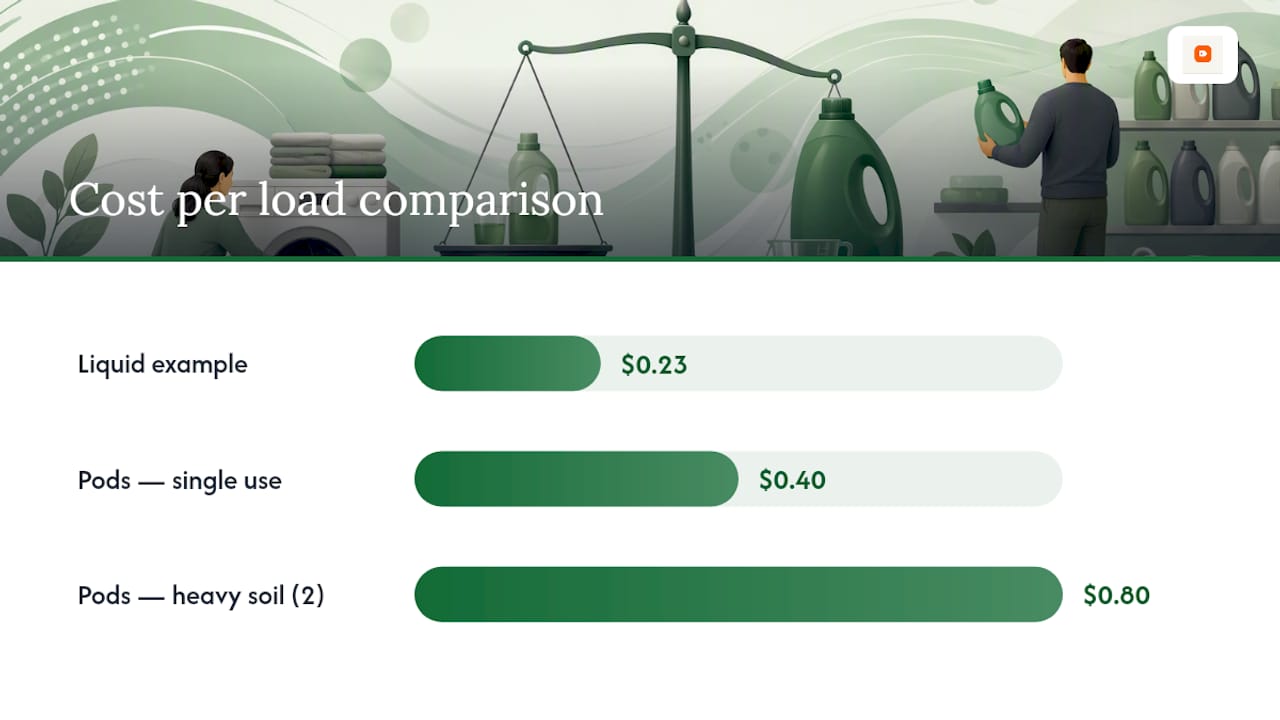
Two real-world examples show why this matters. A 92-ounce bottle of liquid detergent priced at $13.99 with a labeled 1.5-ounce dose per load works out to roughly 61 loads, or about $0.23 per load. The bigger bottle wins every time you check the math instead of the price tag.
Pods create the opposite trap. A 42-count tub for $16.99 comes out to about $0.40 per load, but many shoppers use two pods for heavily soiled clothes without realizing it, quietly doubling the effective cost per load.
How to Calculate Your Own Cost Per Load
The formula is simple: price paid ÷ number of loads the package actually delivers = your cost per load. The catch is getting an honest number of loads, since manufacturers often print load counts based on a smaller dose than most people actually use.
- Find the total price you paid, including tax if you're comparing store to store.
- Check the labeled dose (in ounces, or number of pods/sheets) for a "medium" or "average" load.
- Divide the container's total volume or count by that dose to get true loads per package.
- Divide your price by that number to get your real cost per load.
A 64-ounce bottle with a labeled dose of 1.5 ounces per load yields about 42 loads. At $9.99, that's roughly $0.24 per load. A 32-pod tub priced at $14.99 gives you exactly 32 loads (one pod per load) for about $0.47 per load, noticeably higher even though the sticker price looked similar to the liquid.
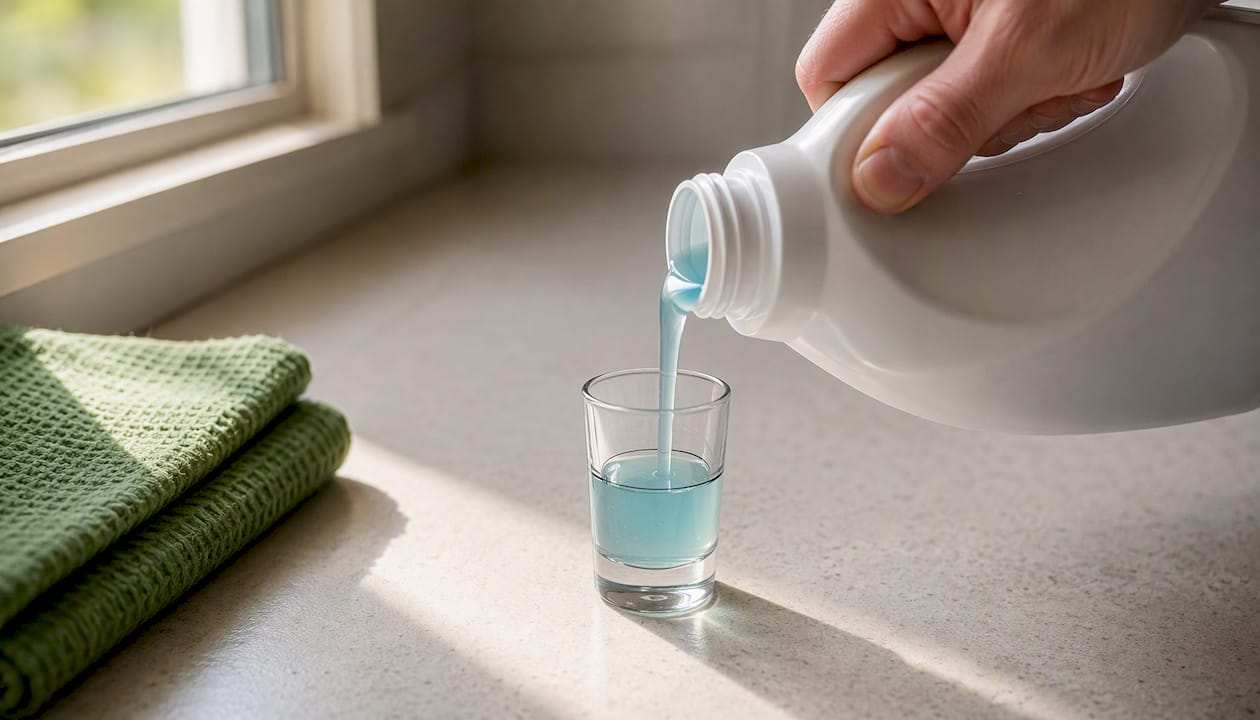
Pro Tip: Buy a $1 shot glass and mark the 1.5-ounce line with a permanent marker. Most people pour closer to 2.5 ounces without measuring, and that habit alone can push a $0.20 detergent up to $0.33 per load.
What Actually Drives Your Real Cost Per Load
The number on the label and the number you actually pay rarely match, and dosing habits are the biggest reason why. Consumer Reports found overdosing is common and directly wastes money without improving cleaning results, since detergent left in the fabric after a rinse cycle does nothing for stain removal.
Your washer type matters almost as much as your pour.
- HE washers use less water, so they need less detergent per load. Standard top-loaders with an agitator use significantly more water and often call for a larger dose to compensate.
- Front-loading, energy-efficient washers cost less to operate annually than traditional agitator top-loaders, and that lower water use compounds with lower detergent use.
- Small loads and lightly soiled clothes need less than the labeled "average" dose, while extra-large or heavily soiled loads need more.
- Hard water reduces detergent's ability to lather and lift stains, which often pushes households in hard-water regions to use more product per load than the label recommends.
By the numbers: Consumer Reports recommends about 1.5 ounces of liquid detergent for an average load. Most people pour well past that line, which is the single most common reason real-world cost per load runs higher than the math on the label.
Shopping Tactics That Lower Your Cost Per Load
Comparing bottle prices instead of cost per load is the most expensive habit in the detergent aisle. Once you start comparing unit price instead of shelf price, the winner changes almost every time.
- Always divide price by labeled loads, not by ounces or bottle size, before deciding which product is actually cheaper.
- Membership and bulk retailers frequently beat standard grocery pricing on both name-brand and store-brand detergent, since comparative price checks show bulk SKUs consistently produce lower cost per load than small bottles bought at full retail.
- Concentrated refills usually undercut standard bottles on cost per load, though it's worth confirming the dose per load hasn't changed along with the concentration.
- Watch for shrinkflation: a box that quietly drops from 100 loads to 80 loads at the same price just raised your real cost per load by 25% without changing the sticker.
Pro Tip: Outletpicks' unit price calculator does this division for you across competing SKUs, so you can compare a 92-ounce bottle against a 128-ounce jug in seconds instead of doing the math in a store aisle.
When a Higher Cost Per Load Is Worth Paying
Cheapest per load isn't always the smartest purchase. Pods and pacs cost more because premeasured dosing eliminates the overdosing problem entirely, and for households that consistently pour too much liquid detergent, that convenience premium can pay for itself.
- Enzyme boosters and color-safe formulas justify a higher cost per load for specific problems like grass stains, sweat odor, or dark fabrics that fade under standard detergent.
- Laundry sheets reduce dosing errors and work well for lightly soiled routine loads, but Consumer Reports testing found sheets can underperform against enzyme-rich liquids on heavily soiled items.
- The smartest approach mixes formats: a cheap powder or liquid for everyday loads, and a specialty formula reserved for the items that actually need it.
— Alex
How Outletpicks Calculates These Detergent Cost Numbers
Every cost-per-load figure in this article comes from rolling price checks across major retailers, normalized by converting each manufacturer's recommended dose into a standardized load count rather than trusting the printed "loads per container" number.
- Prices are pulled from current retailer listings, not list price or MSRP, and rechecked on a rolling cycle.
- Promotional and clearance pricing is excluded unless it reflects a sustained, ongoing price rather than a one-day flash sale.
- Dosing conversions follow labeled ounces or pod counts per average load, cross-checked against Outletpicks' own laundry cost breakdown.
- Final cost-per-load figures are rounded to the nearest cent for readability.
Regional pricing, retailer-specific SKUs, and individual dosing habits will always shift your actual number somewhat from any published average.
A Quick Checklist for Cutting Your Laundry Costs This Week
Measure your dose with an actual shot glass instead of guessing. Switch to powder or a concentrate for everyday loads and save pods for real stains. Buy by cost per load, not bottle size. Run HE settings if your washer has them, since they need less product per cycle. Check online price comparison platforms for price drops before you restock.
Compare Detergent Prices Before You Buy Again
Price comparison platforms exist for exactly this problem: sticker prices lie, and cost per unit tells the truth. Instead of guessing which bottle, tub, or box actually costs less per load, you can run the numbers across retailers in one place and see the real winner instantly.
The unit price calculator lets you punch in price, size, and dose for any detergent and get an exact cost per load in seconds, which beats doing division in a store aisle with a phone calculator and a squinting eye on the fine print. Outletpicks also tracks live price drops by category so you catch a genuine deal instead of a shrinkflation trap dressed up as a sale. Beyond laundry, the full category index applies the same real cost per unit approach to skincare, pet food, and household essentials, so the next time a "bigger size, same price" claim shows up on a shelf tag, you can check it before it checks you. Start with your current detergent and run the numbers.
Sources
- Laundry detergents buying guide — Consumer Reports
- Best laundry detergents and cost notes — Good Housekeeping
- How much does laundry detergent cost? — ThePricer
FAQ
How much should detergent cost per load?
A reasonable target is $0.10 to $0.30 per load, with powder and concentrates at the low end and pods or premium liquids at the high end. Anything consistently above $0.40 per load usually means you're paying for convenience rather than cleaning power, according to Good Housekeeping's cost analysis.
Is $2 per load of laundry a lot?
Yes, and that figure almost always includes water, electricity, and dryer costs on top of detergent, not detergent alone. Detergent itself rarely exceeds $0.50 per load even in premium formats, so if your total per-load cost is hitting $2, the bigger expense is likely your washer and dryer's energy use rather than the detergent.
What is the average cost of detergent?
Across common formats, average cost per load falls between $0.10 and $0.30, with the exact number depending heavily on concentration, pack size, and how carefully you measure each dose. Buying in bulk or through membership retailers tends to push that average toward the lower end.
How much does 1 gallon of laundry detergent cost?
A gallon (128 ounces) of liquid detergent typically covers approximately 85 to 128 loads at a standard 1 to 1.5 ounce dose. That works out to roughly $0.15 to $0.25 per load, making gallon-size bottles one of the better values in the liquid category.
How much detergent should I actually use per load?
Consumer Reports recommends about 1.5 ounces of liquid detergent for an average load, adjusted down for small or lightly soiled loads and up for extra-large or heavily soiled ones. Measuring this amount rather than estimating it is the fastest way to bring your real cost per load in line with the number on the label.