

The best time to buy laundry detergent is during the sale windows that come around every year: spring cleaning season in March and April, the back-to-school stretch in September, and Black Friday through the year-end clearance period, with January and February as a bonus. The month matters less than the price per load. A big jug at a "sale" price can still cost more per wash than a cheaper size at full price, so the smart move is to know the calendar and check the unit price before you buy.
TL;DR
- Discounts cluster in March and April, September, and November through February. Retail guides for 2026 point to the same windows.
- Judge any sale by cost per load, not the sticker price. Divide the price by the loads printed on the label.
- Stock up during a sale, but only as much as you will use in a few months. Unopened liquid detergent stays effective for roughly 12 to 18 months.
- Check this week's laundry detergent prices on our site to see what is cheapest per load right now.
Table of Contents
- The laundry detergent sale calendar
- How to tell a real sale from a fake one
- How much detergent should you stock up on?
- Other ways to pay less per load
- A year of buying: a sample plan
- See this week's detergent prices ranked by cost per load
- FAQ
- Sources
The laundry detergent sale calendar
Detergent is a product people buy on a rhythm, and retailers know it. Promotions come in waves rather than at random. Here is how the year tends to break down in the United States.
| Window | Why prices drop | What to do |
|---|---|---|
| January and February | Stores clear out holiday inventory and reset shelves | Look for large jugs and multi-packs, and compare unit prices |
| March and April | Spring cleaning campaigns | Good time to restock before summer |
| September | Back-to-school and dorm-season promotions | Buy if your supply is below three months |
| November and December | Black Friday, Cyber Monday and year-end clearance | The widest range of bundles and coupon stacking |
The seasonal pattern comes from a 2026 buying guide that lists spring cleaning in March and April, September's back-to-school period, and November and December as the most common discount periods. The same guide says Black Friday promotions are often worthwhile, and that January and February can bring strong deals as retailers liquidate holiday stock.
Notice what is missing from that list: a single magic week. Detergent is a staple, and there is no one date when it hits rock bottom. Treat the calendar as a set of windows, then use unit price to pick the best moment inside a window.
The same logic works for other planned purchases. If you are curious how seasonal timing plays out in a different category, the best times to buy perfume follow a similar holiday-driven rhythm.
Why sales matter more for detergent than most products
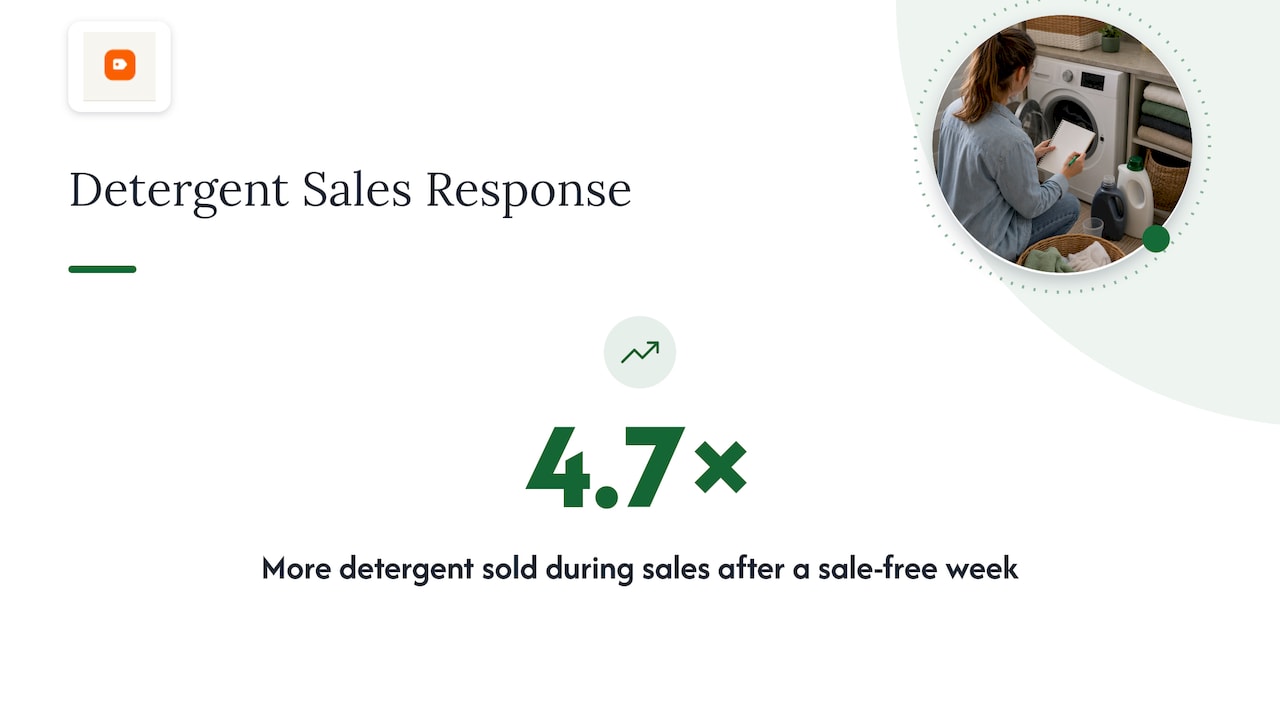
Shoppers react strongly to detergent discounts. A 2002 NBER working paper studying laundry detergent found that the quantity sold was 4.7 times higher during sales than outside them, provided there had been no sale the previous week. In plain terms, people do not buy at the sticker price when they can wait. The paper also reports that households accumulate inventory in response to temporary price cuts, which is the behavior this article recommends: buy more when it is cheap, then buy none until the next dip.
That study is old, and prices have changed a great deal since. Still, the habit it describes is the one that keeps costs low today.
How to tell a real sale from a fake one
A yellow tag does not make a deal. Three checks take under a minute.
1. Calculate cost per load
Divide the price by the number of loads on the label. This is the single most useful number in the aisle, and it is the method recommended by detergent brands themselves for comparing sizes and formulas.
Here is an illustration with made-up round numbers:
- Jug A: $18.00 for 90 loads is $0.20 per load.
- Jug B: $13.00 for 48 loads is about $0.27 per load, even though the sticker price is lower.
- Jug C, on sale: $22.00 for 110 loads is $0.20 per load. That is no better than Jug A at its regular price.
The cheapest-looking tag lost, and the "sale" turned out to be an ordinary price. If you want benchmarks for what a normal load costs, our breakdown of detergent cost per load and our guide to how much a load of laundry costs show the typical range.
2. Compare formats on the same footing
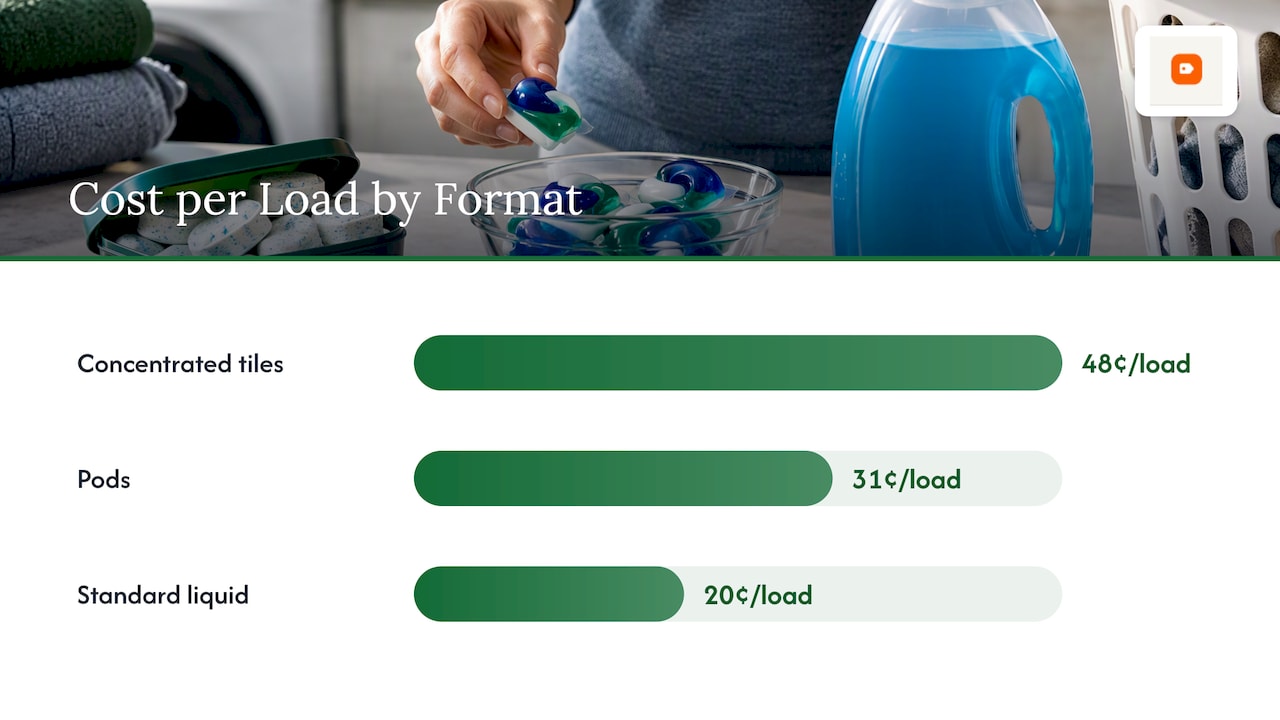
Format changes the math. A 2026 report on a newer concentrated detergent format put concentrated tiles at about 48 cents per load, against about 20 cents for standard liquid and 31 cents for pods. Convenience and packaging are real reasons to choose a format, but you should know what you are paying for them. Our comparison of pods versus liquid goes through the per-load numbers in detail.
3. Look at the price history, not just today's tag
If a price is "40% off" a number nobody ever paid, it is marketing. Compare the sale price against what the same product cost over the last few weeks. A real sale is a dip below the usual range. Our stock-up price guide explains the three month rule and the unit price tools we use to spot those dips.
Price does not equal cleaning power
Spending more does not automatically get you cleaner clothes. Consumer Reports' tests of more than 50 detergents found that a high price does not guarantee high performance, and that some less expensive products clean comparably. Those tests date from 2010, so formulas have changed, but the principle holds: let cost per load narrow the field, then pick from what remains by the brand and scent your household likes.
How much detergent should you stock up on?
The best sale in the world is wasted if the product degrades in your closet or you run out of space. A practical rule is to buy enough to reach the next likely sale window and not much more.
Shelf life limits the stockpile
Laundry detergent does not truly expire, but it can lose effectiveness. According to The Spruce, unopened liquid detergent typically stays effective for 12 to 18 months, and an opened container for about six months, when stored at normal temperatures. That timeline is the real ceiling on how much you should buy.
The same source recommends a cool, dry spot, and airtight containers for powders and single-dose products, so moisture does not clump or degrade them. A laundry room shelf above the dryer, which gets warm and humid, is not ideal. A hallway closet or a basement shelf away from the water heater is better.
A simple stock-up formula
Work out your own usage and sale rhythm:
- Count your loads. A household that washes five loads a week uses roughly 260 loads in a year.
- Pick a horizon. One retail guide suggests a three to six month supply during promotional periods for homes. With sale windows that come about three times a year, three to four months is a comfortable target.
- Divide. Loads needed over the horizon, divided by loads per jug, gives the number of jugs. For 65 loads a quarter and a 100-load jug, that is one jug per quarter, or two jugs if you want a six-month cushion.
- Check storage. If you cannot keep it cool and dry, buy less.
Families with babies or heavy loads will use more, and our diaper timing guide applies the same stock-up thinking to another category where the household goes through product quickly.
Do not overdose
Stocking up only pays off if each load uses what the label says. Overdosing is a common way to waste money, and measuring to the first cap line helps you reach the listed number of loads. If a jug says 100 loads and you pour double, you are really paying twice the cost per load you calculated. A reminder taped inside the cabinet door works better than good intentions.
Other ways to pay less per load
Subscriptions and membership buying
Subscribing directly with a brand can produce ongoing savings. One 2026 guide puts direct subscriptions at 15% to 25% below one-time retail purchases. Retailer subscribe-and-save programs can also help, but the discount only matters if the base price is competitive. We explain how to check unit price and price history before subscribing.
Membership retailers are popular for detergent too. A June 2025 Consumer Reports survey found that 62 percent of Americans who belong to a membership-based retailer regularly buy laundry detergent there. Large sizes there are often cheap per load, but you still have to do the division, and you have to have room to store a big jug.
Skip the DIY detergent
Homemade recipes look like an easy saving, but experts advise against them: DIY detergent may damage washing machines and may not clean effectively. A store-brand detergent bought at a sale price usually gets you to a low cost per load without that risk.
Pair detergent timing with appliance timing
If you are replacing your machines, the same principle of timing and unit costs applies. You can see current washing machine deals and clothes dryer deals on our site, and a more efficient machine lowers every future load.
Cold water is also worth knowing about. A cold winter can drop incoming water temperatures, and detergent can work less well in very cold water, so check that your formula is rated for cold washes if your pipes run chilly.
A year of buying: a sample plan
Here is how a typical household might put this together without overthinking it.
- January or February: If your supply is under two months, buy one large jug or a multi-pack at the best cost per load you find.
- March or April: Check unit prices. If a spring promotion beats your last purchase, buy enough to reach September.
- September: Do the same check. Skip if you still have three months in the cabinet.
- Black Friday through December: Compare bundles carefully, since gift sets and "value packs" are sometimes priced above the standard size. Buy to reach the new year.
The rule that ties it together: never buy at a price higher than your last good purchase unless you are almost out. Running low is the only situation where waiting costs you more than paying a bit extra.
Our take: buy by the load, not the label
We built OutletPicks around one idea: the sticker price tells you very little. Detergent is the perfect example. Jugs come in different sizes, formulas range from standard liquid to pods to concentrated formats, and every brand prints a different number of loads. Sale tags make the picture muddier.
That is why we rank products by real cost per unit, and for detergent that unit is the load. We recheck retailer prices on a rolling cycle and normalize them, so a 46-load jug and a 100-load jug can be compared directly, whichever brand or store sells them.
Our advice is simple. Learn the sale windows, keep your usual cost per load in mind, and pounce when a price dips below it. Do not chase a percentage off. Chase a lower number per load.
Alex
See this week's detergent prices ranked by cost per load
Our laundry detergent page ranks current listings by real cost per load across Amazon and partner retailers, so you can see right away whether this week is a good time to buy. If you are shopping for the whole household, you can also browse every category we track, including baby care and body care, and check the brand index to see which brands come out cheapest per unit.
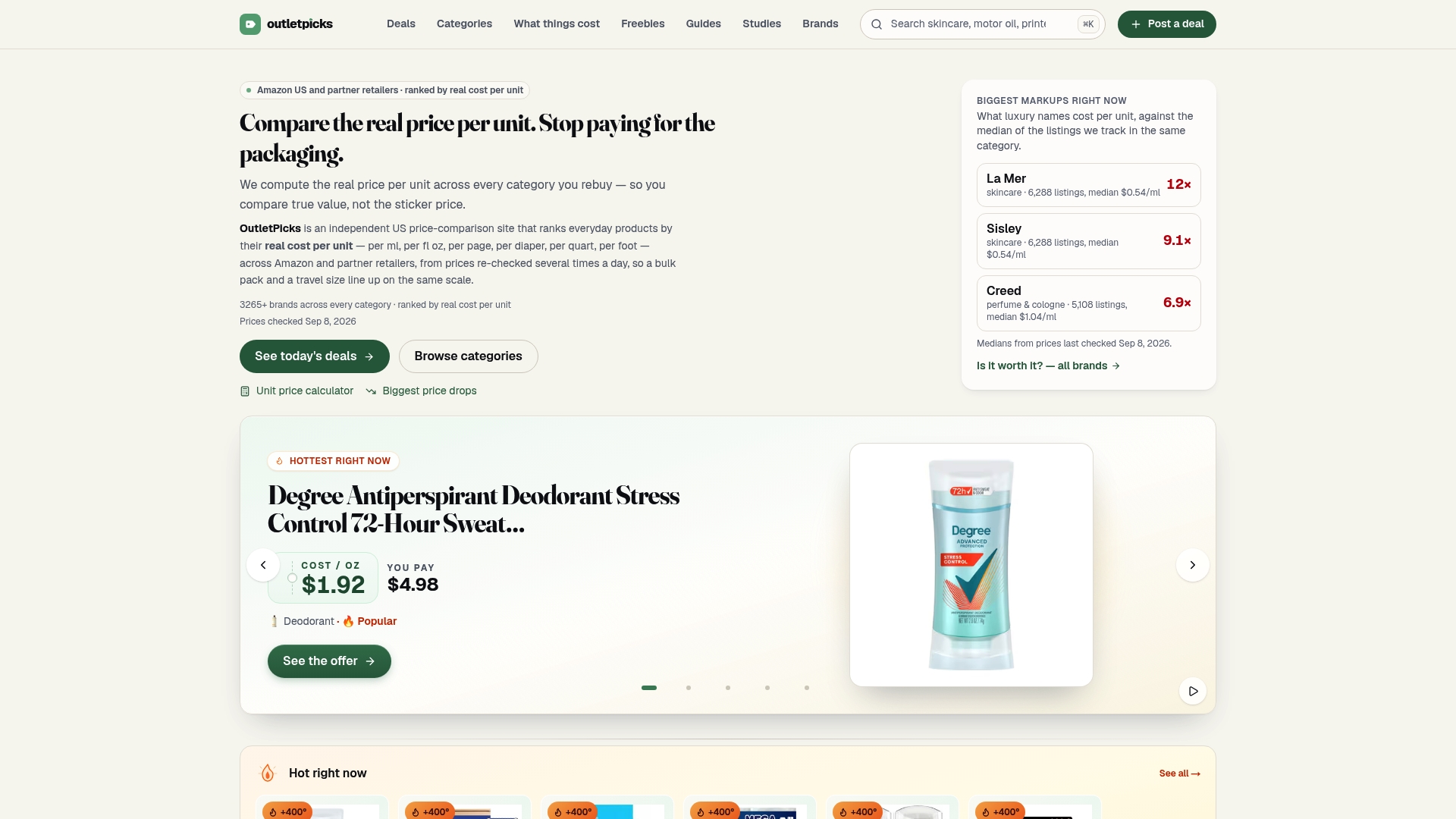
Prices change as retailers update them, so check the page before you buy rather than relying on a number you saw last month. When you want something nearby, our dish soap deals are ranked the same way.
FAQ
What laundry detergent is on sale this week?
Sale lineups change constantly, so a static list goes stale fast. Our laundry detergent page is refreshed on a rolling cycle and ranks current listings by cost per load. Sort by that number rather than by the percentage off, and you will see which deals are truly cheap.
Is it cheaper to buy laundry detergent in bulk?
Often, but not always. A bigger container usually lowers the cost per load, yet some large sizes are priced no better than a mid-size jug on sale. Divide the price by the loads on the label for each option. Also check that you can use it within its shelf life, which is about 12 to 18 months unopened for liquid.
Is Black Friday a good time to buy detergent?
It can be. Black Friday and the weeks around it are among the most common discount periods, and January and February can bring strong deals too. Do not assume every holiday offer is the lowest price of the year. Compare it with the cost per load you paid last time.
How long does laundry detergent last once you buy it?
Unopened liquid detergent typically stays effective for 12 to 18 months, and opened liquid for about six months, when stored at normal temperatures, according to The Spruce. Keep it somewhere cool and dry. Powders and single-dose products should go in airtight containers.
Sources
- Laundry Detergent on Sale: Smart Buying Guide 2026
- NBER working paper w9048 on laundry detergent sales
- Cheapest Laundry Detergent (2026): Cost Per Load Compared
- Inside P&G's waterless version of Tide detergent
- Consumer Reports: Laundry Detergent Test, 2010
- Consumer Reports: Best Prices for Cleaning and Paper Supplies
- The Spruce: Does Laundry Detergent Expire?
- Better Homes & Gardens: Should You Make Your Own Laundry Detergent?
- Best times to buy perfume