
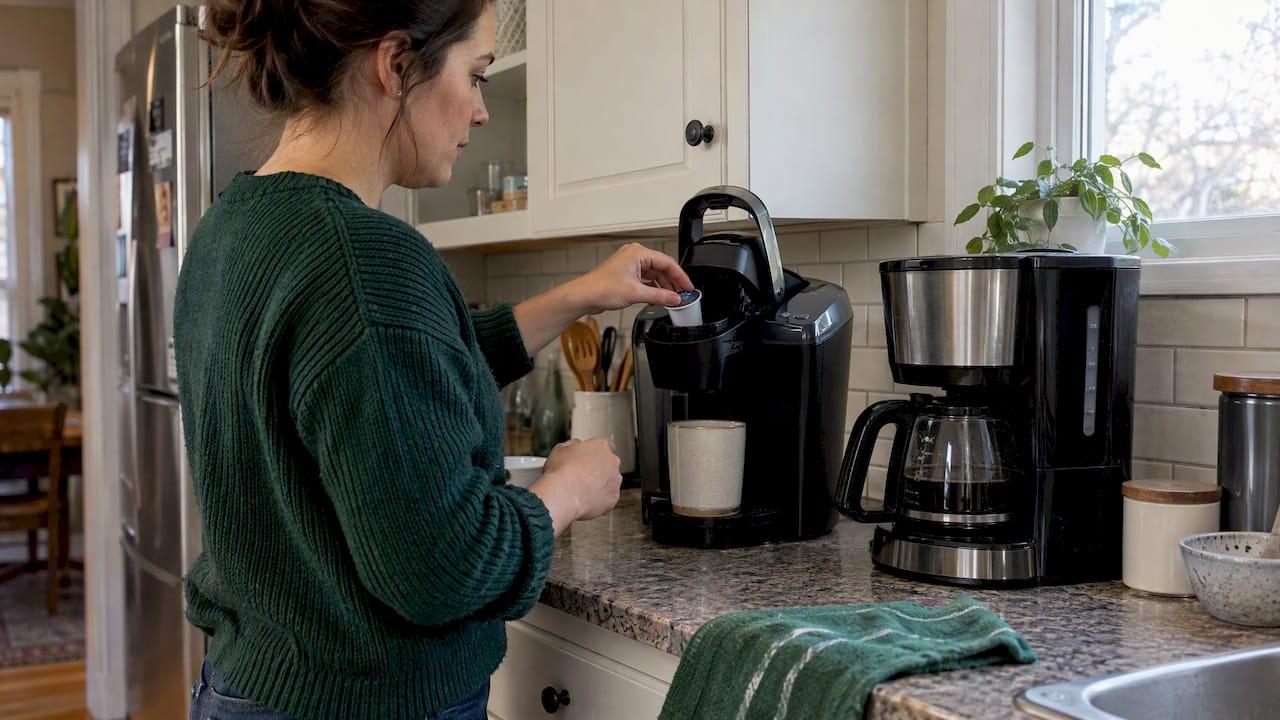
For most home drinkers, drip coffee costs less per cup than Keurig K-Cups, mainly because ground coffee is cheaper per pound than prepackaged pods. The gap narrows if you use a reusable pod filter or buy pods in bulk, and it shrinks even more if you only brew occasionally. The scenarios and math below show exactly where the numbers land for your own habits.
TL;DR:
- At one, two, and three cups daily, drip saves about $88, $182, and $277 yearly, respectively, under the article’s standard price assumptions.
- Bulk or sale pods at $0.40 to $0.50 each, or a reusable filter, can narrow the yearly gap for two cups daily to $60 to $70.
- Clean Keurig entrance and exit needles monthly, because a clog can cause a weak or partial brew and waste a full pod.
- For occasional coffee or guest servings, the yearly price difference may be small; daily drinkers can justify drip’s extra setup through accumulated savings.
Table of Contents
- 1. Breaking down the per-cup cost of K-Cups vs ground coffee
- 2. What actually drives the cost gap between the two methods
- 3. Real monthly and yearly costs by how much you drink
- 4. How we calculated these numbers and what to adjust for yours
- 5. Quick decision rules based on how much you drink
- Use OutletPicks tools to calculate your exact cost per cup
- FAQ
- Sources
1. Breaking down the per-cup cost of K-Cups vs ground coffee
A single K-Cup pod typically runs $0.35 to $0.80 at retail, though bulk and sale pricing can push that down. Some market analyses have found K-Cup pricing that translates to $40 to $50 per pound on a pound-equivalent basis, well above what bagged ground coffee costs. Ground coffee, by contrast, usually sells for $8 to $16 per pound, and a standard 12-ounce cup takes about 10 to 12 grams of grounds, or roughly 0.4 ounces.
That ratio matters more than the sticker price on the bag. A $12 pound of ground coffee contains about 454 grams, enough for roughly 38 to 45 cups, which puts the ingredient cost at around $0.27 to $0.32 per cup before you add electricity or a filter.
OutletPicks' own cost-per-cup analysis of home brewing, using Bureau of Labor Statistics pricing, lands in a $0.31 to $0.43 per-cup range for drip coffee, which lines up closely with the math above and gives a reliable band to plan around.
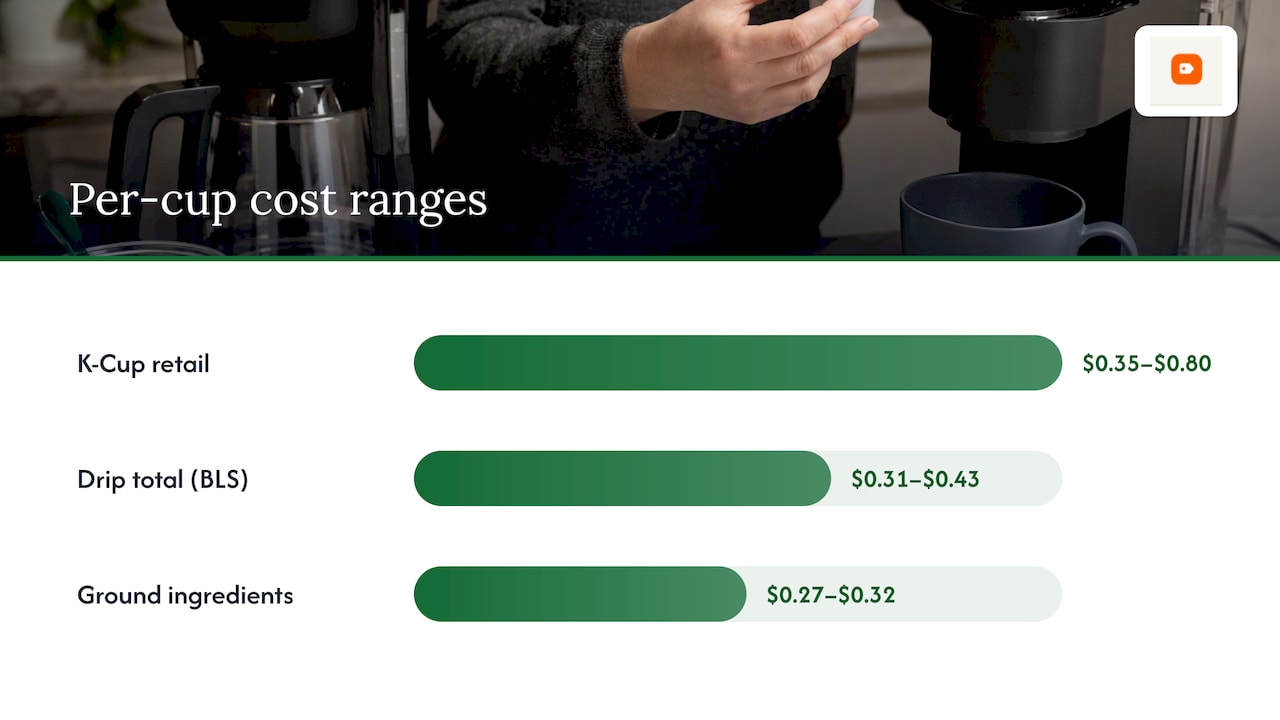
Government data backs this up from a different angle. The Economic Research Service reported that home brewers paid an average of 23.6 cents for a 12-ounce cup of black coffee during the first eight months of 2022, before a 21.9% year-over-year jump in ground coffee prices. Even with inflation since then, that figure shows how far below pod pricing a basic cup of drip coffee can sit.
Machine cost adds a small amount per cup once you spread it out:
- A budget drip machine around $25 to $40, used daily for 4 years, adds roughly $0.02 to $0.03 per cup.
- A budget Keurig around $60 to $100, used daily for 4 years, adds roughly $0.04 to $0.07 per cup.
- A reusable My K-Cup filter lets you brew ground coffee in a Keurig, which drops the ingredient cost toward drip-coffee territory while keeping single-serve convenience.
Put together, drip coffee generally lands between $0.30 and $0.45 per cup including machine amortization, while standard K-Cups run $0.40 to $0.85 per cup depending on where you buy them.
2. What actually drives the cost gap between the two methods
The per-cup number hides a few moving parts worth understanding, since they explain why your own costs might land above or below the averages.
Pack size distorts price-per-unit more than people expect. A 12-count box of pods often costs more per pod than a 60-count box from the same brand, so buying small boxes repeatedly quietly inflates your real cost. Ground coffee shows the same pattern: a 2-pound bag is almost always cheaper per ounce than a 12-ounce bag.
Energy use plays a smaller but real role. The ENERGY STAR scoping report on coffee makers notes that single-serve machines often use less total energy per year than full-size drip machines, but a drip machine's warming plate left on for hours, or a single-serve unit left in standby, can erase that advantage. The report points to auto-off settings as a simple way to keep electricity costs predictable on either machine.
Maintenance adds a few more dollars a year on each side:
- Drip machines need occasional paper filters and a vinegar or descaling rinse every few months.
- Keurig machines need periodic needle cleaning, since a clogged needle can produce a weak or partial cup that effectively wastes a pod.
- A reusable pod filter needs regular rinsing to avoid the same weak-brew problem.
Pro Tip: Clean your Keurig's entrance and exit needles monthly. A partial brew from a clog wastes a full pod's worth of coffee and quietly raises your real cost per cup.
Convenience itself has value that doesn't show up in these numbers. A single button press with no grounds to measure is worth something to a busy household, even if it costs more per year.
3. Real monthly and yearly costs by how much you drink
These scenarios use $0.60 per pod, $12 per pound of ground coffee, 11 grams per cup, a 4-year machine life, and $0.14 per kWh for electricity, roughly the inputs discussed above.
- One cup a day: Keurig runs about $18 a month and $219 a year; drip runs about $11 a month and $131 a year, a savings of roughly $88 a year with drip.
- Two cups a day: Keurig runs about $37 a month and $438 a year; drip runs about $21 a month and $256 a year, a savings of roughly $182 a year with drip.
- Three or more cups a day: Keurig runs about $55 a month and $657 a year; drip runs about $31 a month and $380 a year, a savings of roughly $277 a year with drip.
The percentage gap stays fairly steady across all three levels, with drip running roughly 40% to 45% cheaper than standard-priced K-Cups at every consumption level. That gap narrows if you buy pods on sale or in bulk packs, where per-pod prices can drop to $0.40 to $0.50, or if you switch to a reusable filter loaded with the same ground coffee used in the drip examples. Under either of those adjustments, the yearly gap for a two-cup-a-day household can shrink from around $182 to closer to $60 or $70, which is the point where convenience starts to outweigh the price difference for a lot of households.
4. How we calculated these numbers and what to adjust for yours
The figures above rest on a handful of assumptions you can swap out for your own habits. We used a 12-ounce cup with 10 to 12 grams of coffee, a $0.35 to $0.80 pod price range, $8 to $16 per pound for ground coffee, a 3 to 5 year machine lifespan, and $0.14 per kWh for electricity.
Each input traces back to a specific source:
- Per-cup brewing cost and ground coffee price trends come from the USDA's Economic Research Service.
- Energy-use ranges and standby behavior come from the ENERGY STAR coffee maker report.
- Reusable filter guidance comes from Keurig's own support pages.
- The $0.31 to $0.43 per-cup range comes from OutletPicks' own BLS-based analysis linked above.
If your local coffee prices, pod prices, or electricity rate differ, plug them into the Coffee Ratio Calculator for grams-per-cup math or the Electricity Cost Calculator for your actual kWh rate.
5. Quick decision rules based on how much you drink
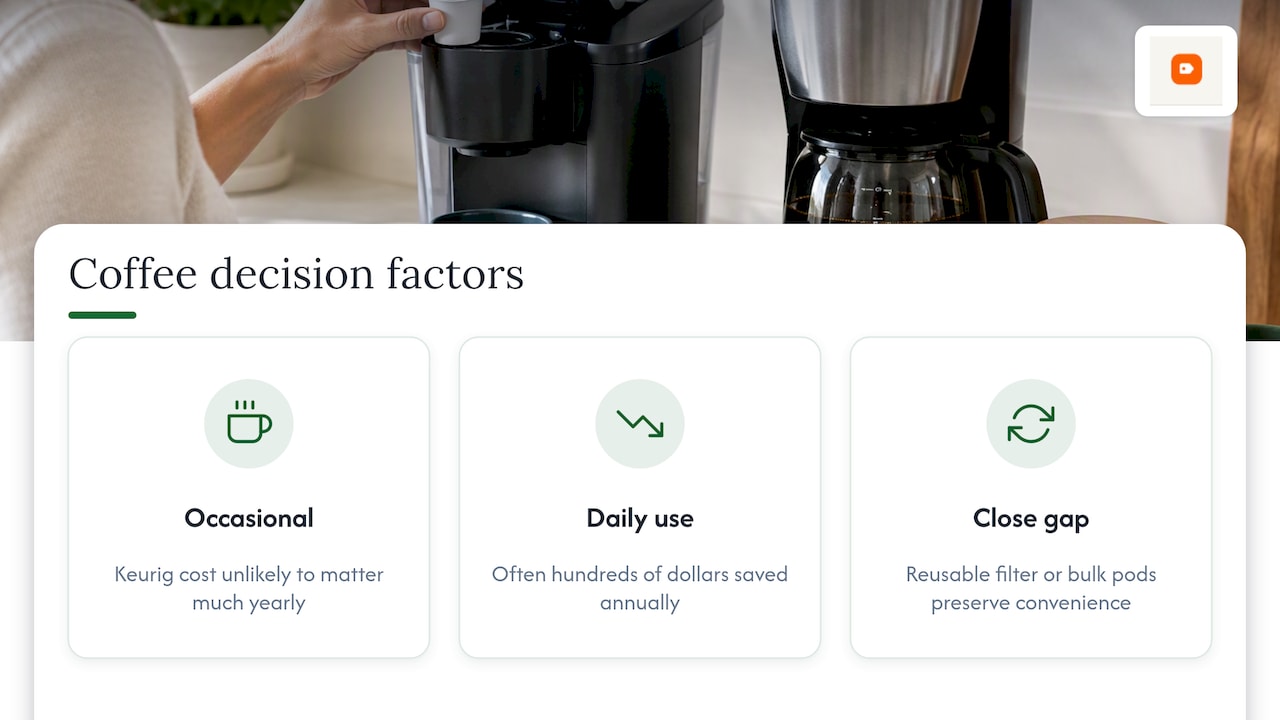
If you drink coffee occasionally or mostly want convenience for guests, a Keurig's higher per-cup cost is unlikely to matter much over a year. If you drink two or more cups a day, every day, drip coffee's lower ingredient cost adds up fast, often by hundreds of dollars annually.
A reusable pod filter or bulk pod buying can close most of that gap without giving up single-serve convenience. Run your own numbers through the calculator above before deciding either way.
— Alex
Use OutletPicks tools to calculate your exact cost per cup
Averages only get you so far when your local coffee prices, pod brand, and electricity rate all differ from the examples above. We built our cost-per-unit tools specifically so you can swap in your own numbers instead of guessing from someone else's grocery receipt.
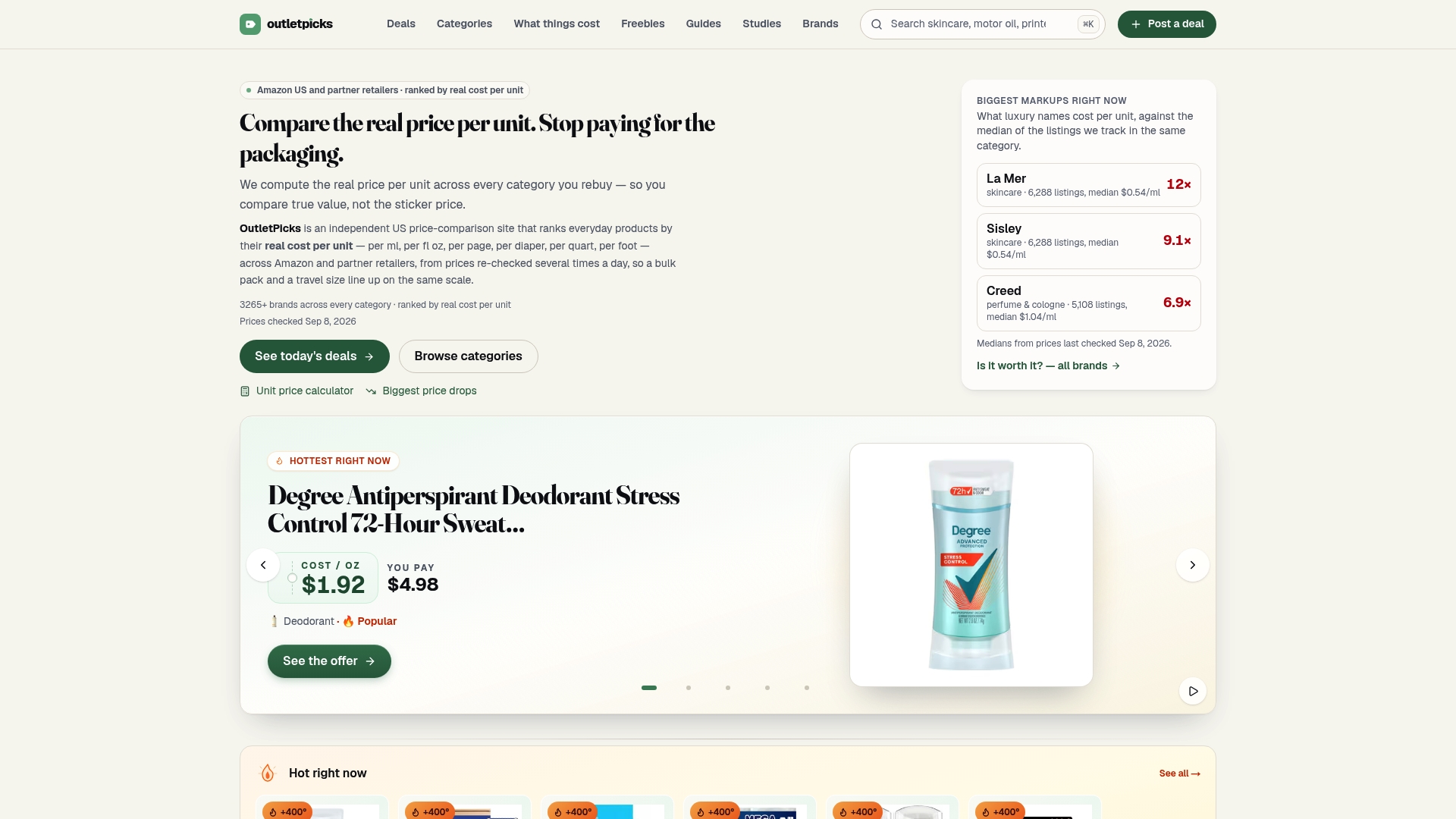
- Use the Coffee Ratio Calculator to find your exact grams-per-cup ratio and scale it to a full pot.
- Read our full cost-per-cup breakdown for the BLS-based pricing behind the $0.31 to $0.43 range cited above.
- If you're weighing specialty beans against standard grocery brands, Purelight Coffee's comparison of pods and ground coffee covers the waste and sourcing side of that choice.
We update retailer prices on a rolling basis across categories, so when you're ready to shop beyond coffee, our full category index shows real cost per unit instead of just the price on the shelf.
FAQ
What are the disadvantages of pod coffee?
Pod coffee generally costs more per cup than ground coffee, with some retail pricing translating to $40 to $50 per pound on a pound-equivalent basis. Pods also create more packaging waste per cup than a bag of ground coffee, and a clogged brewing needle can produce a weak or partial cup if the machine isn't cleaned regularly.
How much does Keurig coffee cost?
A standard K-Cup pod typically costs $0.35 to $0.80, and bulk or sale pricing can bring that closer to $0.40 to $0.50 per pod. Including machine amortization and electricity, a cup brewed in a Keurig usually lands between $0.40 and $0.85 total.
What is the 15-15-15 rule for coffee?
This phrase isn't tied to a standard, widely cited brewing or cost guideline, so definitions vary depending on where you see it. It's not something our cost analysis relies on, and it doesn't affect the per-cup math above.
Is Keurig a drip coffee maker?
No, a Keurig is a single-serve pod machine, which works differently from a traditional drip coffee maker that brews a full pot from ground coffee and a paper or reusable filter. Some Keurig models support a reusable My K-Cup filter, which lets you brew ground coffee single-serve, closer to drip economics but still not the same brewing method.
Sources
- Rising costs have percolated through to coffee prices in 2022 | Economic Research Service
- ENERGY STAR Scoping Report - Coffee Makers
- How to use My K-Cup | Keurig support
- Using K-Cups costs up to 5 times more than getting coffee from a pot