
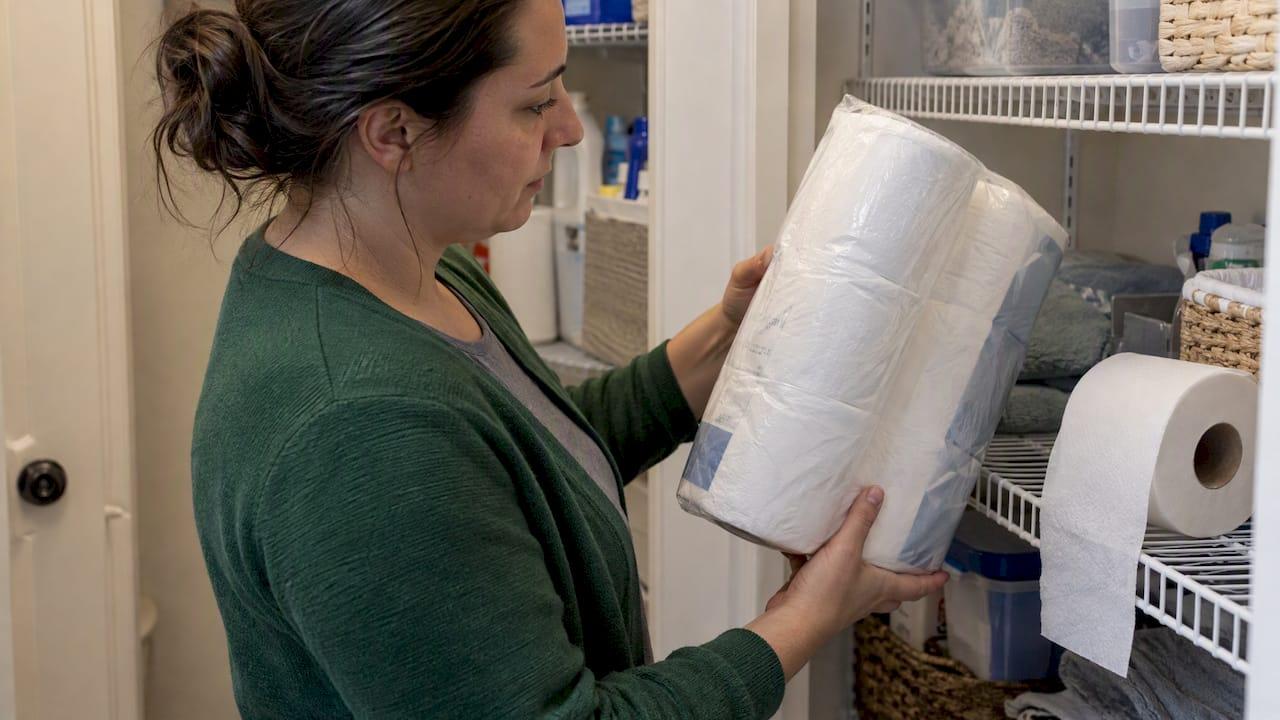
Price per sheet, or price per 100 sheets, is the fairest way to compare toilet paper, because roll counts and “mega” labels hide how much paper you actually get. Divide the pack price by the total sheets, then compare. We calculate that unit price across retailers on OutletPicks, so start by checking the exact pack you’re considering.
TL;DR:
Subtract coupons, membership offers, and subscription discounts before dividing by total sheets; shipping and checkout costs can change which pack is cheapest.
Compare packs with similar ply and sheet size, since thicker or larger sheets may reduce the number used while bulk formats may not fit standard holders.
For septic systems, flush only human waste and toilet paper, and keep wipes and paper towels out of the bowl.
Membership warehouses often have low unit prices, but weekly ads, drugstore promotions, and online offers can change the winner, so recheck live listings.
Table of Contents
How do you calculate toilet paper price per sheet?
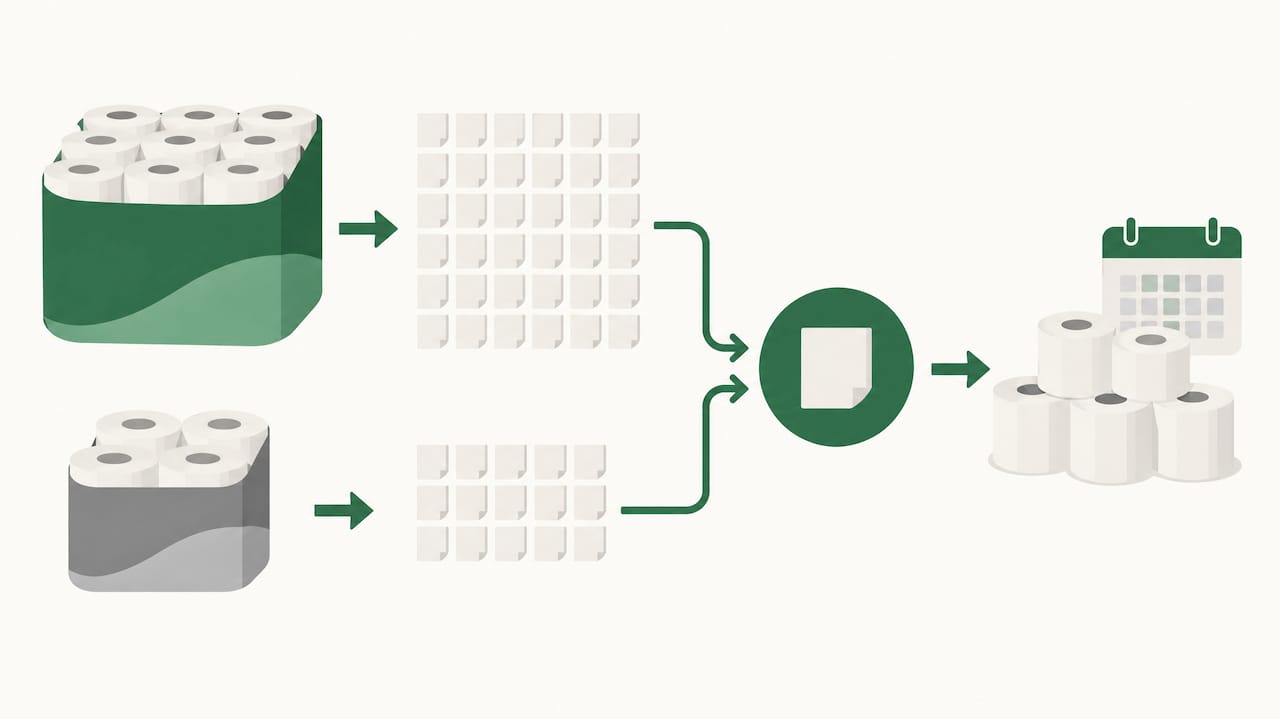
The math is straightforward, and Consumer Reports recommends price per 100 sheets as a fair unit metric. Follow these steps:
-
Find the sheets per roll on the label, then multiply by the rolls in the pack to get total sheets.
-
Divide the pack price by total sheets to get the price per sheet.
-
Multiply that result by 100 to get the price per 100 sheets, which gives you a number that is easier to read.
-
Subtract any coupon or membership discount from the price first, then redo the division.
Here is a worked example with illustrative numbers. Say a pack of 9 mega rolls has 320 sheets per roll, which is 2,880 sheets, and costs $18. That is $0.00625 per sheet, or about $0.63 per 100 sheets. Apply a $3 coupon and the same pack drops to $15, or about $0.52 per 100 sheets.
Pro Tip: Recalculate at checkout. Shipping, membership pricing and subscribe-and-save discounts can change the final price, and the label price may not be what you pay.
Our toilet paper calculator also estimates what you use and spend each month. If a roll count looks too good, our note on how many sheets are on a roll shows why labels mislead.
Which toilet paper brands and formats should you compare?
Treat the entries below as a shortlist of listings to check, not a ranking. Prices move by date and retailer, so always recalculate for the exact pack in front of you.
-
Angel Soft: a value-oriented brand to compare against other listings. It suits shoppers who want lots of sheets per pack, so check its current per-sheet cost against everything else.
-
Seventh Generation: a sustainability-positioned option that can be competitive per sheet in large packs. It fits buyers who want responsibly sourced fiber without paying a big premium, but confirm the unit price before you commit.
-
Charmin Ultra Strong: a premium-feel national brand that usually costs more per sheet. It suits people who put strength and softness first, and coupons or promo bundles can narrow the gap.
-
Presto! (Amazon private label): a value-focused option sold online in several pack sizes. Amazon listings often include it in unit-price comparisons, and subscription discounts can lower the cost further. Watch pack size, since the best unit price often sits in one particular count.
-
Scott (commercial and contract formats): very large rolls and cartons that can bring per-sheet cost down sharply. They work best for big households or facilities with compatible dispensers, because the cores and rolls may not fit a standard holder.
Some of these names appear in more than one pack format, so compare like with like: same ply, similar sheet size, and the same retailer on the same day. Our guide to mega roll vs. regular roll walks through that logic.
What matters besides the raw price per sheet?
The cheapest sheet is not always the cheapest bathroom visit. Check these before you buy:
-
Ply and sheet size: a thicker or larger sheet can mean you use fewer per visit, which lowers your effective cost even when the unit price looks higher.
-
Septic safety: the EPA’s septic guidance says to flush only human waste and toilet paper, so keep wipes and other non-flushables out of the bowl.
-
Shrinkflation: fewer sheets per roll raise your unit price even when the pack price holds steady. Our shrinkflation analysis shows how unit-price drift builds up over time.
-
Storage and household size: bulk packs cost less per sheet, but they need space and may not suit a small household.
Consumer Reports documents shrinkflation in major toilet paper brands, which is why we compare sheets, not rolls.
If you’re also weighing reusable options for other household hygiene spending, this look at what period underwear costs applies the same budgeting mindset.
Where and when should you buy to get the lowest price per sheet?
Check several retailer types, because the winner changes by pack and week:
-
Membership warehouses: in Consumer Reports’ price checks, bulk and generic options at membership retailers often had the lowest unit prices.
-
Big-box stores and supermarkets: watch weekly ads and regional chains for stock-up deals.
-
Drugstores: promo pricing can beat shelf prices, and listings often show unit price.
-
Online marketplaces and office supply outlets: Staples deal pages publish price per 100 sheets for many SKUs, which makes comparison quick.
-
Subscription programs: subscribe-and-save discounts can lower the unit price, so recalculate with the discount applied.
Time your purchase around weekly ads and seasonal stock-up sales, then confirm sheets per roll and the final checkout price before you buy.
How do we collect and normalize our prices?
We want you to know where the numbers come from:
-
We run rolling price checks across retailers and normalize each listing to price per sheet.
-
We draw on published buying guides, including Consumer Reports findings, and on retailer price snapshots such as the Walgreens toilet paper catalog, which shows unit pricing for many SKUs.
-
Prices vary by date and retailer, so recheck live prices on OutletPicks before a big purchase.
What is my take on buying toilet paper by the sheet?
Alex here: run the unit-price math before any bulk buy, and run it again when you clip a coupon. A pack that looks like a bargain on the shelf can lose to a plainer one once you divide by total sheets. Use the number as your starting point, then let your household’s preferences, and your septic system if you have one, make the final call. A cheap sheet you hate using is no savings at all.
— Alex
Where can you see the current best price per sheet?
We calculate and rank products by their real cost per unit, and we refresh prices on a rolling cycle, so the comparison you see stays current. Run a live check on our brand index ranked by real cost per unit, or browse our category pages to find the best price per sheet today.
FAQ
Which toilet paper is septic safe?
Look for plain toilet paper that breaks down quickly, and avoid anything labeled as wipes. The EPA says wipes, paper towels and similar items should never be flushed into a septic system.
How many pieces of toilet paper should I use?
There is no official number, since it depends on ply, sheet size and your own habits. Try a few visits with your usual paper and count the sheets, then plug that into our toilet paper calculator to see your monthly cost.
What is the best toilet paper on Amazon?
The best option is the one with the lowest price per sheet for the quality you want. Compare Presto! and the name brands by dividing the pack price by total sheets, and recheck after subscription discounts.
Does pack size always lower the price per sheet?
Usually, but not always. Larger packs often cost less per roll, yet Consumer Reports advises checking unit pricing to be sure.