
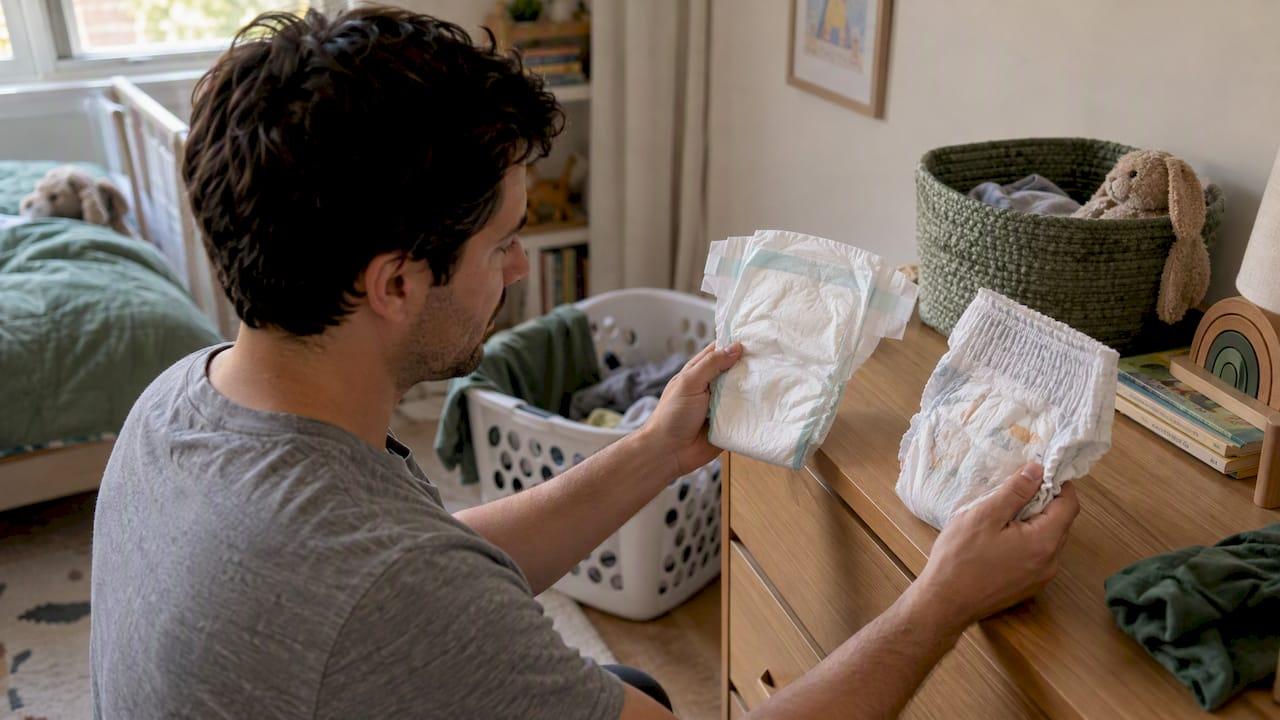
For daytime potty learning, training pants usually work better once a toddler shows real readiness signs, while diapers remain the smarter choice for sleep, long outings, or any child who isn't quite there yet. The right call also depends on your budget: training pants typically cost more per use than regular diapers, so knowing the real unit price matters as much as knowing your child's development stage.
TL;DR:
- Look for dry stretches of at least two hours, ability to follow simple directions, manage clothing, communicate needs, and discomfort with wetness.
- Try a supervised trial without a diaper for two or three hours, then track dry periods and timely signals before committing to a full switch.
- Use training pants for dressing practice and short outings, but avoid frequent switching because absorbency can mask wetness and inconsistent routines can blur learning cues.
- Disposable diapers average about $0.29 each in the United States; compare unit prices, and budget separately for nighttime protection after daytime training.
- Keep diapers or other overnight products for sleep until your child wakes dry most mornings; nighttime dryness often develops well after daytime control.
Table of Contents
- Training Pants vs Diapers for Daytime Learning: Pros and Cons
- What Diapers, Training Pants, and Cloth Really Cost
- Is Your Toddler Ready to Switch? A Quick Checklist
- Using Training Pants Without Slowing Down Progress
- Naps, Nighttime, and Why Diapers Often Stick Around Longer
- Why I Put Readiness Before Budget, Not the Other Way Around
- Comparing Real Costs with OutletPicks' Unit-Price Tools
- FAQ
- Sources
Training Pants vs Diapers for Daytime Learning: Pros and Cons
Training pants are built to feel like underwear: a child can pull them up and down without help, which supports the independence that potty learning depends on. That same design is also their weakness. Because they're more absorbent than cloth underwear, a wet training pant doesn't always feel uncomfortable right away, which can dull the physical cue a child needs to connect "wet" with "I need to go." Mayo Clinic notes that training pants work best as a practice tool rather than a safety net, and that once daytime toileting is consistent, moving to real underwear tends to work better than staying in training pants indefinitely.
Diapers still make sense in several situations: car rides, childcare drop-offs where consistency can't be guaranteed, or any stretch where a toddler isn't yet showing readiness signs. They contain accidents fully and don't require the same vigilance that training pants or underwear do.
Where many parents lose ground is bouncing between the two depending on the day. Mayo Clinic specifically cautions against frequent switching, since it can blur the signals a toddler is just starting to pick up on.
- Training pants: support independent dressing and a sense of "big kid" progress, but can mask wetness.
- Diapers: reliable containment for outings and non-ready toddlers, but offer no learning signal at all.
- Switching back and forth: tends to confuse routines and slow overall progress.
What Diapers, Training Pants, and Cloth Really Cost
The sticker price on a pack rarely tells you what you're actually paying per diaper or per change, and that gap grows during a transition when you might be buying two product types at once.
- Disposable diapers average around a low cost per diaper in OutletPicks' unit-price analysis, though pack size and brand shift the amount meaningfully. Buying in bulk from a value brand usually lowers the per-unit cost; premium brands and small packs push it up.
- Disposable training pants generally run more per use than standard diapers, since the stretchy waistband and underwear-like construction add material cost.
- Cloth training pants or cloth diapers carry a higher upfront cost but a lower cost per use over time, which OutletPicks' cloth versus disposable comparison breaks down in detail for households weighing the long-term math.
Disposable diapers cost about $0.29 each on average in the US, according to OutletPicks' pricing data, which makes a useful baseline when comparing any training pant price against it.
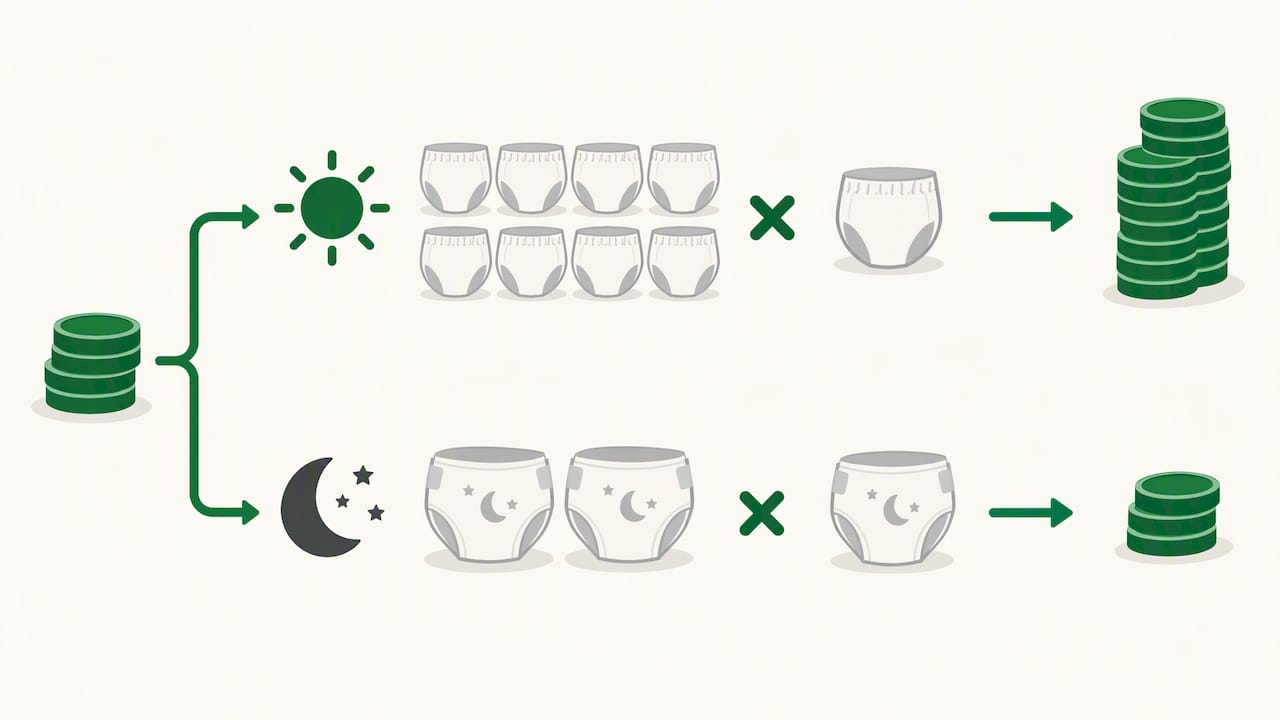
A simple budgeting rule: multiply your toddler's typical daily changes by the unit cost of whatever product you're using, then add a separate line for nighttime protection, since many families keep using diapers or overnight-specific products after switching to training pants or underwear during the day. Running your own numbers through a unit-price calculator takes the guesswork out of comparing brands and pack sizes side by side.
Is Your Toddler Ready to Switch? A Quick Checklist
Age is a weak signal on its own. Healthychildren recommends focusing on developmental readiness rather than hitting a specific birthday, since children vary widely in when they're prepared.
- Dry stretches: your toddler stays dry for two hours or more during the day.
- Following instructions: they can understand and act on simple, one-step directions.
- Dressing skills: they can pull pants or training pants up and down with little help.
- Communication: they tell you, through words or clear gestures, when they need to go or have gone.
- Discomfort with mess: they show they don't like a wet or soiled diaper.
If most of these are showing up consistently, a short trial helps confirm readiness without a big commitment. Try two or three supervised hours without a diaper, tracking how often your child stays dry or signals in time; HealthyChildren.org points to this kind of brief test as a low-risk way to gauge progress before committing to a full switch. A parent-facing readiness guide can walk through similar checklists if you want a second framework to compare against.
Using Training Pants Without Slowing Down Progress
Training pants work best in specific moments rather than as an all-day default from day one.
- Use them during active dressing practice, when your toddler is pulling pants up and down repeatedly.
- Use them for short outings where a true accident would be hard to manage but you still want the learning cue.
- Pair them with a consistent routine: scheduled bathroom prompts, a visual chart, and small positive reinforcement when your toddler succeeds.
- When accidents happen, clean up calmly and briefly, without shaming language, then return to the routine.
If accidents pile up over a few days, it's reasonable to step back into diapers for a week before trying again. Regression during a stressful stretch, a new sibling, a move, illness, is common and usually resolves once things settle, according to HealthyChildren.org's guidance on older toddlers.
Pro Tip: Keep a spare set of clothes and a training pant within reach during the first two weeks: fast, low-drama cleanup keeps accidents from turning into a source of anxiety for your toddler.
Naps, Nighttime, and Why Diapers Often Stick Around Longer
Night dryness lags well behind daytime control, and that's normal rather than a sign of slow progress. Mayo Clinic notes that many children don't consistently stay dry overnight until school age, so keeping diapers or an overnight-specific absorbent product in rotation long after daytime training is complete is common practice, not a step backward.
- Keep diapers or nighttime pull-ons in use for naps and overnight sleep until your child wakes up dry on most mornings.
- Protect the mattress with a waterproof cover while you're testing overnight readiness.
- Test for nighttime readiness only after daytime training has been consistent for a while, not at the same time.
- If overnight accidents continue past the point other milestones are solid, that's still within the typical range and doesn't need a product change.
Why I Put Readiness Before Budget, Not the Other Way Around
I've seen plenty of parents reach for training pants because a birthday or a daycare deadline says it's time, not because their toddler is actually signaling readiness. Pediatric guidance is consistent on this: behavior matters more than age. My advice is to run the two or three hour at-home trial first, then check the unit-price math second, once you know which product you'll actually be buying in volume. A quick cost comparison takes five minutes and tells you whether training pants, diapers, or a cloth option fits your household best during the weeks ahead.
— Alex
Comparing Real Costs with OutletPicks' Unit-Price Tools
We built our unit-price calculator because sticker prices on diaper and training pant packs rarely show what you're actually paying per change, and that gap gets expensive fast during a multi-month transition. Our tools let you rank products by real cost per diaper, per training pant, or per cloth change, so you can budget with numbers instead of guesswork.
- Run your own numbers with our cost-per-diaper breakdown before stocking up on either product.
- Check our diaper size chart to find the cheapest price per size as your toddler grows.
- Browse our baby care category to compare current prices across brands and pack sizes.
FAQ
Are training pants as good as diapers?
Training pants and diapers serve different purposes rather than one being universally "better." Training pants support independent dressing and the learning process during daytime practice, while diapers offer more reliable containment for sleep, outings, or toddlers not yet showing readiness.
Will training pants hold pee?
Yes, disposable training pants are absorbent enough to contain urine, similar to a diaper, which is part of why they can dull the wetness cue a child needs during learning. Mayo Clinic recommends treating them as a practice tool rather than relying on them the way you would a diaper for full-day containment.
What age should you start training pants?
There's no single age that works for every child, since HealthyChildren.org points to developmental readiness signs, like staying dry for stretches, following instructions, and communicating needs, as the better signal than a birthday. Most families start seeing these signs sometime in the toddler years, but the right time varies widely from child to child.
What is the 10-10-10 rule for potty training?
This isn't a term used in pediatric or clinical guidance from sources like Mayo Clinic or HealthyChildren.org, so there's no standard, agreed-upon definition to point to. If you've seen it referenced elsewhere, treat it as informal advice rather than an established clinical framework, and lean on readiness signs and short at-home trials instead.