
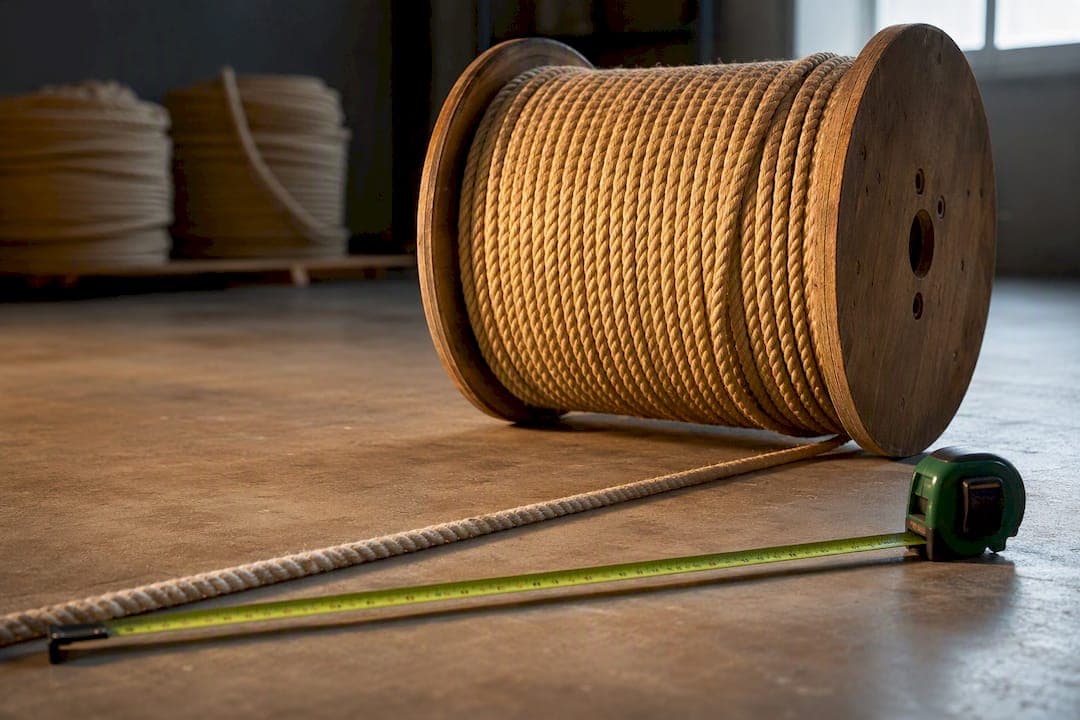
Rope typically runs $0.04 to $5.00 per foot, with most DIY jobs landing between $0.10 and $1.50 per foot depending on material and diameter. Diameter and purchase quantity drive the price more than brand does. A rolling per-foot price table and a spool math check with a tool like the OutletPicks Unit Price Calculator will confirm the real cost before checkout. For most home and garden tasks, 3/8-inch nylon or polypropylene in the $0.15 to $0.60 per foot range is the practical default.
TL;DR:
- Rope prices vary widely, with common materials costing from $0.04 to $0.50 per foot, depending on diameter and bulk quantity.
- Nylon 3/8-inch offers a strong balance of cost and performance for most DIY load-bearing applications, typically costing around $0.35 per foot.
- Spool size significantly reduces per-foot cost once you purchase at least 100 feet, with discounts of 10 to 15 percent or more for larger quantities.
- Heavier or specialty ropes beyond 1/2-inch diameter can cost several dollars per foot and require careful consideration of load and environmental needs.
- Always verify the actual cost per foot, including shipping and waste, before buying, especially when comparing online spools against local cut lengths.
Table of Contents
- What Does Rope Cost Per Foot by Material?
- How Does Spool Size Change the Per-Foot Price?
- Real Per-Foot Prices by Diameter and Material
- How to Choose the Right Rope for Your Project
- How OutletPicks Calculates Per-Foot Rope Prices
- When Does Buying a Spool Actually Save Money?
- The Simplest Way to Shop for Rope by the Foot
- Check Your Exact Rope Cost Before You Buy
- Sources
- FAQ
What Does Rope Cost Per Foot by Material?
Rope pricing splits into two camps: general-purpose synthetics that undercut everything else, and specialty or natural-fiber ropes that cost several times more per foot for added strength or feel. The rope cost guide puts the overall market range at roughly $0.04 on the low end to $0.50 on the high end for common materials, though large-diameter and industrial ropes push well past that.
Here's how the five most common types stack up when bought by the foot.
| Material | Typical diameters | Per-foot price range | Common uses | Bulk price pattern |
|---|---|---|---|---|
| Polypropylene | 1/4" to 1/2" | $0.04 to $0.20 | Clotheslines, general utility, water sports (floats) | Drops fast on 100+ ft spools |
| Nylon (3-strand) | 1/4" to 1" | $0.14 to $2.43 | Towing, anchoring, general DIY strength jobs | Steady 10 to 15 percent savings past 100 ft |
| Polyester | 1/4" to 1/2" | $0.15 to $0.45 | Outdoor use, low stretch, UV exposure | Moderate savings on larger spools |
| Manila (natural fiber) | 3/8" to 1 1/2" | $0.30 to $8 or more | Decorative work, landscaping, nautical themes | Smaller discount curve, priced by weight |
| Paracord | 1/8" | $0.09 to $0.35 | Crafts, camping, lightweight tie-downs | Sharp drop past 100 ft spools |
A few things jump out. Polypropylene is the cheapest option on the shelf, and it's also the weakest and least UV resistant, so it earns its low price. Nylon 3/8-inch is the workhorse most DIY buyers should default to for general strength jobs, sitting in a sweet spot between cost and performance. Manila and heavy-gauge nylon over an inch thick are where prices jump into specialty territory, often north of $2 per foot.
For anything load-bearing, like a swing set, a tow strap, or climbing gear, price should never be the only filter. Consult the manufacturer's working load specs before you buy on cost alone. A cheap rope that fails under load costs far more than the few cents you saved per foot.
How Does Spool Size Change the Per-Foot Price?
The single biggest lever on rope cost is how much you buy at once, not which store you buy it from. A single cut foot of 1/8-inch parachute cord runs about $0.30, but that same cord drops to roughly $0.253 per foot on a 1,000-foot roll, a savings pattern that shows up across nearly every rope category.
Retailers list prices two ways: per foot on the product page, or per roll with the per-foot math buried in fine print. Watch for rolls priced attractively that turn out to be short lengths, which hides a higher effective rate.
To convert any SKU to a true per-foot number:
- Find the total roll or spool price and its exact length in feet.
- Divide the total price by the number of feet.
- Compare that figure against the per-foot price for smaller cuts of the same product.
- Add estimated shipping for heavy spools before declaring a winner.
Real Per-Foot Prices by Diameter and Material
Sourced pricing from actual product listings makes the diameter effect obvious. Thicker rope uses more raw material per foot, so cost scales up quickly once you cross the 1/2-inch mark.
| Diameter | Material example | Per-foot price | Price basis |
|---|---|---|---|
| 1/4" | 3-strand nylon | $0.14 | Retail cut length |
| 3/8" | 3-strand nylon | $0.35 | Retail cut length |
| 1/2" | 3-strand nylon | $0.61 | Retail cut length |
| 1" | 3-strand nylon | $2.43 | Retail cut length |
| 1/8" | Parachute cord | $0.253 | 1,000-ft spool average |
| paracord | Nylon paracord | $0.09 | Cut-to-length SKU |
The nylon figures come from retail cut lengths, meaning you're paying the "buy a few feet" rate rather than the spool-discounted rate. The parachute cord number reflects a bulk average across a full 1,000-foot roll, so it's not directly comparable to a single-foot nylon price. When you budget for a project, round up your foot count by 5 to 10 percent for knots and waste, then add a flat shipping estimate if you're ordering a heavy spool online rather than picking it up locally.
How to Choose the Right Rope for Your Project
Price only matters once you know what the rope actually needs to do. Start with a simple checklist before you compare a single dollar figure.
- Define the required breaking strength for your heaviest expected load.
- Apply a safety factor: for static loads, a common approach is to size rope rated at 5 to 10 times the working load, more for dynamic or life-safety applications.
- Check UV and abrasion resistance if the rope will live outdoors long term.
- Consider knot performance. Some synthetics slip more than others and need specific knots to hold.
- Factor in flotation needs for marine or water-based uses; polypropylene floats, nylon does not.
Diameter and strength move together, but not in a straight line. Doubling the diameter of a rope roughly quadruples its cross-sectional area, which is why a jump from 3/8-inch to 3/4-inch nylon can push the per-foot price up several times over rather than just doubling it.
Natural fiber rope like manila appeals for its look and grip, but it absorbs water, degrades faster outdoors, and costs more per foot than most synthetic equivalents at the same diameter. Choose manila for decorative or handling-friendly applications, and choose synthetic for anything exposed to weather or sustained load.
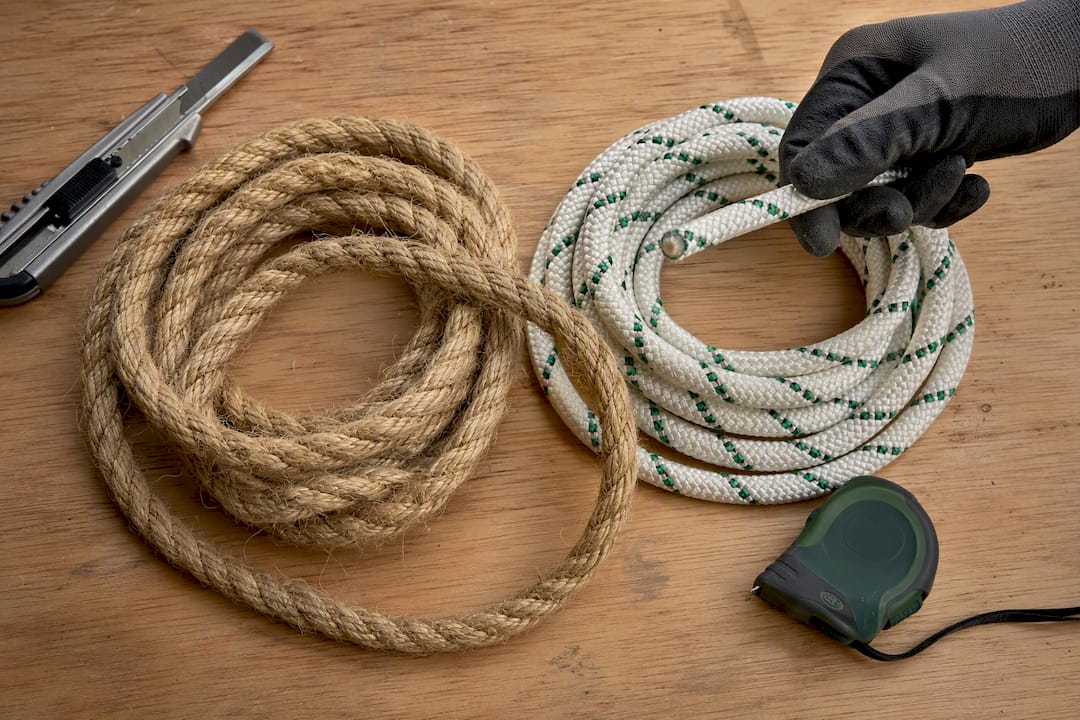
Pro Tip: Divide the rated working load by the per-foot price to get a quick "strength per dollar" score. It won't replace a proper engineering spec, but it's a fast way to rule out overpriced rope that doesn't offer more actual capacity.
How OutletPicks Calculates Per-Foot Rope Prices
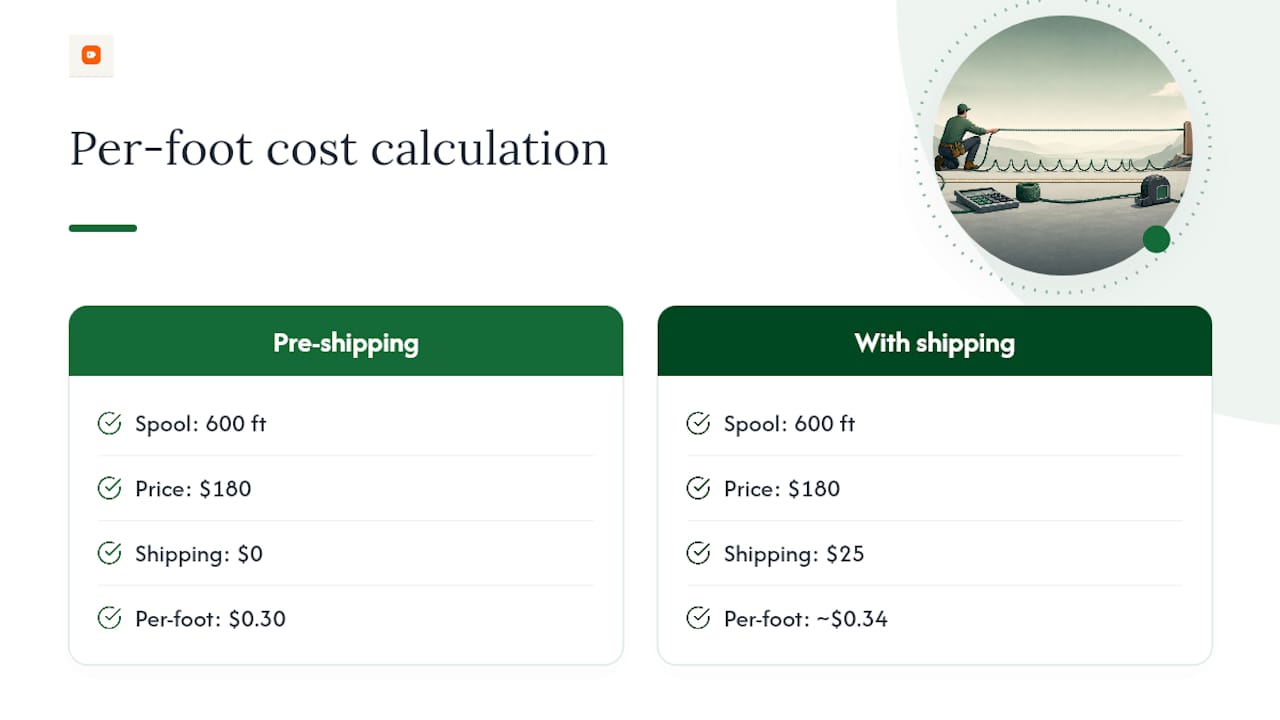
Retailer prices are checked on a rolling cycle and normalized down to a per-foot figure, so a 600-foot spool and a 10-foot retail cut of the same product can be compared honestly. Shipping and typical waste are factored into the landed cost estimate rather than ignored.
A quick example: a 600-foot spool listed at $180 works out to $0.30 per foot before shipping. Add a flat $25 shipping charge on a heavy spool, and the real per-foot cost climbs to about $0.34. Run your own SKU through the Unit Price Calculator to see the landed number before you commit.
When Does Buying a Spool Actually Save Money?
Spools start paying off once you clear roughly 100 feet of need. Mission Rope's pricing tiers show savings of 10 to 15 percent between single-foot cuts and 100-foot purchases, and the discount curve keeps improving past that.
- A 100-foot purchase typically beats single-foot pricing by a meaningful margin without adding shipping risk.
- Heavy spools (600 feet and up) can lose some of that savings to shipping cost if the retailer charges by weight.
- Local hardware stores that cut rope to length on-site often beat online per-foot prices for small quantities, since there's no shipping to absorb.
- Some suppliers set minimum order lengths for spool pricing, so check that a smaller project still qualifies for the discounted tier.
If you need less than 50 feet, a local cut-to-length purchase is usually the safer bet. Past that, compare the landed online price against the local rate before deciding.
The Simplest Way to Shop for Rope by the Foot
Buy the cheapest rope that meets your required working load and environmental exposure, and stop there. The only exception worth paying extra for is safety-critical use, climbing, rigging, or sustained marine exposure, where a higher-grade rope's UV and abrasion resistance genuinely extends its working life.
— Alex
Check Your Exact Rope Cost Before You Buy
Sticker prices on rope, cord, and spools rarely tell you the real per-foot cost until someone does the math. Instead of eyeballing a $180 spool against a $0.35-per-foot retail cut, run the numbers first.
The Unit Price Calculator converts any spool, roll, or package price into a true per-foot figure in seconds, shipping included. Pair it with the Price Per Square Foot Calculator if you're also estimating material waste on a larger project. Before purchasing, plug the listed price and length into a calculator to see what you're actually paying per foot.
Sources
FAQ
How much is 100 feet of rope?
At $0.10 to $0.60 per foot for common nylon or polypropylene diameters, 100 feet typically costs around $10, and bulk spool pricing often trims that by 10 to 15 percent.
What is the price of a 50-foot battle rope?
Battle ropes use thick, heavy-duty poly dacron or nylon in large diameters, and specialty fitness retailers usually price a 50-foot length at amounts that vary depending on diameter and cover material.
How expensive is rope?
Rope ranges from about $0.04 per foot for basic polypropylene up to $5 or more per foot for large-diameter or specialty synthetic and natural fiber rope.
How much does rope cost at Home Depot?
Home Depot's by-the-foot rope selection spans roughly $0.11 per foot for basic paracord up to $4 or more per foot for thicker specialty rope, similar to pricing at dedicated rope suppliers.
Is it cheaper to buy rope by the spool or by the foot?
Buying a spool almost always lowers the per-foot price once you need 100 feet or more, though heavy spools can lose some of that savings to shipping costs on online orders.