
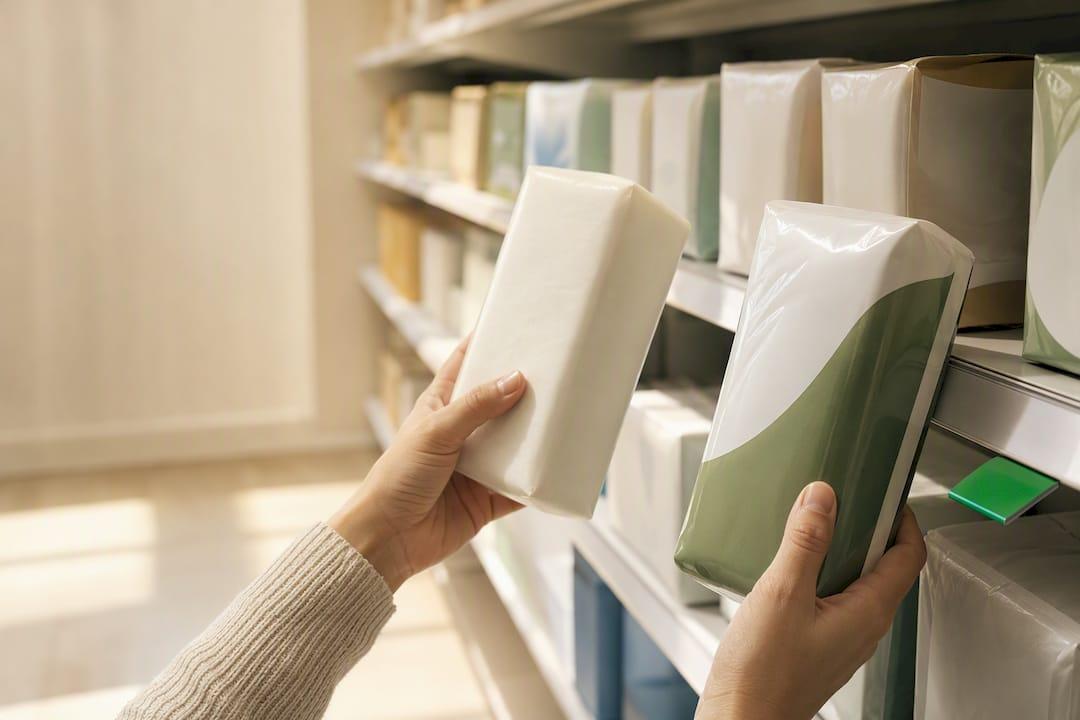
For most household staples, private label matches or beats national brands on value, and often on quality too. The exceptions are regulated and premium categories, where formulation differences or clinical testing still give brands a real edge. The three factors that decide it every time: unit price, category parity, and how much research and regulation the product actually requires.
TL;DR:
- Private label products often match or beat national brands in value and quality, especially in everyday staples, OTC medications, and vitamins.
- Manufacturing models such as co-packing, retailer-spec manufacturing, and proprietary development lead to wide quality variation among private labels.
- Category-specific factors, like FDA regulation for drugs and infant formula, determine when store brands are a reliable replacement for brands.
- Retailers pay strategic shelf placement and branding efforts to build store loyalty, rather than advertising demand for the product name.
- Price comparisons based on unit price and recent reviews are essential for accurately assessing private label value over brand products.
Table of Contents
- Private Label vs. Brand: What Each Term Actually Means
- How Private-Label Products Get Made (and Why It Matters)
- Which Categories Favor Private Label, and Which Favor Brands?
- Pros and Cons Beyond the Price Tag
- Your Four-Step Checklist for Choosing In-Store or Online
- How Fast Is Private Label Actually Growing?
- What Outletpicks Found When It Measured the Real Price Gap
- When Regulation, Not Preference, Should Decide
- How Store Brands Went From Stigma to Strategy
- Trademark and Legal Differences Worth Knowing
- Why Private-Label Marketing Looks Nothing Like Brand Marketing
- Why Private Label Gets the Best Shelf Position Now
- Why Shoppers Trust (or Distrust) the Store Brand
- Standout Private-Label Success Stories
- What Shoppers and Brands Should Take From This
- Compare Private Label and Brand Prices With Outletpicks
- Sources
- FAQ
Private Label vs. Brand: What Each Term Actually Means
"Private label vs brand" gets used loosely, so it helps to separate three distinct things you'll see on a shelf or product page.
A national brand (also called a branded product or manufacturer brand) is made and marketed by a company that sells the same product under its own name across every retailer that carries it. Think Tide, Pepsi, or Neutrogena. These companies fund advertising, research and development, and often years of clinical or consumer testing, and that overhead gets baked into the price.
A private label product is developed for, and often owned by, a specific retailer. The retailer controls the formula, the packaging, and the specs, even when a third-party factory does the manufacturing. White label is a close cousin: a generic product made by one manufacturer and sold under many different retailer names with only the label changing.
Three production models drive private label today:
- Co-packing, where the same factory line that fills brand-name bottles fills the store-brand version, often with a nearly identical formula.
- Retailer-spec manufacturing, where the store writes detailed specifications and a contract manufacturer builds to that spec.
- Retailer-developed proprietary lines, where the retailer designs its own formula or product from scratch.
Walmart's Great Value, Kroger's Simple Truth, Costco's Kirkland Signature, Trader Joe's private label, and Aldi's house brands all use combinations of these three models, and that mix is exactly why quality varies so much from one private-label item to the next.
How Private-Label Products Get Made (and Why It Matters)
Manufacturing model is the single biggest reason two products that look identical can taste, work, or last differently. Here's how the three approaches break down in practice.
- Co-packing and dual-supply. A manufacturer that makes a national brand's cereal, aspirin, or shampoo also runs a private-label version on the same or an adjacent line, often with the identical active ingredients and only cosmetic differences in packaging or scent. This is common in vitamins, OTC pain relievers, and pantry staples, and it's the scenario where private label is most likely to be functionally identical to the brand.
- Retailer-spec manufacturing. The retailer writes a detailed specification (protein content, fabric weight, fill volume) and puts it out to bid among contract manufacturers. Costco's Kirkland Signature famously operates this way, often exceeding the spec of the national brand it's compared against because Costco negotiates high minimums and strict QC as a condition of the contract.
- Retailer-developed proprietary products. The retailer designs the product itself, sometimes hiring the same food scientists or chemists who once worked for national brands. Trader Joe's built its entire identity this way, developing recipes in-house rather than copying an existing branded product.
Many of the biggest private labels are simply the store's own portfolio at scale. Kirkland belongs to Costco, and Great Value belongs to Walmart, which gives each retailer enormous leverage over sourcing and quality control that a smaller store brand could never negotiate. That scale is also why some private labels can afford better ingredients than the mid-tier national brand sitting next to them on the shelf, not just a cheaper imitation of the premium one.
Which Categories Favor Private Label, and Which Favor Brands?
Category matters more than any general rule about private label versus branded products. Some aisles are essentially a coin flip on quality; others carry real risk if you assume parity that doesn't exist.
A few things explain the pattern. Pain relievers and vitamins score high on parity because the FDA requires the same active ingredient at the same dose regardless of who sells it, so a store-brand ibuprofen and a name-brand one are chemically the same drug. Premium skincare and specialized pet food sit at the other end because the brand's value is tied to a specific tested formula or clinical claim that a retailer's private label usually hasn't replicated or validated.
Infant formula deserves its own note: it's tightly regulated on nutrient content, which is why private-label formula from major retailers can be a reasonable swap, but it's still worth reading the nutrient panel side by side before switching an infant's diet.
Pros and Cons Beyond the Price Tag
The sticker price is the easiest thing to compare and often the least reliable.
- Unit price is the real comparison. A 24-ounce jar priced lower than an 18-ounce brand jar is not automatically the better buy once you do the math per ounce.
- Shrinkflation hits both sides. Brands and private labels have both quietly shrunk package sizes while holding the price steady, and shrinkflation has added up to 32% per unit in some categories tracked by Outletpicks, hidden entirely from a shopper glancing at the shelf tag.
- Formulation differences matter most in personal care. A private-label moisturizer might swap a specific active ingredient or fragrance compound, which matters little for a basic lotion but a great deal for a retinol serum or a fragrance-sensitive skin type.
- Supply consistency can shift. Because private label sometimes rotates between suppliers to control cost, the exact formula or texture of a private-label product can change year to year in ways a stable national brand usually doesn't.
- Trust signals still apply to private label. Third-party certifications (USDA Organic, Leaping Bunny, dermatologist-tested claims), a transparent ingredient list, and a solid volume of independent reviews are just as meaningful on a store brand as on a national one.
Pro Tip: Before switching a personal-care or skincare product to a private-label version, pull up the ingredient list for both and compare the first five ingredients. If they match closely, the products likely perform close to identically.
Consumer research backs up the caution around personal care specifically. Price is consistently the top reason shoppers say they'd try a private-label alternative, but comparable quality and ingredient concerns are close behind as reasons shoppers switch back to the brand.
Your Four-Step Checklist for Choosing In-Store or Online
Run this checklist before you toss either option in the cart, and it takes less time than reading the label twice.
- Calculate the true unit price. Divide the total price by the unit that matters (ounces, sheets, diapers, milliliters), not by the package price. This step alone catches most shrinkflation tricks and pack-size illusions.
- Compare the ingredient or formulation list. For food, supplements, and personal care, check the active ingredient and the first several ingredients listed. A near match usually means near-identical performance.
- Check certifications and recent reviews. Look for third-party certification marks and skim the most recent reviews, not just the star average, since formulas and suppliers can change over time.
- Buy the smallest size first, then re-evaluate. Test a small size or single unit before committing to a bulk purchase, especially with a product you've never tried from that retailer.
Some categories are worth paying more for regardless of the math: therapeutic or prescription-strength products, infant formula where you have any doubt about the nutrient match, specialized or prescription pet food, and clinical skincare treating a diagnosed skin condition. In each of these, the brand's testing and regulatory documentation is the product, not just the packaging around it.
| Situation | Recommended default | Why |
|---|---|---|
| Everyday staples, cleaning, paper goods | Private label | Near-identical formulas, lower unit price |
| OTC medication, vitamins | Private label | Same active ingredient required by law |
| Prescription pet food, therapeutic skincare | Brand | Formulation and clinical testing not replicated |
| Fragrance and specialty personal care | Test small size first | Scent and formulation vary widely |
How Fast Is Private Label Actually Growing?
Private label is no longer the discount-aisle afterthought it was a generation ago. It now represents roughly [20 to 25% of unit sales in U.S. grocery](https://www.whobrands.com/blog/is-there-a-difference-between-store-brand-and-name-brand), with even higher penetration in club and mass channels like Costco and Walmart.
Consumer sentiment has shifted right along with that growth. A 2025 analysis from NIQ found that about 75% of consumers say private label offers good value, and 72% now view it as a strong alternative to national brands rather than a lesser one.
Two forces are accelerating this. Persistent grocery inflation has pushed even brand-loyal shoppers to test store brands out of necessity, and many stayed once they found the quality acceptable. At the same time, retailers have poured investment into premium private-label tiers and the marketing content to support them, which has quietly erased much of the old stigma that store brands were just for shoppers who couldn't afford better.
- Great Value alone reaches an estimated 72.7% household penetration among U.S. consumers, with Walmart's Equate health and beauty line near 51%.
- Retailers increasingly run private label across value, mid, and premium tiers rather than a single generic price point.
- Ingredient transparency has become a competitive feature for private label, not just an afterthought, as retailers respond to shoppers who read labels before switching.
What Outletpicks Found When It Measured the Real Price Gap
Outletpicks tracks real cost per unit across retailers on a rolling cycle, which matters because sticker price alone hides most of the story on shrinking pack sizes and inconsistent sizing between brand and private-label versions of the same product.
| Comparison type | What the sticker price shows | What the per-unit price reveals |
|---|---|---|
| Same category, different pack sizes | Similar or lower price on private label | Sometimes a smaller true discount, or occasionally a larger one, once divided by unit |
| Same category, matched sizes | Private label priced lower | Savings confirmed and quantified per ounce/unit |
The Generic vs Name Brand: The Real Price Gap, Measured study walks through this comparison across everyday categories, and the gap is often wider or narrower than the shelf tags suggest.
Pro Tip: You can run this same check in under a minute: find the total volume on both packages, divide each price by that volume, and compare the two per-unit numbers directly, ignoring the sticker price entirely.
When Regulation, Not Preference, Should Decide
For OTC drugs, the FDA requires generic and private-label versions to match the brand's active ingredient and dosage, with therapeutic equivalence documented through the Orange Book and ANDA approval process. That documentation is exactly why a store-brand ibuprofen works the same as the name brand.
Infant formula, therapeutic pet food, and prescription-strength skincare deserve extra caution. Check labeling closely, or ask a pharmacist or veterinarian before substituting.
How Store Brands Went From Stigma to Strategy
Private label isn't a modern invention. Retailers have sold house-brand goods since at least the late 1800s, when grocers like A&P introduced their own coffee and canned goods to undercut national suppliers and build customer loyalty to the store itself rather than to any single manufacturer.
For most of the 20th century, store brands carried a clear stigma: plain packaging, minimal marketing, and a reputation as the option shoppers picked only when money was tight. National brands, meanwhile, built their dominance through decades of national advertising campaigns, brand mascots, and the postwar boom in mass media that let a single company reach millions of households with one message.
The shift began in earnest in the 1990s and accelerated through the 2000s and 2010s, as retailers like Costco and Trader Joe's proved that a store's own label could carry a premium reputation rather than a discount one. Kirkland Signature launched in 1995 and quickly became known for matching or beating name-brand quality, not just undercutting it on price. Trader Joe's went further, building its entire business around proprietary products developed in-house rather than sourced as cheaper knockoffs of existing brands.
That history explains why private label today spans the full spectrum from bargain-bin generic to genuinely premium. The stigma faded not because retailers marketed harder, but because enough of them proved the products could actually compete on quality, and shoppers noticed.
Trademark and Legal Differences Worth Knowing
Private label and national brands operate under the same trademark law, but the ownership structure looks different. A national brand's manufacturer holds the trademark, formula, and patents for its product, and it licenses or sells that branded item to retailers who have no legal claim to the recipe or the name.
With private label, the retailer typically owns the trademark on the store-brand name itself (Great Value, Kirkland Signature, Simple Truth), even when a third-party contract manufacturer physically produces the product. The manufacturer usually has no right to use that branding elsewhere, and confidentiality agreements often prevent the co-packer from disclosing which retailer's product came off which line.
This is also where "is it legal to private label products" gets answered clearly: yes, it's entirely legal, and it's one of the most common business arrangements in retail. A private-label brand still has to meet the same safety, labeling, and (where applicable) FDA regulations as a national brand selling the identical category of product. What changes is who owns the brand name and formula, not the underlying legal obligations tied to the product itself. Contract manufacturing agreements typically specify quality standards, exclusivity terms, and liability, all separate from the trademark question.
Why Private-Label Marketing Looks Nothing Like Brand Marketing
National brands spend heavily on advertising because their entire business model depends on demand pulling shoppers into any store that carries the product. That means TV campaigns, social media influencers, and sponsorships designed to build brand recognition that travels with the shopper from store to store.
Private label flips that model. The retailer doesn't need to build demand for the product name; it needs to build trust in the store itself, since the private-label line only exists on that retailer's shelves. Marketing dollars go toward in-store placement, packaging design, and loyalty-program tie-ins rather than national ad buys, which is a major reason private-label goods can be priced lower even when the manufacturing cost is similar to the branded version.
Retailers increasingly market tiers within their own private-label portfolio the way a national brand would market separate product lines. Kroger's Simple Truth targets the natural and organic shopper specifically, while a retailer's base-tier private label targets pure value shoppers, all under the same parent store but with distinct visual branding and shelf positioning. This tiered approach lets one retailer capture shoppers across multiple price points without ever mentioning a competing national brand by name.
Why Private Label Gets the Best Shelf Position Now
Retailers control the shelf, and that control has become one of the most valuable strategic assets in the private label versus national brand fight. Placing a store brand at eye level next to the national brand, often at a visibly lower price, is a deliberate merchandising decision, not an accident of stocking.
This matters because shelf placement itself shapes brand perception independent of the product inside the package. A private-label item positioned confidently next to (or above) the national brand signals to the shopper that the retailer stands behind its own product, which is part of why premium private-label lines no longer get relegated to a bottom shelf the way generic products once did.
Retailers also use private label to strengthen the store's own identity in a way no national brand purchase ever could. A shopper who loves Trader Joe's private-label products associates that satisfaction directly with the Trader Joe's brand itself, not with any outside manufacturer, which builds a kind of loyalty that's much harder for a competing retailer to poach. That's a structural advantage national brands simply don't have access to, since their loyalty is tied to the product, not the store selling it.
Why Shoppers Trust (or Distrust) the Store Brand
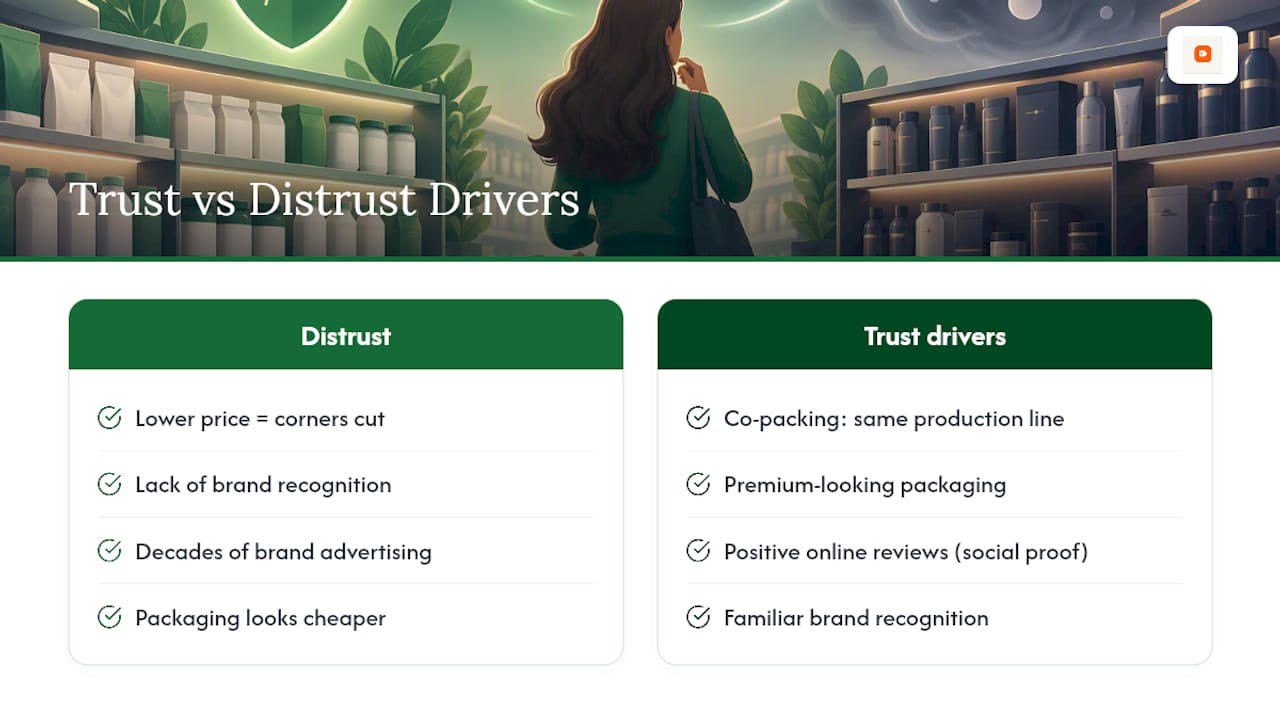
Perception gaps between private label and national brands are shrinking, but they haven't disappeared, and the psychology behind them is worth understanding. Shoppers who distrust private label typically cite a belief that "you get what you pay for," an assumption that a lower price must mean a corner cut somewhere in the formula or manufacturing.
That assumption is often wrong, particularly in categories where co-packing means the private-label version comes off the identical production line as the brand. But the belief persists because national brands have spent decades building recognition through repetition and emotional advertising, and that recognition creates a felt sense of reliability that a newer or less-advertised private label hasn't earned yet in the shopper's mind.
Packaging design plays a bigger psychological role than most shoppers realize. Retailers that invest in premium-looking private-label packaging, matching fonts, and finish quality typically see faster adoption of their private-label lines, because the visual cues signal quality before the shopper reads a single ingredient. This is part of why Aldi's private-label packaging looks deliberately similar in style and color palette to name-brand competitors: it reduces the shopper's mental effort to categorize the product as "just as good," even before tasting or trying it.
Social proof closes the gap fastest. A private-label product with a strong volume of positive reviews online overcomes brand-loyalty bias more effectively than price alone, which is exactly why checking recent reviews belongs in the decision checklist above rather than being optional.
Standout Private-Label Success Stories
A handful of private labels have moved well past "acceptable substitute" into genuine brand loyalty of their own, and each did it differently.
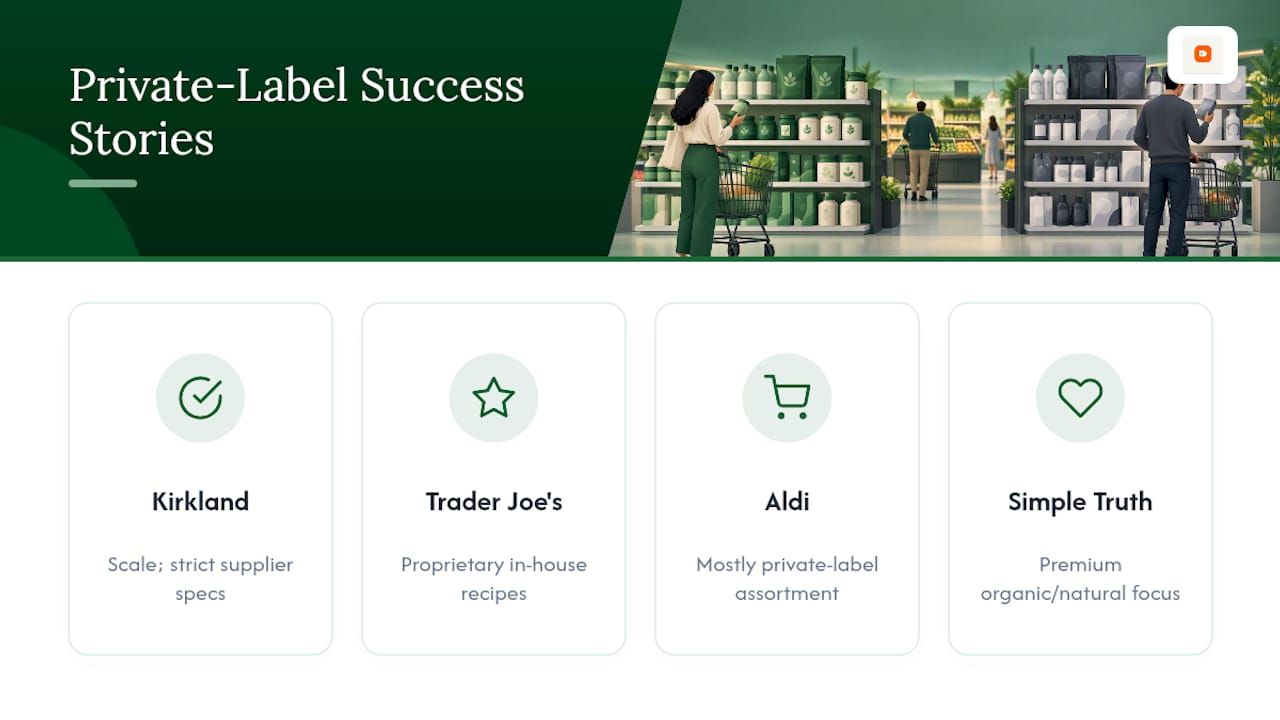
Kirkland Signature built its reputation on scale and strict supplier requirements. Costco negotiates high purchase minimums with contract manufacturers and holds them to quality specs that sometimes exceed the national brand equivalent, which is why Kirkland products frequently earn a reputation for outperforming the name brand at a lower price, not just matching it.
Trader Joe's took the opposite path, developing proprietary recipes in-house rather than replicating existing branded products. Its private label isn't trying to be a cheaper version of anything else on the market; it's an original product line that happens to only exist at one retailer, which is part of why shoppers describe genuine brand loyalty to a store that sells almost nothing but its own label.
Aldi built its entire business model around private label from the start, stocking a small, tightly curated selection where the overwhelming majority of shelf space is Aldi's own brand rather than a mix of national and store brands. That concentration lets Aldi negotiate manufacturing costs down further than a retailer splitting shelf space with dozens of national brands.
Simple Truth from Kroger shows the premium-tier strategy in action, targeting organic and natural-ingredient shoppers specifically rather than competing purely on price, proof that private label now competes across the entire price spectrum rather than just at the bottom of it.
What Shoppers and Brands Should Take From This
Private label isn't slowing down, and it doesn't need to be perfect to win most shelf comparisons. It just needs to be close enough on quality while being meaningfully cheaper per unit.
Brands that survive this shift will be the ones that can point to a real, provable difference, whether that's a clinical formulation, a patented ingredient, or a certification a private label hasn't matched. For shoppers, the fastest path to saving money without a quality gamble is applying the category rules above and running an actual unit-price check instead of trusting the shelf tag.
— Alex
Compare Private Label and Brand Prices With Outletpicks
Reading ingredient lists and doing unit-price math in the aisle works, but it's slow, and prices change week to week. This platform solves the actual bottleneck in this whole comparison: nobody has time to do per-ounce math on every purchase, so it already does this by tracking real cost per unit across retailers on a rolling update cycle instead of relying on the sticker price.
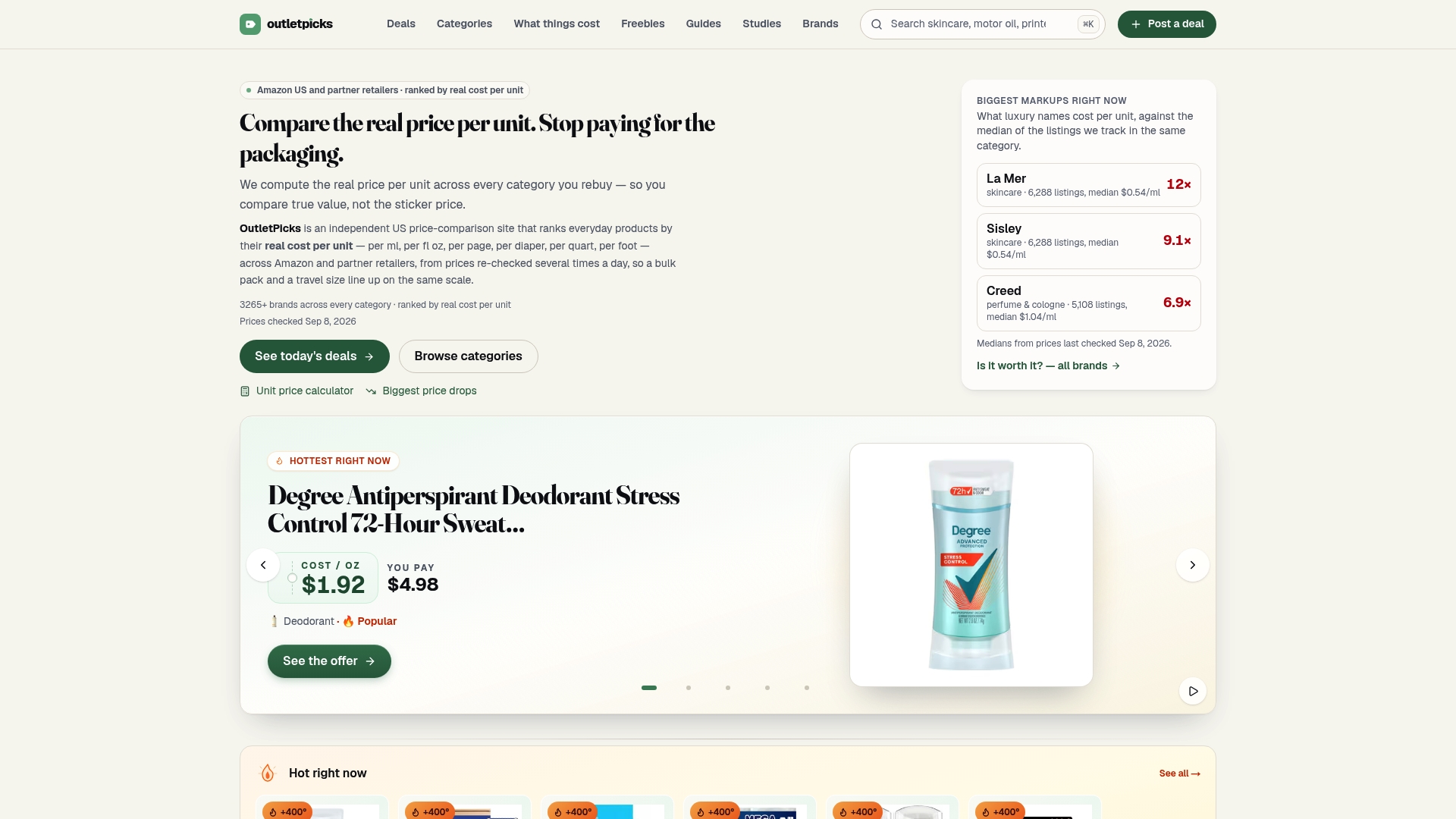
Head to the categories page to see cost-per-unit breakdowns across skincare, hair care, body care, baby care, and more, or check the brand index to see how a specific brand stacks up against private-label alternatives on real per-unit cost. Click through and you'll find interactive unit-price charts and side-by-side comparisons that show exactly where the private-label savings are real and where they're smaller than the shelf tag implies. Start with whichever category you buy most often, and let the numbers make the call instead of the packaging.
Sources
- Private Label and Branded Products: A Changing Shelfscape
- Evaluation of Therapeutic Equivalence
- Is There Actually a Difference Between Store Brand and Name Brand? | Who Brands
FAQ
What Are the Biggest Private-Label Brands in the US?
Walmart's Great Value, Costco's Kirkland Signature, Kroger's Simple Truth, and Aldi's house brands rank among the largest by household reach. Great Value alone reaches an estimated 72.7% household penetration in the US.
Is Trader Joe's Only Private Label?
No, but it's close. The overwhelming majority of Trader Joe's shelf space is its own proprietary private-label products, developed in-house rather than licensed from outside manufacturers, with only a small selection of outside branded items mixed in.
Is Zara a Private Label?
Zara isn't a private label in the traditional retail-grocery sense. It's a vertically integrated fashion brand that designs, manufactures, and sells exclusively under its own name, closer to a national brand model than a store brand sold alongside outside manufacturers' products.
Is It Legal to Private Label Products?
Yes, private labeling is a fully legal and common business arrangement across retail. The retailer owns the trademark on the store-brand name while a contract manufacturer often produces the item, and the product still must meet all applicable safety and labeling regulations for its category.
Does Outletpicks Compare Private Label and Brand Prices?
Yes. Outletpicks calculates real cost per unit across retailers so shoppers can see whether a private-label or branded product is actually cheaper per ounce, sheet, or unit, not just cheaper on the sticker price.