
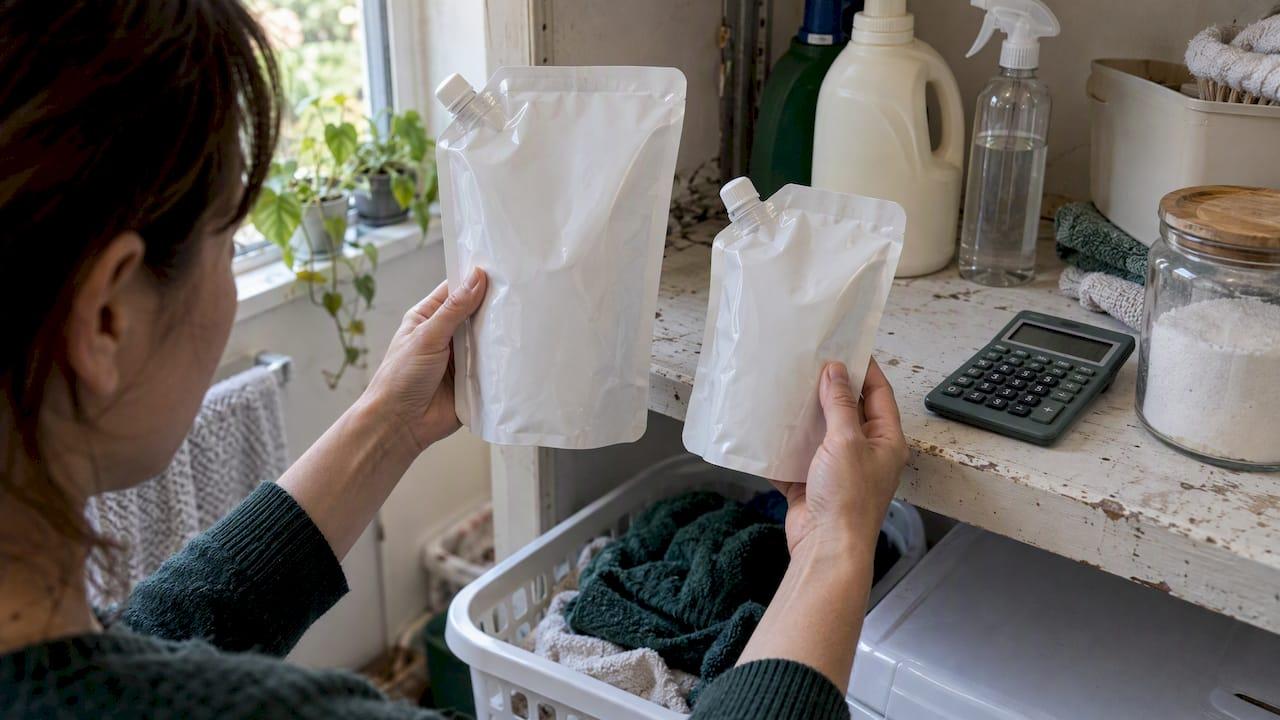
Cost per use equals total price divided by the number of uses you expect to get, and the same math (price divided by quantity) gives you unit price for things like ounces or milliliters. Shoppers reach for this formula when comparing detergent loads, diapers, or perfume sprays across different pack sizes, since sticker price alone hides the real cost. The FTC calls unit pricing the most reliable way to comparison shop, and a calculator can run the numbers in seconds.
TL;DR:
- Larger packages do not always offer the best value; manufacturers sometimes raise the unit price on bigger sizes or shrink packaging secretly.
- Comparing products requires converting all measurements to the same base unit, such as grams or milliliters, to ensure accurate cost calculations.
- Small differences in cost per use, like four cents per load, can add up significantly over time, making proper comparison essential for savings.
- Reusable items have a higher upfront cost but often save money over their lifetime when factoring in recurring expenses and total uses.
- Using a calculator or unit price tag helps quickly identify the most economical option, especially in cases of shrinkflation or mixed measurement systems.
Table of Contents
- What cost-per-use actually measures
- How to calculate cost per use: three worked examples
- Normalizing units and spotting shrinkflation
- Comparing single-use and reusable products fairly
- Fast ways to check cost-per-use while shopping
- Why per-use math changed how I shop
- Try the OutletPicks Unit Price Calculator
- FAQ
- Sources
What cost-per-use actually measures
Cost per unit and cost per use sound similar but answer different questions. Unit price tells you what you pay per gram, ounce, or milliliter, which works well for raw ingredients like flour or lotion. Cost per use tells you what one application, wash, or wear actually costs, which matters more when a product's packaging doesn't match how you use it, like a 500-sheet pack of paper towels or a 60-load jug of detergent.
The two formulas:
- Unit price = total price ÷ quantity (grams, ounces, milliliters, count)
- Cost per use = total price ÷ estimated number of uses
Pick unit price when you're comparing raw volume or weight, like two jars of peanut butter. Pick cost per use when the package specifies servings, loads, diapers, or sprays, since that number reflects how the product is actually consumed.
- Liquids: convert to milliliters or fluid ounces before comparing.
- Dry goods: convert to grams or ounces.
- Discrete items: compare by count (diapers, sheets, capsules).
- Scented or metered products: estimate sprays or doses per container.
How to calculate cost per use: three worked examples
Here's the arithmetic, step by step, for three everyday purchases.
- Laundry detergent. Say a 100-ounce bottle costs $12 and the label recommends a 1.6-ounce dose per load. That bottle delivers about 62 loads (100 ÷ 1.6), so cost per load is $12 ÷ 62, or roughly $0.19 per load. Compare that to a smaller bottle at $7 for 50 ounces with the same 1.6-ounce dose: about 31 loads, or $0.23 per load. The bigger bottle wins here, but only because the dose size stayed the same.
- Diapers. A box of 92 diapers priced at $27.99 works out to $27.99 ÷ 92, or about $0.30 per diaper. If a store adds sales tax, your real cost per diaper rises slightly, so factor local tax into comparisons when the difference between two boxes is a cent or two.
- Perfume. A 50 ml bottle typically yields somewhere around 400 to 500 sprays depending on the atomizer, as discussed in how long a bottle of perfume lasts. At $65 for 50 ml and an estimated 450 sprays, cost per spray lands near $0.14. A smaller 15 ml bottle at $35 with about 135 sprays comes out closer to $0.26 per spray, even though the smaller bottle looks like the "starter" deal.
Pro Tip: Check the actual dose line on detergent caps and the spray-count estimate on fragrance product pages before assuming the label's suggested serving matches how you really use it.
Normalizing units and spotting shrinkflation
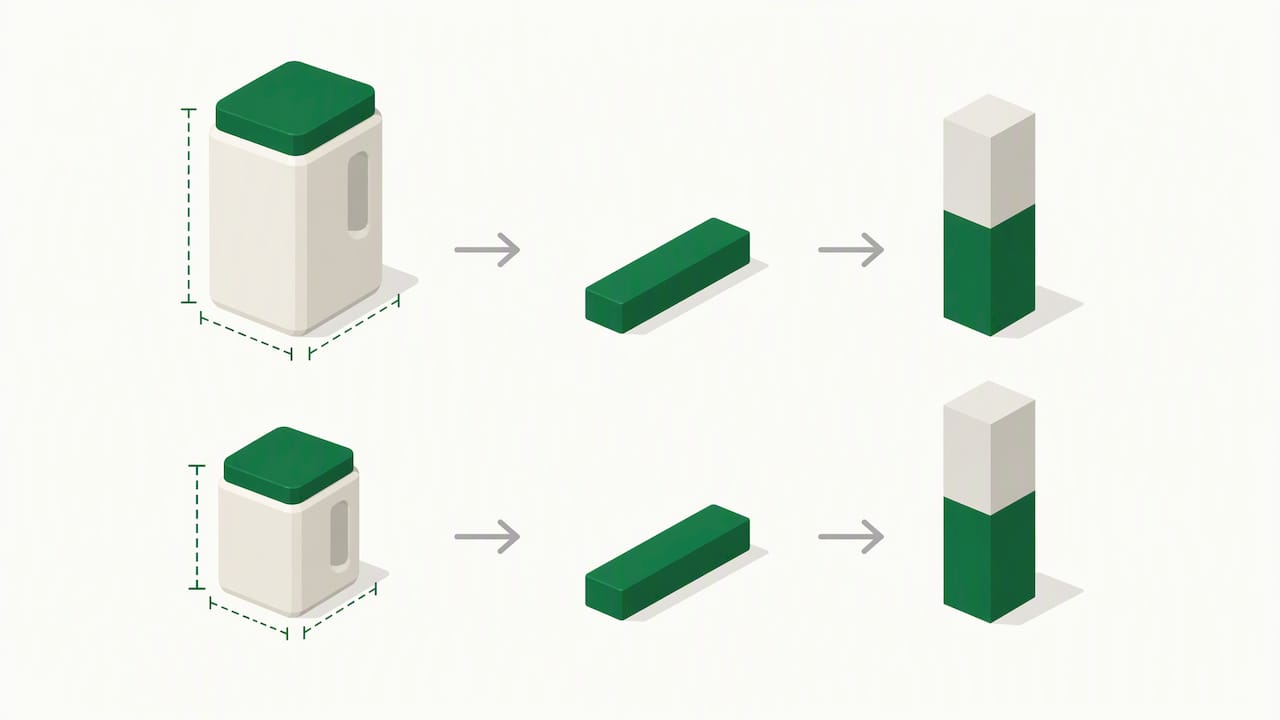
Before any cost-per-use math works, both products need to be in the same base unit. Converting everything to grams or milliliters first, rather than mixing ounces and grams mid-comparison, avoids simple arithmetic errors that throw off the whole result, a point DataWeave's guidance on normalizing units makes directly.
Package sizes shrink more often than prices drop, which is why the sticker price alone misleads. The FTC's shrinkflation guidance notes that unit pricing remains reliable precisely because it exposes a smaller fill weight even when the box looks the same. A study on shrinkflation found reduced package quantities adding up to 32% more per unit in some categories, a gap invisible if you only glance at the shelf price.
- Read the unit-price tag on the shelf, not just the item price.
- Watch for bundled "extras" that inflate the sticker price without adding proportional value.
- Be skeptical of "per serving" claims on food and supplement labels, since serving sizes vary by brand.
Comparing single-use and reusable products fairly
A reusable item usually costs more upfront, so comparing it to a disposable on sticker price alone is misleading. Amortizing the purchase spreads that upfront cost across its expected lifetime of uses:
Cost per use = (purchase price + expected recurring costs over lifetime) ÷ expected number of uses
- Recurring costs to add in: detergent, water or electricity, and replacement parts.
- Include recurring costs only when they're specific to the item, not general household overhead.
- Example framework: a cloth diaper system costing $300 upfront, plus estimated laundering costs over its life, divided by the total diaper changes it covers, versus a disposable box priced per diaper as shown above.
For higher-ticket appliances like washers or dishwashers, the DOE's dishwasher test procedure and the residential clothes washer test data provide per-cycle energy and water figures that feed directly into this formula when you're weighing a new machine against an older one.
Fast ways to check cost-per-use while shopping
A good calculator needs three inputs: total price, quantity or use count, and the unit you're normalizing to. Enter those and you skip the manual conversion math entirely.
- Use a grams-to-ounces or fluid-ounce-to-milliliter converter when labels mix measurement systems.
- Snap a photo of the shelf tag to compare unit prices before you leave the aisle.
- Cross-check with a price-tracking tool like Fox Patrol to see whether a "sale" price is actually lower than recent history.
- Run the numbers through a shopping checklist built around per-unit comparisons rather than sticker price.
Why per-use math changed how I shop
Running the numbers on two seemingly identical detergent bottles once showed a four-cent gap per load. That sounds trivial until you multiply it across a year of laundry, where four cents a load on 300 loads adds up to $12, enough to notice. Small per-use differences compound quietly, which is the real argument for doing the math before checking out.
— Alex
Try the OutletPicks Unit Price Calculator
We offer a Unit Price Calculator to help you avoid doing this math by hand in a store aisle. Our cost-per-unit index tracks real prices across 52 everyday categories, rechecked on a rolling cycle, so the per-ounce or per-use figure you see reflects current shelf reality rather than a one-time snapshot.
- Skip manual conversions between ounces, grams, and milliliters.
- Catch shrinkflation before it hits your cart.
- Compare brands side by side on real cost per unit, not sticker price.
Browse our full category listings to see per-unit rankings for skincare, hair care, fragrance, baby care, and more, updated as retailer prices change.
FAQ
What is the basic cost-per-use formula?
Cost per use equals the total price of a product divided by the number of uses it provides, such as loads, diapers, or sprays. For raw quantities like weight or volume, the related formula is price divided by quantity, often called unit price.
How do I calculate cost per use when units don't match?
Convert both products to the same base unit, such as milliliters or grams, before dividing price by quantity. A grams-to-ounces converter or milliliter converter handles this step automatically.
Why does a bigger package sometimes cost more per use?
Manufacturers occasionally raise the per-unit price on larger "value" sizes, which is exactly why the FTC recommends checking the posted unit price rather than assuming bulk always wins. Shrinkflation, where package weight shrinks while the price holds steady, can make this gap even wider.
How do I compare a reusable product to a disposable one?
Add the purchase price to any expected recurring costs, like laundering or replacement parts, then divide by the total number of uses you expect over its lifetime. This amortized cost per use can then be compared directly against a disposable item's price per unit.
Is cost per use calculated automatically by a unit price calculator?
Our Unit Price Calculator takes a product's price and quantity and returns the normalized cost per unit or per use, pulling from a rolling index of retailer prices across dozens of categories. It removes the manual conversion step shoppers would otherwise do by hand.