
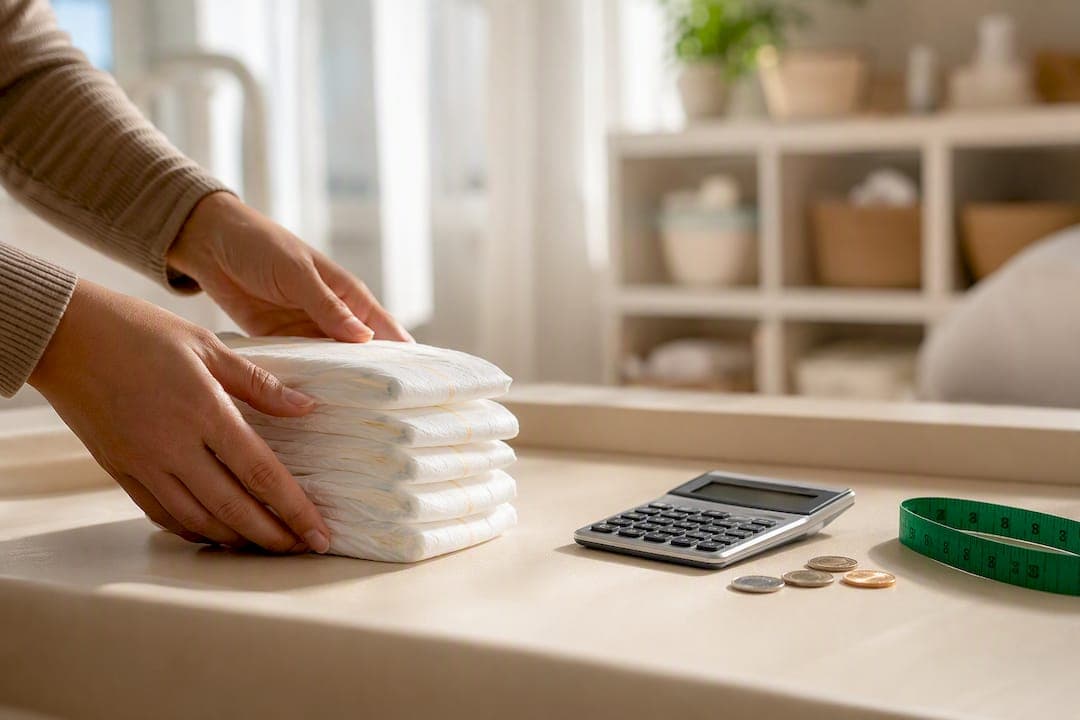
Expect to pay somewhere between $0.14 and $0.59 per diaper, with most families landing near $0.29 on average. Anything under $0.20 per diaper counts as a good deal for standard sizes bought in bulk, while $0.30 to $0.40 is normal for name-brand packs at retail price. Size, brand tier, and whether you buy one pack at a time or subscribe all push that number around.
TL;DR:
- Buying in bulk from warehouse clubs or using subscription services can reduce the cost per diaper to as low as $0.14, but saving depends on store membership and store policies.
- Price per diaper varies significantly by brand tier, with store brands costing around $0.14 to $0.20 and premium or organic lines reaching up to $0.59, influencing total costs over time.
- Using the correct formula—adjusted pack price divided by the number of diapers—ensures accurate cost comparisons, especially when factoring in discounts and taxes.
- Diaper rash and skin issues can add unexpected costs through creams and doctor visits, potentially outweighing savings from cheaper diapers if discomfort persists.
- Wipes, creams, and disposal systems typically add $20 to $40 monthly to diaper expenses, making the full changing-table budget larger than just the diaper cost.
Table of Contents
- Typical Cost Per Diaper: Averages, Monthly Totals, and Yearly Estimates
- How to Calculate Cost Per Diaper (Formula and Quick Examples)
- Diaper Prices by Brand Tier and Size
- Warehouse Clubs, Subscriptions, and Coupons: Where the Real Savings Are
- When Cheaper Isn't Actually Cheaper
- Outletpicks Methodology: How We Track Real Diaper Prices
- The Real Cost of Diaper Rash and Skin Issues
- What Wipes, Cream, and Disposal Systems Add to Your Diaper Budget
- Cutting Diaper Costs: Where To Start This Week
- Try Outletpicks: Compare Real Diaper Prices Before You Buy
- Sources
- FAQ
Typical Cost Per Diaper: Averages, Monthly Totals, and Yearly Estimates
The national average sits close to $0.29 per diaper, but that number hides a wide spread. Budget and store-brand diapers can drop to $0.14 to $0.18 each, while premium and organic lines often run $0.35 to $0.59, according to lab price sampling from BabyGearLab. Most parents end up somewhere in the middle, closer to $0.22 to $0.32 per diaper once sales and pack size get factored in.
By the numbers: A newborn changed 8 times a day burns through roughly 240 diapers a month. At the U.S. average price, that's close to $70 a month and about $840 a year. Drop to 6 changes a day as your baby grows, and monthly cost falls to around $52, or roughly $624 annually, assuming the price per diaper stays flat.
That last assumption rarely holds. As babies grow into larger sizes, each diaper costs more even though pack counts shrink. A size 1 pack might hold 198 diapers for $30, while a size 5 pack holds only 108 for the same price. The diaper itself uses more material, so the manufacturer charges more per unit, and pack counts drop to compensate. That's why yearly spending doesn't decline evenly as your baby grows out of the newborn stage, even though daily change frequency does.
For a fuller picture of where diapers fit into the bigger monthly budget, our breakdown of newborn costs per month walks through how diaper spending compares to formula, clothing, and childcare. And if you want to see exactly how price shifts by size, the diaper size chart lays out weight ranges next to typical per-size pricing.
How to Calculate Cost Per Diaper (Formula and Quick Examples)
The formula is simple: cost per diaper = pack price ÷ number of diapers in the pack. That's the number that actually matters, not the price printed on the shelf tag, because a bigger box at a higher sticker price can easily beat a smaller box that looks cheaper.
Here's how to run the math correctly every time:
- Start with the total price you'll actually pay, not the list price. Subtract any coupon or manufacturer rebate first.
- Divide that adjusted price by the diaper count printed on the pack, not an estimate.
- If you're buying through a subscription, apply the subscription discount (commonly 5% to 20%) before dividing.
- Add sales tax back in states that tax diapers, since that changes your real out-of-pocket cost per diaper.
- Compare the result against the size and brand tier bands below, not just against a single competing pack.
Example 1: A 40 count pack of a name-brand diaper costs $12.99. No coupon applied. $12.99 ÷ 40 = $0.32 per diaper.
Adjusted price is $33.99. $33.99 ÷ 198 = $0.17 per diaper, less than half the small-pack price.
Calculators built for this exact math, like the ones from Calcipedia and TOOLRIZ, let you plug in daily change counts, taxes, and subscription discounts to get monthly and yearly projections instead of doing this by hand every time you shop.
Pro Tip: Photograph the shelf tag's "price per diaper" or "price per unit" figure before you leave the aisle. Retailers sometimes calculate it using list price, not the price you'll pay after a manufacturer coupon, so double check the math against your receipt.
Diaper Prices by Brand Tier and Size
Brand tier explains more of the price variation than size does, though both matter. Here's roughly what each tier costs per diaper, based on typical pack pricing across sizes:
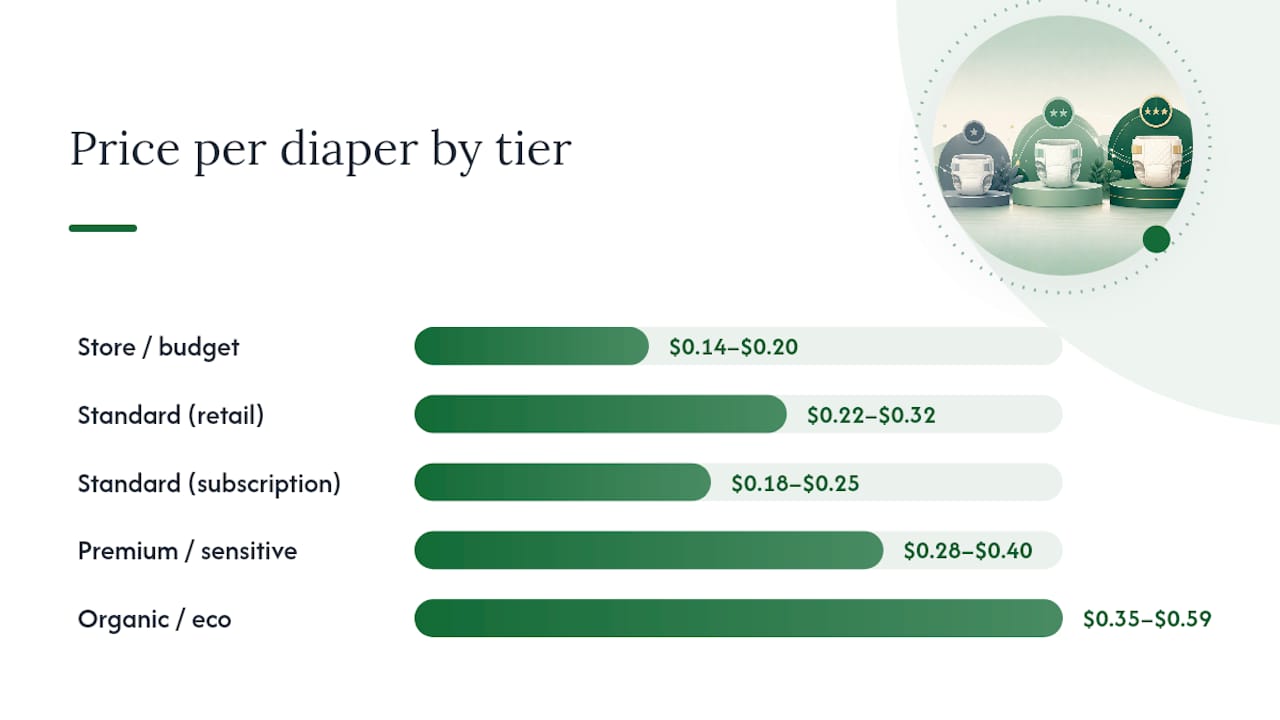
- Store brand / budget tier: $0.14 to $0.20 per diaper. Includes retailer private labels and bulk club brands.
- Standard name brand: $0.22 to $0.32 per diaper at regular retail price, dropping to $0.18 to $0.25 with subscriptions or club pricing.
- Premium and sensitive-skin lines: $0.28 to $0.40 per diaper.
- Organic and eco-conscious brands: $0.35 to $0.59 per diaper, with some subscription composting services adding recurring collection fees on top of the diaper price itself, as Dyper's program shows.
Size math: Smaller diaper sizes usually cost less per diaper, while larger sizes tend to be more expensive due to increased materials and smaller pack sizes.
Pack count plays a bigger role than most parents expect. Warehouse-sized boxes and case packs consistently deliver the lowest unit price, but only if you have somewhere to store them and won't outgrow the size before finishing the box.
Promotional pricing moves the needle more than most people realize, too. A "buy 2, get $5 off" promotion on two standard packs can push a $0.30 per diaper price down to $0.24, which is a meaningful discount without switching brands or tiers at all.
Over the entire diapering period from newborn to potty training, the cost difference between budget and premium brand tiers can add up to a substantial amount, influenced mainly by brand choice rather than single purchases.
Warehouse Clubs, Subscriptions, and Coupons: Where the Real Savings Are
Warehouse clubs like Costco and Sam's Club consistently post some of the lowest per-diaper prices available, largely because their case-pack format spreads packaging and shipping costs across more units. But the membership fee has to enter your math. A $60 annual membership only pays for itself on diapers if the savings versus your usual store exceed that fee, so run the comparison before assuming a club membership is worth it purely for diapers.
Online subscription programs often provide discounts and sometimes waive shipping fees, which can significantly reduce diaper costs given the weight and shipping expense of diaper cases. The tradeoff is commitment. Canceling or adjusting a subscription before your baby changes sizes takes an active step most parents forget to take, so set a calendar reminder tied to your baby's growth curve.
A few practical moves stack on top of subscriptions and club pricing:
- Combine manufacturer coupons with store sales rather than using either alone.
- Check rebate apps like Ibotta or Fetch before checkout, since diaper offers rotate frequently.
- Run a short price test, comparing the same brand and size across three retailers over one week, before committing to a bulk order.
- Watch for seasonal sales tied to major shopping holidays, which tend to offer the deepest per-unit discounts of the year.
Pro Tip: Before buying a case, check the return policy for unopened packs. Some retailers will take back diapers if your baby jumps a size unexpectedly; others won't, which turns a "good deal" into wasted money fast.
Bulk buying carries real risk if you buy a size your baby will outgrow in a few weeks. Newborns especially move through sizes fast, sometimes in under a month, so the savings from a case pack can evaporate if half the box goes unused. Storage space is the other constraint people underestimate: a case of size 4 diapers takes up more closet real estate than most nurseries have to spare.
When Cheaper Isn't Actually Cheaper
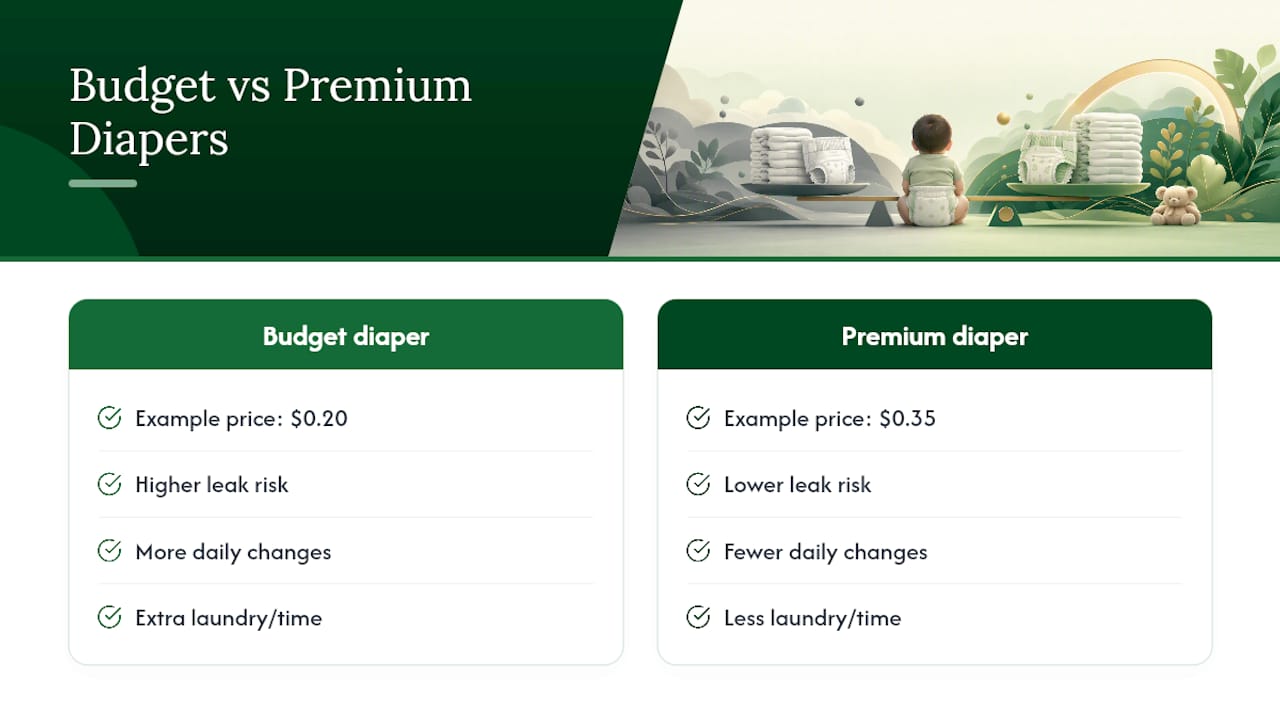
A diaper's absorbency changes how many you use, and that changes the real math more than most price comparisons account for. Lab testing on leak protection and absorbency suggests that a diaper with better performance can reduce how often you need to change your baby, meaning a $0.35 diaper that lasts through the night might cost less overall than a $0.20 diaper that leaks and forces an extra change plus a load of laundry, according to BabyGearLab's testing.
For example, if a cheaper diaper causes an extra change each day due to leaks, the additional diaper use can negate the initial savings from a lower price per diaper. Even more expensive diapers may be cost-effective in the long run due to fewer changes. Close enough that fit and comfort become the deciding factor, not price alone.
The smart move is a short trial. Buy one small pack of a higher-tier diaper and track leaks and comfort over a few days against your current brand before committing to a case. Budget diapers still make sense in specific situations: the newborn stage before you know which brand fits your baby's shape, or as a backup stash at daycare where a rash or leak matters less than having supply on hand.
Outletpicks Methodology: How We Track Real Diaper Prices
Cost per diaper is calculated by dividing the actual shelf or online price by the exact diaper count printed on each pack, with retailer pricing rechecked on a rolling cycle so the numbers reflect current sales, not stale list prices.
Here's what gets normalized before a price makes it onto a comparison:
- Pack counts, pulled directly from packaging rather than estimated from box size.
- Active discounts and subscription pricing where retailers offer them.
- Multiple retailers for the same product, so the comparison reflects the actual lowest price available that day.
- Size-specific listings, since a size 1 and size 5 pack from the same brand are never directly comparable on price alone.
You can run your own numbers through the unit price calculator, and the methodology page explains the full retailer-checking process in more detail. This article's data and editorial review were handled by contributor Alex.
The Real Cost of Diaper Rash and Skin Issues
Diaper rash adds a cost line most budgets don't plan for. A tube of diaper rash cream runs $6 to $12, and a moderate case might need two or three tubes before it clears, adding $18 to $36 to a month's diapering costs that a simple price comparison never captures.
Persistent or severe rash sometimes requires a pediatrician visit, and copays for that visit run anywhere from $20 to $50 or more depending on your insurance plan, before factoring in any prescribed treatment. Chronic rash tied to a specific diaper brand or material sensitivity can also push a family toward a pricier hypoallergenic or sensitive-skin line, which typically costs $0.05 to $0.10 more per diaper than a standard tier product.
The practical takeaway: don't judge a diaper purely on cost per diaper if it's causing skin irritation. Switching to a $0.30 diaper that eliminates recurring rash can cost less overall than staying with a $0.20 diaper that triggers cream purchases and the occasional doctor visit. Fit matters here too. A diaper that's too loose lets moisture sit against skin longer, so sizing up or down within the same brand sometimes solves a rash problem without switching products entirely.
What Wipes, Cream, and Disposal Systems Add to Your Diaper Budget
Diapers are only part of the changing-table budget. Wipes typically add $15 to $25 a month for an average newborn, and that number climbs during illness or diarrhea when wipe usage spikes. A tub of diaper rash cream or barrier cream, used preventively rather than only during a flare, adds another $8 to $15 a month for most families.
Diaper disposal systems carry their own ongoing cost. A diaper pail itself is a one-time purchase, usually $20 to $40, but the refill cartridges or bag systems many pails require can run $8 to $15 a month, which adds up to $100 or more a year on top of the diapers themselves. Using a standard kitchen trash bag instead skips that recurring cost, though it trades off odor control.
Add it up and a realistic full changing-table budget runs $20 to $40 a month above the diaper cost alone, once wipes, cream, and disposal are factored in together. That's a meaningful gap between "diaper budget" and "actual changing-table budget," and it's worth padding your monthly estimate by that range rather than budgeting for diapers in isolation.
Cutting Diaper Costs: Where To Start This Week
If you want to lower your diaper spend without overhauling your routine, start with the math, not the marketing. Calculate your current cost per diaper using your last receipt, test one alternative brand or pack size against it for a week, then commit to whichever bulk or subscription option actually wins on both price and performance.
Use a unit price calculator to check your current brand first. If a cheaper option checks out during a short trial, lock in the savings with a subscription or club purchase rather than buying single packs indefinitely.
— Alex
Try Outletpicks: Compare Real Diaper Prices Before You Buy
Outletpicks exists because sticker prices lie about which pack is actually the better deal, and diapers are one of the clearest examples of that. A 25 count "convenience" pack and a 198 count case can carry wildly different per-diaper prices even when the shelf tags look similar at a glance.
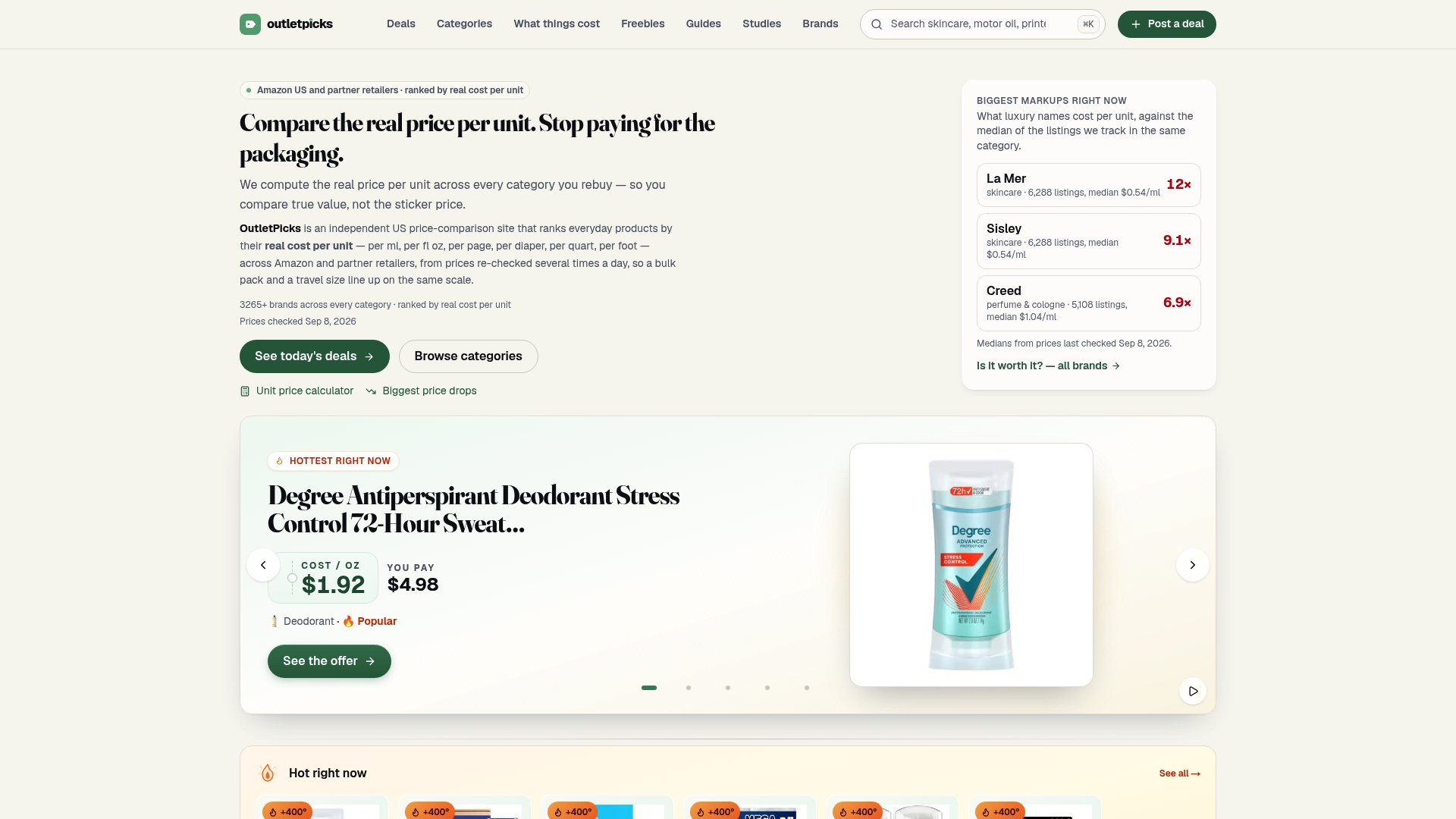
The unit price calculator lets you punch in a pack price and diaper count from any retailer and get your real cost per diaper in seconds, which makes it easy to check a deal before you commit to a case. Pricing across Amazon and partner retailers is tracked on a rolling basis, so the comparisons reflect current sales rather than outdated list prices. If you're planning a bulk purchase or setting up a subscription, run the numbers through the calculator first, then check current price comparisons to see which retailer actually has the lowest cost per diaper for the size and brand you've settled on this week.
Sources
- The Best Disposable Diapers | Lab Tested & Ranked
- Diaper Facts & Statistics: Average Cost Of A Diaper
- Diaper Calculator | Calcipedia
- Cost Per Diaper Calculator - TOOLRIZ
FAQ
What is the average price per diaper?
The U.S. average runs close to $0.29 per diaper, though prices range from about $0.14 for budget store brands to $0.59 for premium and organic lines.
What is the cost of one diaper?
A single diaper typically costs between $0.14 and $0.59 depending on brand tier and size, with most standard name-brand diapers falling between $0.22 and $0.32 each.
How long does $200 worth of diapers last?
At the U.S. average of roughly $0.29 per diaper, $200 buys around 690 diapers, covering about 1.5 to 2 months for a baby changed 8 times a day, or 2 to 2.5 months at 6 changes a day.
How do you calculate cost per diaper?
Divide the pack's actual price, after coupons and subscription discounts, by the exact number of diapers in the pack. Run the same formula across a few retailers or use a tool like Outletpicks' unit price calculator to compare instantly.