
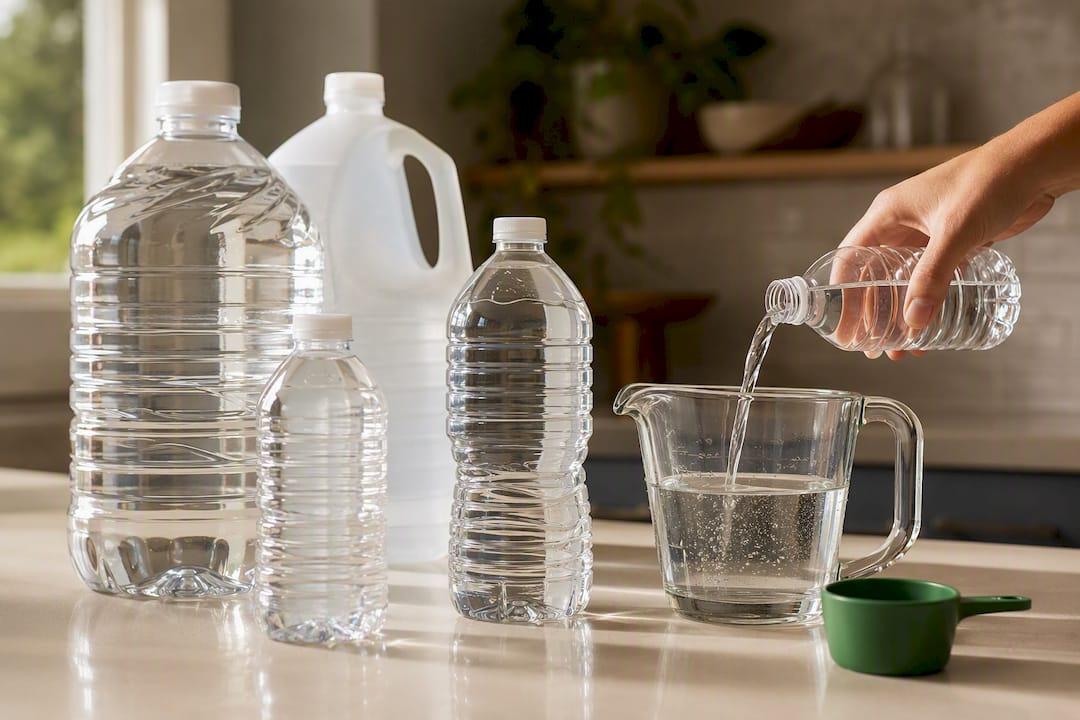
Expect bottled water prices to range from about $1 to $15 or more per gallon depending on format. The Beverage Marketing Corporation's industry benchmark, reported through the International Bottled Water Association, puts the average wholesale price near $1.44 per gallon. Retail tells a different story: single-serve bottles inflate that number by 10 times or more, while warehouse jugs bring it back down close to wholesale.
TL;DR:
- The price of bottled water varies dramatically depending on format, with single-serve bottles costing about $11 to $15 per gallon, often exceeding $20 in high-markup locations.
- Bulk options like 1-gallon jugs at grocery stores typically cost less than $1 per gallon, making them the most economical retail choice for household use.
- Buying water at airports, sports venues, or hotel minibars can push costs above $20 per gallon, which is significantly higher than standard retail prices.
- Municipal tap water costs less than half a cent per gallon, whereas home filtration systems usually range from $0.10 to $0.30 per gallon, offering a cost-effective alternative.
- Regional factors, such as transportation, retail competition, and local water quality, greatly influence bottled water prices across different markets.
Table of Contents
- Bottled Water Cost per Gallon by Purchase Format
- How to Calculate the Price per Gallon of Any Bottle
- Bottled Water vs. Tap and Home Filtration: The Real Numbers
- Where to Find the Cheapest Bottled Water per Gallon
- How to Cut Your Bottled Water Spending Starting Today
- How OutletPicks Verifies These per-Gallon Numbers
- The Environmental Cost Behind the Sticker Price
- Why Bottled Water Prices Differ by Region
- How Bottled Water Pricing Has Shifted
- When Bottled Water Actually Makes Sense
- Compare Real per-Gallon Prices Before You Buy
- Sources
- FAQ
Bottled Water Cost per Gallon by Purchase Format
Format is the single biggest lever on price. A 16.9 oz bottle bought one at a time from a convenience store or vending machine can run roughly between $10 and $20 per gallon once you do the math, while the same water bought as a 1-gallon jug at a grocery store might land under one dollar. That's not a rounding error.
| Format | Typical retail price | Approximate $/gallon |
|---|---|---|
| Single 16.9 oz bottle (vending/convenience) | $1.50 | Around $11 to $15 |
| 24-pack of 16.9 oz bottles | $5.49 to $7.99 | Around $2.00 to $3.80 |
| 1-gallon store-brand jug | $0.89–$1.49 | Around $0.89 to $1.49 |
| 5-gallon delivery jug (refill) | $6.00 | Around $1.20 |
| 5-gallon jug with cooler rental/delivery fees | $10 to $15 | Around $2.00 |
Some consumer-guide analyses put single-serve bottled water even higher, in the $10 to $20 per gallon range once you factor in the smallest formats sold at premium locations.
A few situations reliably spike the price further:
- Airports and travel hubs often charge $3 to $5 for a single bottle, pushing per-gallon cost past $20.
- Sporting venues and concerts frequently sell water at similar markups, sometimes with no size options below 16 oz.
- Vending machines in offices or gyms tend to sit at the high end of single-serve pricing because there's no comparison shopping happening in the moment.
- Hotel minibars can push a single small bottle to $4 or $5, which is the most expensive water most people ever buy.
If you're buying bottled water for a household rather than a single trip, checking real per-unit prices across retailers before you commit to a format saves more than switching brands ever will.
How to Calculate the Price per Gallon of Any Bottle
The formula is simple: divide the price by the ounces, then multiply by 128 (the number of fluid ounces in a gallon).
- 20 oz bottle at $1.79: $1.79 ÷ 20 = $0.0895 per ounce. Multiply by 128 and you get $11.46 per gallon.
- 16.9 oz bottle, 24-pack at $5.49: That's $0.229 per bottle-ounce equivalent, or $5.49 ÷ (16.9 × 24) = $0.0135 per ounce. Times 128 equals $1.73 per gallon.
- 1-gallon jug at $1.19: Already in gallons, so it's just $1.19 per gallon. No conversion needed.
Keep that formula on hand whenever you're comparing pack sizes at the shelf, or run the numbers through OutletPicks' ounce-to-milliliter converter if you're working from metric labeling.
Bottled Water vs. Tap and Home Filtration: The Real Numbers
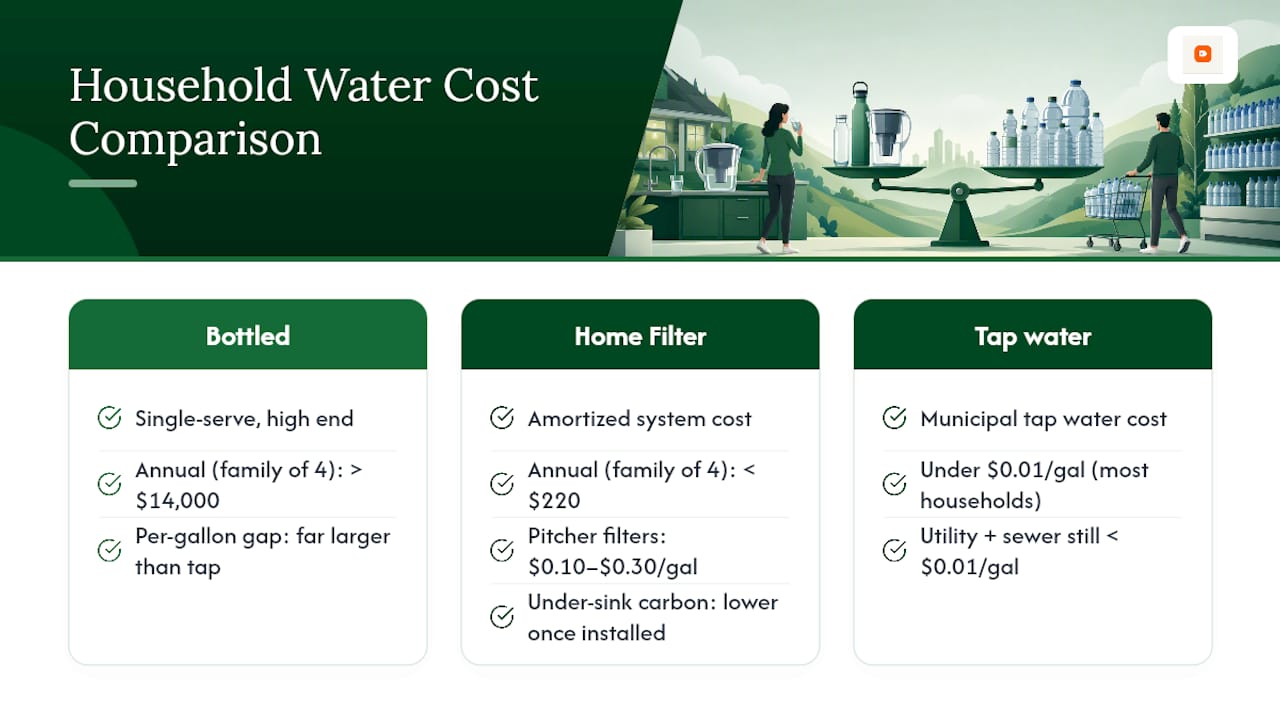
Municipal tap water, according to EPA cost and regulation data, typically costs a fraction of a cent per gallon before sewer charges, and even with utility and sewer fees added in, most households pay well under $0.01 per gallon. That gap versus bottled water isn't close.
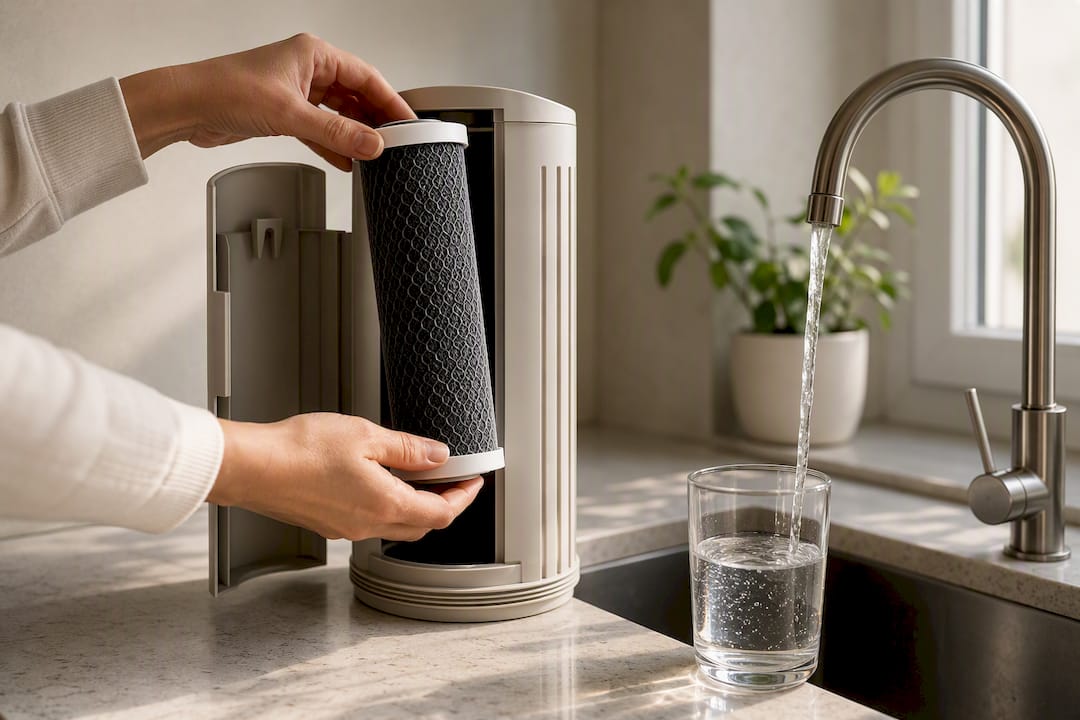
Home filtration narrows the gap for people who don't trust tap water straight from the faucet. Pitcher filters amortize to roughly $0.10 to $0.30 per gallon once you factor in the replacement cartridge cost, under-sink carbon systems run lower once installed, and reverse osmosis systems land somewhere in between depending on unit cost and filter life.
Pro Tip: Run the annualized math for your actual household, not just per gallon. A family of four drinking a gallon each per day spends over $14,000 a year on single-serve bottles at the high end, versus under $220 on an amortized filter system.
Where to Find the Cheapest Bottled Water per Gallon
Warehouse clubs consistently offer the best per-gallon math on bottled water, mostly because they sell in volume and skip the packaging premium that single-serve formats carry.
- Warehouse clubs (Costco, Sam's Club) sell 40 packs of 16.9 oz bottles that often price out near $1.50 to $2.00 per gallon.
- Store-brand 1-gallon jugs at grocery chains routinely undercut name brands by 30% to 50% for identical treatment quality.
- 5-gallon delivery and refill programs work best for households already drinking multiple gallons a week, since the per-gallon rate drops once you're not paying for a new bottle every time.
- Refill stations at some grocery and specialty stores let you bring your own container and pay only for the water, often the lowest true per-gallon rate available.
- Retailers like Pure Wave Water sell bulk formats specifically built for households trying to avoid single-serve pricing altogether.
How to Cut Your Bottled Water Spending Starting Today
Small format changes save more money than brand switching. Here's the order that matters most:
- Calculate $/gallon before buying, using the formula above, so sticker price never fools you again.
- Buy the largest format your storage allows. A case generally offers better value than a 6-pack; a 1-gallon jug usually offers better value dollar for dollar than a case.
- Watch for subscribe-and-save or multi-pack promotions, which frequently knock 10% to 20% off already-low bulk pricing.
- Use refill stations and carry a reusable bottle for daily hydration, saving single-serve purchases for situations where bottled water is genuinely the only safe or practical option.
- Run a break-even check against your own consumption: if you drink more than half a gallon a day, a $30 pitcher filter typically pays for itself within a month compared to convenience-store bottles.
Pro Tip: If you're buying bottled water mainly for taste or habit rather than safety concerns, a filter almost always wins the math within weeks, not years.
How OutletPicks Verifies These per-Gallon Numbers
OutletPicks calculates real cost per unit by normalizing prices across retailers into a single comparable figure. That means converting every pack size, whether it's measured in milliliters, ounces, or gallons, into one consistent unit before ranking anything as cheap or expensive.
- Prices get rechecked on a rolling cycle so a promotional dip or a price hike doesn't linger in the rankings after it's gone.
- Every conversion uses fixed constants (like milliliters to fluid ounces) so pack-size differences never distort the comparison.
- Retailer comparisons draw from Amazon and partner listings, giving a wider view than checking one store alone.
- The same methodology that produces the examples in this article backs OutletPicks' published studies, and it lines up with the wholesale benchmarks IBWA and BMC report and the labeling standards the FDA sets for packaged water.
The Environmental Cost Behind the Sticker Price
The price tag on a bottle of water doesn't include what happens after you drink it. Plastic production, transportation weight, and disposal all carry costs that show up in landfills and waterways rather than at checkout.
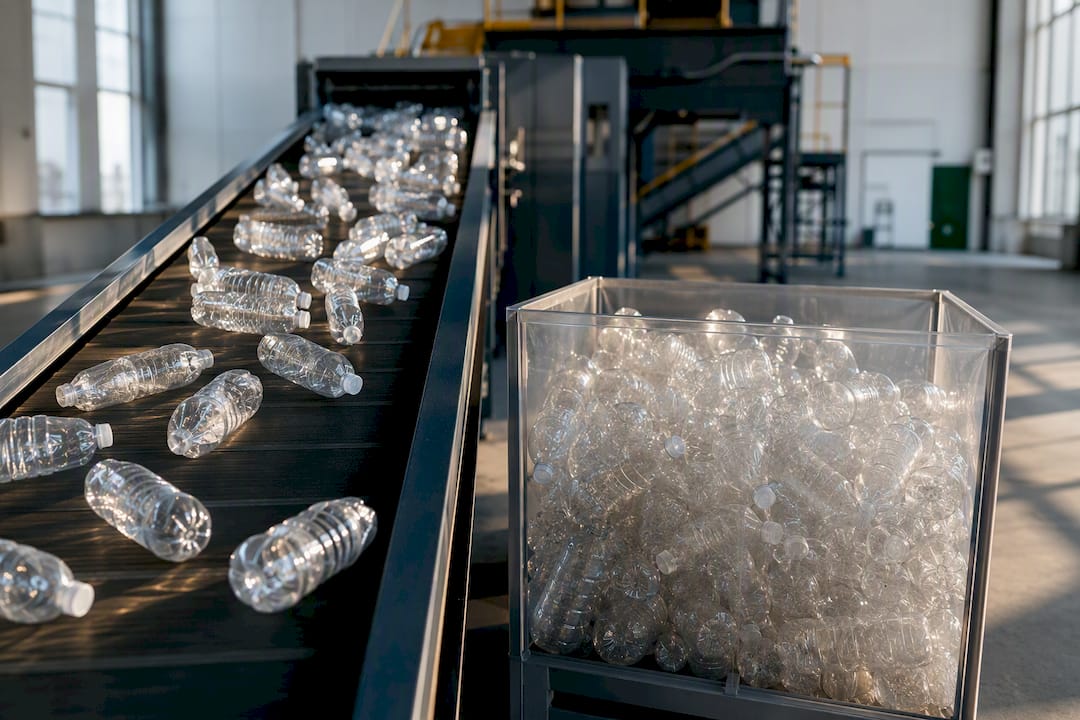
Single-serve plastic bottles are lightweight to ship compared to glass, but the sheer volume sold means packaging waste adds up fast across a country that buys billions of bottles a year. Recycling rates for PET plastic bottles remain well below total production, so a meaningful share ends up in landfills or as litter regardless of what the bottle claims about recyclability.
There's also a health-adjacent environmental question drawing more attention: NIH-affiliated research has identified microplastic particles in bottled water, raising questions researchers are still working through about long-term exposure. That doesn't mean bottled water is unsafe. The FDA regulates it as a packaged food product with its own safety and labeling standards. But it does mean the environmental and health calculus isn't purely about price per gallon.
For readers weighing bulk bottled water against a filter system, the environmental math tends to favor filtration on both counts: fewer bottles produced and shipped, plus one filter cartridge doing the work that hundreds of single-use bottles would otherwise do.
Why Bottled Water Prices Differ by Region
Where you buy bottled water changes the price as much as what you buy. Areas with higher shipping costs, higher retail rents, or fewer competing grocery chains tend to see higher per-gallon prices across every format, from single bottles to bulk cases.
Coastal and urban markets, especially those far from bottling plants, often pay a transportation premium baked into shelf price. Rural areas sometimes see the opposite effect: fewer retail options mean less price competition, so store-brand jugs might not discount as aggressively as they do in a market with three competing grocery chains fighting for the same customers.
Local tap water quality plays an indirect role too. Regions with aging infrastructure or known contamination issues tend to see higher bottled water demand, and retailers in those markets sometimes price accordingly since demand is less price-sensitive when people feel they don't have a choice. Warehouse club density also matters. A market with a nearby Costco or Sam's Club gives shoppers access to bulk pricing that simply isn't available in areas without one nearby, meaning the "best" per-gallon price in one zip code can be double the best price twenty miles away.
The takeaway for a cost-conscious shopper: don't assume a national average applies to your specific store. Check actual shelf prices at your regional retailers, then run the per-gallon formula, rather than relying on any single quoted average.
How Bottled Water Pricing Has Shifted
Bottled water pricing has trended upward at retail even as wholesale benchmarks have stayed relatively stable, which tells you where the markup is actually landing. Packaging materials, fuel costs for distribution, and retail markup have all pushed shelf prices higher over the past several years, while the underlying wholesale cost of the water itself has moved far less.
Premium and flavored bottled water categories have grown share within the category, and they typically carry higher per-gallon pricing than standard still water, pulling category averages upward even when plain water pricing holds steady. Private-label and store-brand jugs have partly offset that trend for budget shoppers, since store brands have generally kept 1-gallon jug pricing more stable than name-brand single-serve formats.
Subscription and delivery services for 5-gallon jugs have also expanded, giving heavy water drinkers a middle option between retail shopping and jug-by-jug purchases. Whether pricing keeps climbing at the same pace depends largely on packaging and transportation costs, which is exactly why checking current prices rather than relying on last year's numbers matters for anyone trying to actually save money.
When Bottled Water Actually Makes Sense
Bottled water earns its price during travel, emergencies, or when local tap water carries a real safety concern. Outside those situations, the math almost always favors bulk jugs or a home filter. Before your next purchase, run the per-gallon numbers yourself. They rarely favor the convenience aisle.
— Alex
Compare Real per-Gallon Prices Before You Buy
Manually checking store shelves and comparing pack sizes eats up time most shoppers don't have, and the savings from doing it wrong (or not at all) show up on every grocery receipt. Some platforms calculate the real cost per unit across retailers, ranking products by actual price per gallon, per ounce, or whatever unit matters, regardless of packaging or labeling.
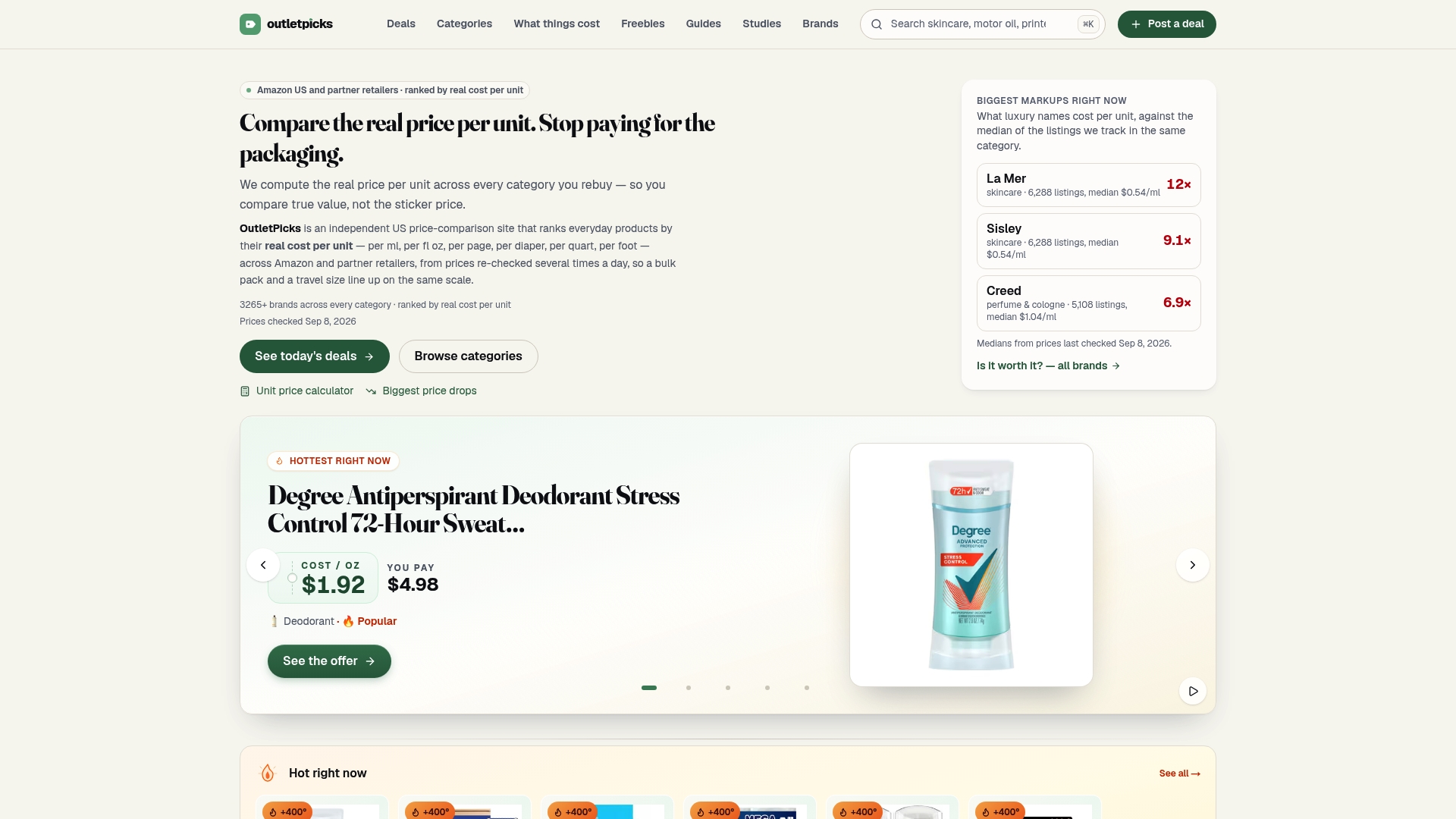
That same normalized, rolling-checked approach that produced the per-gallon ranges in this article applies across dozens of everyday categories, from household essentials to personal care, so you're never stuck guessing whether the bigger pack is actually the better deal. If you want to see how a specific brand or size stacks up against its competitors before you buy, browse the brand index ranked by real cost per unit and check the current numbers for yourself.
Sources
- How Much Does Bottled Water Cost? | IBWA
- Bottled water everywhere: keeping it safe · FDA
- EPA drinking water information PDF
- NIH research matters: plastic particles in bottled water
FAQ
What is the average cost of 1 gallon of water?
Bottled water averages close to $1.44 per gallon wholesale, but retail prices vary far more depending on format, ranging from under $1 for store-brand jugs to over $15 for single-serve bottles. Tap water, by contrast, typically costs a fraction of a cent per gallon.
What is the price of 1 gallon of water?
The price depends entirely on format and retailer. A 1-gallon jug at a grocery store usually runs $0.89 to $1.49, while the same volume bought as single-serve bottles can cost $10 or more.
What is the average cost of bottled water?
Bottled water pricing spans a wide range because it's driven by packaging and format rather than the water itself. Single bottles, multi-packs, and gallon jugs of identical water can differ in per-gallon cost by 10 times or more, which is why checking the actual per-gallon math matters more than checking sticker price alone.
How much does 1 gallon of water cost at Walmart?
Walmart's store-brand 1-gallon jugs typically fall in the same $0.89 to $1.49 range seen at most major grocery retailers, though exact pricing varies by location and changes over time. Checking current per-unit prices before you shop gives a more accurate number than relying on a fixed average.